Yoruba — Ifá / Orisha Realms
Yoruba / Ifá Divination System
Yoruba (Oyo, Egba, Ijebu, Ile-Ife, Ekiti, Ijesa, Igbomina) southwestern Nigeria and Benin Republic.
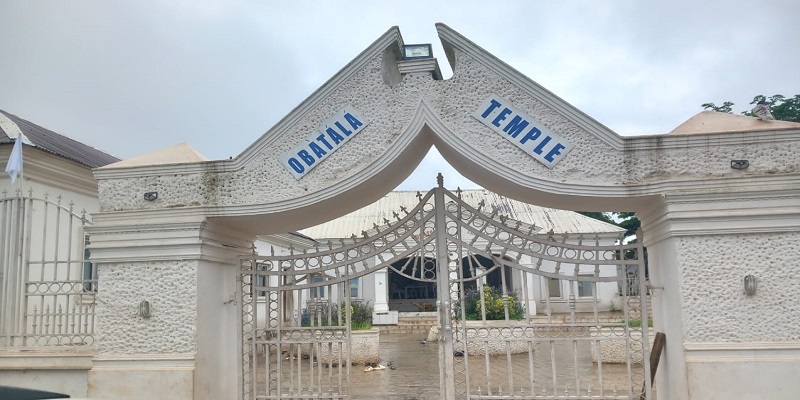
Yoruba
The culture
Yoruba (Oyo, Egba, Ijebu, Ile-Ife, Ekiti, Ijesa, Igbomina) southwestern Nigeria and Benin Republic.
Where
West Africa: southwestern Nigeria, Benin Republic and Togo
Time depth
3,000+ years oral tradition. Ifá corpus recognized by UNESCO as Intangible Cultural Heritage 2005.
Living tradition
Yes: actively practiced across West Africa. Ifá and the orisha also travelled across the Atlantic, where they are honoured in Cuba, Brazil, Trinidad and beyond.
Language
Yoruba language. Ifá verses (ese Ifá / odu) chanted by Babalawo. Oriki praise poetry sung by specialists. Call-and-response performance structure.
The world of its stories
Cosmological Structure
Three worlds: Orun (spirit world/heaven above), Aiye (earth/living world), and the world of the Egungun ancestors. 401+ Orisha govern every aspect of existence. Each person carries Ori: their personal divine essence/chosen destiny. The universe is organized by Ashe: the divine power flowing through all things that makes ritual effective.
Creation
Obatala descended on a chain from Orun carrying a calabash of sand and a five-toed chicken. Sand poured, chicken scattered it to form land: Ile-Ife (sacred city, navel of the earth). Oduduwa, founder of the Yoruba, descended to rule. Olodumare (supreme being, too vast for direct approach) delegated creation and governance to the Orisha.
Time
Cyclical. Each person's Ori (destiny) is chosen before birth and can be modified through ritual. Reincarnation within family lines. Ancestors return through new births. Ifá divination reveals what is written in destiny and what can be changed through right action.
The Sacred
Orisha are sacred forces embodied in nature: rivers (Oshun), ocean (Yemoja), iron (Ogun), thunder (Sango), the crossroads (Eshu). Ashe flows through all things. Every Orisha has specific colors, numbers, foods, days, and sacred objects that activate the connection.
Death / Afterlife
Egungun masquerade: the dead return to visit the living through masked performance. The good dead join the ancestors in Orun and return through reincarnation (atunwa) within the family. Ori follows the soul across lifetimes.
Why Web Architecture
The 256 Odu of Ifá form a vast interconnected web: each Odu connecting to others, each story within an Odu linking to multiple Orisha, multiple remedies, multiple outcomes. The paths through the system are many. The Babalawo navigates the web to find the relevant node for each unique situation. Every story in the tradition is a thread that connects to other threads.
Structural Logic
Stories move toward alignment: restoring right relationship between a person, their Ori (chosen destiny), the relevant Orisha, and the community. Restoration of the flow of ashe. The resolution is achieved when all the web's threads are in right relationship.
Structural Movement
Disruption of web (out-of-alignment situation) → identification of which thread is broken (which Orisha, which taboo, which Ori message) → the ese Ifá story that matches the situation → the prescribed remedy → restoration of the web
Key figures
Supreme Being
Olodumare: distant, unknowable, too vast for direct approach. All Orisha are expressions of Olodumare's aspects.
Major Orisha
- Eshu-Elegba: the crossroads, communication, the divine messenger. Nothing begins without Eshu. Every ceremony honors him first. The force that allows all other forces to move.
- Ogun: iron, war, labor, technology, the forest. Patron of all who use iron. Raw, direct, uncompromising.
- Sango: thunder and lightning. Former king of Oyo Empire. Justice, power, and morality.
- Yemoja: the ocean, motherhood, women's wisdom. Grandmother of all Orisha.
- Oshun: rivers, love, fertility, beauty, wealth. Sweet water. Negotiation and sensuality.
- Orunmila: wisdom, knowledge, divination. Witnessed all human destinies at creation.
- Obatala: purity, creation, wisdom, the elderly. First to touch earth.
Trickster / Culture Figure
Eshu-Elegba, trickster and messenger, guardian of crossroads and of every exchange between people and the orisha. The divine messenger between Orun and Aiye.
Ancestor Figures
Egungun: the collective ancestor masquerade. Personal ancestral shrines (ile orisha) in every home. The Babalawo (Ifá priest) channels ancestral wisdom through the divination system.
Who’s Who
Sacred elements
Sacred Objects
Opele (divining chain), ikin (sacred palm nuts): Ifá divination instruments. Ogun's iron implements. Sango's double-headed axe (oshe). Oshun's brass and honey. Yemoja's cowrie shells. Eshu's crossroads staff.
Sacred Places
Ile-Ife: where creation began. Osun-Osogbo Sacred Grove (UNESCO). Sacred rivers (Oshun's domain). The crossroads (Eshu's domain). The smithy (Ogun's domain). Sango's shrine.
Sacred Practices
Ifá divination: Babalawo casts opele or ikin, reads the resulting Odu (one of 256 configurations), chants the matching ese Ifá verses containing stories, prescriptions, and prophecies. Egungun masquerade: ancestors return through masked performance. Orisha festival ceremonies feeding specific Orisha with their preferred offerings.
Sacred Prohibitions
Each Orisha has specific taboos (eewo): Ogun forbids cooked beans. Sango forbids dogs near his shrine. Oshun requires no salt in her offerings. Each person's Ori also carries specific prohibitions revealed through divination.
How their stories are told
How Stories Are Told
Ese Ifá: the narrative verses within each of the 256 Odu, chanted by the Babalawo during divination. Each Odu contains hundreds of stories. Oriki: praise poetry sung by specialist singers at ceremonies and greetings. Ijala: hunters' poetry. Community storytelling at festivals and masquerades.
Who Tells Them
Babalawo (Ifá priests) for ese Ifá. Oriki specialists for praise poetry. Egungun performers for ancestor masquerade. Elders at community gatherings.
When They Are Told
Ese Ifá during divination (whenever consultation is sought). Oriki at birth ceremonies, funerals, festivals, when greeting important persons. Festival performances tied to Orisha calendar.
The Purpose of Story
Ese Ifá stories are prescriptive: they reveal what happened to others in similar situations and what remedies worked. Story is simultaneously diagnosis and prescription.
Signature Story Types
Ese Ifá narrative verses (the 256 Odu × hundreds of stories), Orisha origin stories, Egungun masquerade narratives, oriki praise poetry, creation of Ile-Ife accounts.
How their stories are built, step by step
Named using Yoruba Orisha/Ifá concepts. Each step title is the Yoruba term followed by the English translation.
Ipinlẹ (The Foundation / The Web's Center)
Cultural meaning
Every Ifá reading begins by establishing the querent's Ori, their chosen destiny, and their relationship to the Orisha who governs their situation. The web has a center. This step establishes it.
In brief
Before Eshu opens the road, you must know where you are trying to go.
Ìdàrúdàpò (The Disruption / When the Web Tangles)
Cultural meaning
Something has fallen out of alignment. A taboo violated, an Orisha neglected, a relationship broken. The web is tangled by a misalignment within its own relationships.
In brief
When one thread breaks, the whole web feels it.
Ìbọ Eshu (Honoring the Crossroads / Opening the Road)
Cultural meaning
Before any action can be taken, Eshu-Elegba must be honored at the crossroads. The crossroads is where all paths intersect: where the web's threads meet. Without Eshu's cooperation, no communication flows between the worlds, no remedy can reach the Orisha.
In brief
Eshu is not the one who blocks the road. Eshu is the road itself, and without his permission, no one travels.
Ìdájọ́ Ifá (The Ifá Reading / Reading the Web)
Cultural meaning
The Babalawo casts the opele and reads the resulting Odu. The Odu is the map of the situation: showing which of the web's 256 configurations the querent's situation corresponds to. The ese Ifá stories for that Odu reveal what happened to others in similar situations.
In brief
Ifá does not tell you what will happen. Ifá shows you what has happened to others who stood where you stand, and what they did.
Ebo (The Prescribed Remedy / Feeding the Web)
Cultural meaning
Every Ifá reading prescribes an ebo, an offering to the relevant Orisha that will restore right relationship. The ebo is specific: the exact foods, objects, and actions that each Orisha requires. This is the practical center of the web architecture: the specific action that reconnects the broken thread.
In brief
The Orisha are not angry. They are hungry. Feed them what they require, and the road opens.
Ìdènà (The Obstruction / When the Web Resists)
Cultural meaning
The ebo is prescribed but something blocks its execution. Another thread in the web creates resistance: another Orisha makes a competing claim, another relationship creates an obstacle. The web's complexity creates complication.
In brief
The road Eshu opens has many crossroads within it. Each one requires its own acknowledgment.
Àṣeyọrí (Accomplishment / The Threads Reconnect)
Cultural meaning
The ebo is finally completed, the obligations fulfilled, the relationships restored. The web returns to alignment in a new configuration, every thread again in right relationship. Ashe flows again.
In brief
When the web is restored, even the broken threads become part of a stronger pattern.
Àṣà (The Living Teaching / What the Web Passes On)
Cultural meaning
Every ese Ifá story ends with the lesson that will be passed to future querents who face similar situations. The web is also an archive: the Odu hold the accumulated wisdom of the babalawo. This story now becomes part of that archive.
In brief
The verse is told so that whoever faces the same trouble will know what the one before learned.
What makes this tradition distinct
What makes this tradition distinct from all others
Ifá is a whole system of knowing the world, and its 256 Odu carry the stories that go with it. The 256 Odu each contain hundreds of ese Ifá verses, making it the largest oral corpus on Earth. Story functions as diagnosis and prescription simultaneously. No other tradition combines narrative with this level of practical application: the stories are read to determine what action to take right now.
What NOT to do in this StoryWorld
- Do not create a single hero overcoming an antagonist: Yoruba narrative is about restoring alignment within a web of relationships, not defeating enemies
- Do not treat Orisha as gods in the Greek/Roman sense: they are forces, aspects of divine energy, not distant sky beings
- Do not separate the spiritual from the political or medical: in Yoruba cosmology these are the same domain
- Do not let the story end with victory: it should end with restored web, fulfilled obligation, returned alignment
The stories
Each story with its source, where to read it and why it fits.
The StoryWorld in Full
StoryWorld · Southwestern Nigeria, Benin Republic, Togo — and globally through the African diaspora
YORUBA / IFÁ — Orisha Realms
Yoruba — Oyo, Egba, Ijebu, Ile-Ife, Ekiti, Ijesa, Igbomina — southwestern Nigeria and Benin Republic. Diaspora: Cuba (Lucumí/Santería), Brazil (Candomblé), Trinidad, Haiti (Vodou roots), United States.
Web architecture
The world as they see it
Cosmological Structure. Three realms — Orun (spirit world/heaven above), Aiye (earth/living world), and the realm of the Egungun ancestors. 401+ Orisha govern every aspect of existence. Each person carries Ori — their personal divine essence/chosen destiny. The universe is organized by Ashe — the divine power flowing through all things that makes ritual effective.
Creation. Obatala descended on a chain from Orun carrying a calabash of sand and a five-toed chicken. Sand poured, chicken scattered it to form land — Ile-Ife (sacred city, navel of the earth). Oduduwa — founder of the Yoruba — descended to rule. Olodumare (supreme being, too vast for direct approach) delegated creation and governance to the Orisha.
The Sacred. Orisha are sacred forces embodied in nature — rivers (Oshun), ocean (Yemoja), iron (Ogun), thunder (Sango), the crossroads (Eshu). Ashe flows through all things. Every Orisha has specific colors, numbers, foods, days, and sacred objects that activate the connection.
Death / Afterlife. Egungun masquerade — the dead return to visit the living through masked performance. The good dead join the ancestors in Orun and return through reincarnation (atunwa) within the family. Ori follows the soul across lifetimes.
The powers and figures
Supreme Being
Olodumare — distant, unknowable, too vast for direct approach. All Orisha are expressions of Olodumare's aspects.
Major Orisha
Eshu-Elegba — the crossroads, communication, the divine messenger. Nothing begins without Eshu. Every ceremony honors him first. The force that allows all other forces to move.
Ogun — iron, war, labor, technology, the forest. Patron of all who use iron. Raw, direct, uncompromising.
Sango — thunder and lightning. Former king of Oyo Empire. Justice, power, and morality.
Yemoja — the ocean, motherhood, women's wisdom. Grandmother of all Orisha.
Oshun — rivers, love, fertility, beauty, wealth. Sweet water. Negotiation and sensuality.
Orunmila — wisdom, knowledge, divination. Witnessed all human destinies at creation.
Obatala — purity, creation, wisdom, the elderly. First to touch earth.
Trickster / Culture Figure
Eshu-Elegba — not merely trickster but the force of communication and the liminal. The divine messenger between Orun and Aiye.
Ancestor Figures
Sacred things and places
Sacred Objects. Opele (divining chain), ikin (sacred palm nuts) — Ifá divination instruments. Ogun's iron implements. Sango's double-headed axe (oshe). Oshun's brass and honey. Yemoja's cowrie shells. Eshu's crossroads staff.
Sacred Places. Ile-Ife — where creation began. Osun-Osogbo Sacred Grove (UNESCO). Sacred rivers (Oshun's domain). The crossroads (Eshu's domain). The smithy (Ogun's domain). Sango's shrine.
Sacred Practices. Ifá divination — Babalawo casts opele or ikin, reads the resulting Odu (one of 256 configurations), chants the matching ese Ifá verses containing stories, prescriptions, and prophecies. Egungun masquerade — ancestors return through masked performance. Orisha festival ceremonies feeding specific Orisha with their preferred offerings.
Sacred Prohibitions. Each Orisha has specific taboos (eewo) — Ogun forbids cooked beans. Sango forbids dogs near his shrine. Oshun requires no salt in her offerings. Each person's Ori also carries specific prohibitions revealed through divination.
How the stories are told
How Stories Are Told. Ese Ifá — the narrative verses within each of the 256 Odu, chanted by the Babalawo during divination. Each Odu contains hundreds of stories. Oriki — praise poetry sung by specialist singers at ceremonies and greetings. Ijala — hunters' poetry. Community storytelling at festivals and masquerades.
Who Tells Them. Babalawo (Ifá priests) for ese Ifá. Oriki specialists for praise poetry. Egungun performers for ancestor masquerade. Elders at community gatherings.
When They Are Told. Ese Ifá during divination (whenever consultation is sought). Oriki at birth ceremonies, funerals, festivals, when greeting important persons. Festival performances tied to Orisha calendar.
The Purpose of Story. Ese Ifá stories are prescriptive — they reveal what happened to others in similar situations and what remedies worked. Story is simultaneously diagnosis and prescription.
Signature Story Types. Ese Ifá narrative verses (the 256 Odu × hundreds of stories), Orisha origin stories, Egungun masquerade narratives, oriki praise poetry, creation of Ile-Ife accounts.
The stories
Anansi and the Box of Stories / The Ifá Story of How Eshu Cleared the Road
Source Yoruba oral tradition — ese Ifá narratives; Wándé Abímbọ́lá, Ifá: An Exposition of Ifá Literary Corpus (1976)
Why it fits Classic Web architecture — multiple threads weaving toward single completion, Eshu opening the crossroads
How Sango Became Thunder
Source Yoruba oral tradition, multiple ese Ifá accounts; referenced in Wole Soyinka's Myth, Literature and the African World (1976)
"
Why it fits Disruption (Sango's pride), prescribed remedy (his transformation), restored web (Sango now serves cosmic order as thunder)
Oshun and the Salvation of the World
Source Yoruba oral tradition — the story where the male Orisha failed and Oshun succeeded through the specific things only she possesses
Why it fits The web architecture at its clearest — all other threads failed, one specific thread (Oshun) held the remedy the situation required
How their stories move
The 256 Odu of Ifá form a vast interconnected web — each Odu connecting to others, each story within an Odu linking to multiple Orisha, multiple remedies, multiple outcomes. No single linear path through the system. The Babalawo navigates the web to find the relevant node for each unique situation. Every story in the tradition is a thread that connects to other threads.
Stories move toward alignment — restoring right relationship between a person, their Ori (chosen destiny), the relevant Orisha, and the community. Not victory over opposition but restoration of Ashe-flow. The resolution is achieved when all the web's threads are in right relationship.
This culture
People · Yoruba — Oyo, Egba, Ijebu, Ile-Ife, Ekiti, Ijesa, Igbomina — southwestern Nigeria and Benin Republic. Diaspora: Cuba (Lucumí/Santería), Brazil (Candomblé), Trinidad, Haiti (Vodou roots), United States.
Place · Southwestern Nigeria, Benin Republic, Togo — and globally through the African diaspora
Living · Yes — actively practiced across West Africa and worldwide diaspora
Web worlds
AKAN / ANANSI — Web Pattern
MIDDLE EASTERN — The Thousand and One Nights (Nested Storytelling)
HAUDENOSAUNEE — Sky Woman / Great Law
ANDEAN / INCA — Quipu (Khipu) Knotted-Cord Narrative
MĀORI — Whakapapa
MELANESIA — Ancestor Presence
UBUNTU / BANTU — Story Circle
What makes this tradition distinct
The Ifá system is unique as a complete epistemological system — a way of knowing the world, not merely a collection of stories. The 256 Odu each contain hundreds of ese Ifá verses, making it the largest oral corpus on Earth. Story functions as diagnosis and prescription simultaneously. No other tradition combines narrative with this level of practical application — the stories are read to determine what action to take right now.
The Guide
GriotsWell StoryWorlds · Guide
Yoruba / Ifá Divination System
Web architecture · 8 steps
How it moves
- Ipinlẹ — The Foundation
- Ìdàrúdàpò — The Disruption
- Ìbọ Eshu — Honoring the Crossroads
- Ìdájọ́ Ifá — The Reading
- Ebo — The Prescribed Remedy
- Ìdènà — The Obstruction
- Àṣeyọrí — Accomplishment
- Àṣà — The Living Teaching
Disruption of web (out-of-alignment situation) → identification of which thread is broken (which Orisha, which taboo, which Ori message) → the ese Ifá story that matches the situation → the prescribed remedy → restoration of the web
Why it is told this way
Stories move toward alignment — restoring right relationship between a person, their Ori (chosen destiny), the relevant Orisha, and the community. Not victory over opposition but restoration of Ashe-flow. The resolution is achieved when all the web's threads are in right relationship.
Ese Ifá stories are prescriptive — they reveal what happened to others in similar situations and what remedies worked. Story is simultaneously diagnosis and prescription.
At a glance
People Yoruba — Oyo, Egba, Ijebu, Ile-Ife, Ekiti, Ijesa, Igbomina — southwestern Nigeria and Benin Republic.
Region Southwestern Nigeria, Benin Republic, Togo — and globally through the African diaspora
Time depth 3,000+ years oral tradition. Ifá corpus recognized by UNESCO as Intangible Cultural Heritage 2005.
Living tradition Yes — actively practiced across West Africa and worldwide diaspora
How it is carried Yoruba language. Ifá verses (ese Ifá / odu) chanted by Babalawo.
“Before Eshu opens the road, you must know where you are trying to go.”— Ifá teaching