Kemet — Ma'at Balance
Ancient Egyptian Ma'at: Cosmic Balance & Divine Truth
The ancient Egyptians of the Nile Valley, from the First Cataract to the Mediterranean Delta
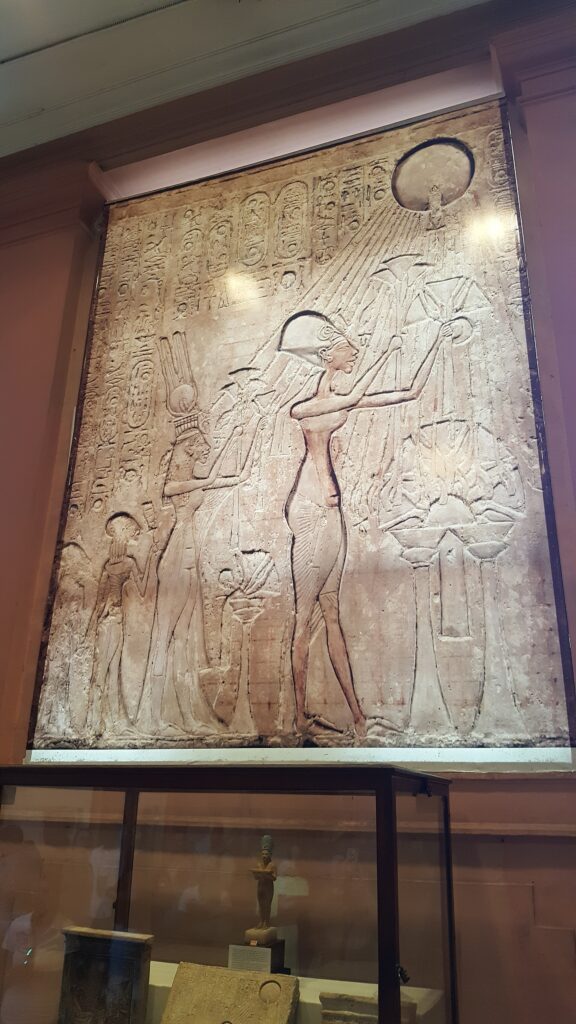
Kemet
The culture
The ancient Egyptians of the Nile Valley, from the First Cataract to the Mediterranean Delta
Where
Nile River Valley, Egypt, one of the world's longest continuously inhabited civilizations
Time depth
3100–30 BCE (3,000+ year continuous tradition), with Ma'at named in Egyptian texts from the Old Kingdom onward.
Living tradition
Partially: elements survive in Coptic Christianity, Nubian traditional practices, and Egyptian cultural identity. The Ma'at concept directly influenced Greek philosophy, Jewish ethics, Christian theology, and Islamic jurisprudence.
Language
Ancient Egyptian (hieroglyphic writing system). The Pyramid Texts (oldest religious texts in the world, ~2400 BCE), the Coffin Texts, and the Book of the Dead preserve the cosmological tradition in written form. Originally transmitted through temple ritual, royal ceremony, and priestly initiation.
The world of its stories
Cosmological Structure
The universe is maintained by Ma'at: the cosmic principle of truth, justice, order, harmony, balance, and morality. Ma'at is simultaneously a goddess (depicted with an ostrich feather on her head), a moral code (the 42 Negative Confessions), and the fundamental law of reality. The universe exists in a constant tension between Ma'at (order, right relationship) and Isfet (chaos, dissolution, entropy). Every human action either sustains Ma'at or feeds Isfet. The pharaoh's primary duty is to maintain Ma'at on Earth.
Creation
Ra (the Sun God) emerged from the primordial waters of Nun on a mound of earth (the first solid thing in existence). Ra created the other gods by naming them, the Word creates reality. The universe was created as an act of Ma'at, the right ordering of chaos into form. Each sunrise is a re-creation: Ra defeats Apophis (the chaos serpent) every night to rise again each morning.
Time
Cyclical, organized by Ra's daily crossing of the sky (day) and the underworld (night). The Nile's annual flood cycle. The agricultural calendar. The pharaoh's reign as a cyclical unit, each reign began with the restoration of Ma'at and was measured by how well Ma'at was maintained.
The Sacred
Ma'at itself, the principle of right order. The pharaoh as the divine representative of Ma'at on Earth. The temples as the houses of the gods on Earth, maintained through daily ritual. The Book of the Dead as the guide to navigating the afterlife correctly. The Nile as the source of all life.
Death / Afterlife
The most elaborate afterlife cosmology of the ancient world. After death the soul (consisting of multiple components: Ba, Ka, Akh, Ren, Sheut, Ib) undergoes the Weighing of the Heart (Psychostasia): the heart (seat of intelligence, emotion, and morality) is weighed against the feather of Ma'at by Anubis. Thoth records the result. If the heart is lighter than the feather (pure, free from wrongdoing), the deceased enters the Field of Reeds (Aaru), eternal paradise. If the heart is heavier, Ammit (crocodile-lion-hippo) devours it and the soul ceases to exist.
Balance-Seeking Architecture
An Architecture of Story
The Balance-Seeking Architecture GuideWhy Balance Architecture
Ma'at IS the balance architecture. The Weighing of the Heart (where the deceased's heart is weighed against the feather of Ma'at) is the literal expression of balance as the organizing principle of the cosmos. Every story in the Egyptian tradition is about the disruption and restoration of Ma'at: Osiris is killed (Ma'at disrupted), Isis reassembles him (restoration attempted), Osiris is resurrected as king of the dead (Ma'at restored at a higher level). Set disrupts (Isfet), Horus persists (Ma'at), divine council judges (balance restored).
Structural Logic
Stories in this tradition move toward restoration: a disruption of cosmic order is followed by efforts to restore it, culminating in a judgment or resolution that establishes a new and richer balance. The resolution restores the relationship between Ma'at and all things. Nobody is conquered. What was disrupted is taken up into a deeper order.
Structural Movement
Divine order established (Ma'at in full expression) → disruption by Isfet (chaos, violation, death, injustice) → the divine forces of restoration mobilize (Isis seeking Osiris, Horus contending with Set) → the ordeal of restoration (multiple trials, magic, persistence) → the heart's passage (the moral reckoning at the center of the cosmos) → judgment (the Weighing, the moment of cosmic truth) → Ma'at restored at a higher level (the new order incorporates what was learned through the disruption)
Key figures
Supreme Being / Creator
Ra: the Sun God, supreme deity of the New Kingdom. Atum, the self-created, the All. Amun, "the Hidden One," supreme deity of the Theban tradition. These are aspects of the same ultimate divine principle rather than competing deities.
Major Deities / Spirits
- Ma'at: goddess of truth, justice, cosmic order. Daughter of Ra. The feather she wears is the measure of the heart. Without Ma'at, creation dissolves.
- Thoth: god of wisdom, writing, knowledge, the moon, and magic. Divine scribe. Records the Weighing of the Heart. Keeper of the cosmic records.
- Osiris: god of the dead, resurrection, and the afterlife. First being to die and be resurrected. Judge of the dead. His resurrection is the model for all human hope of afterlife.
- Isis: goddess of magic, healing, motherhood. Wife of Osiris, mother of Horus. The supreme magical practitioner.
- Horus: sky god, divine kingship. Son of Osiris and Isis. The living pharaoh is Horus; the dead pharaoh becomes Osiris.
- Anubis: jackal-headed god of embalming and the dead. Oversees the Weighing of the Heart.
- Set: god of chaos, storms, and foreigners. The necessary force of disruption, more than simple evil. The antagonist of Horus.
- Sekhmet: lioness goddess of war, destruction, and medicine. The force that punishes Ma'at violations.
Trickster / Culture Hero
Thoth, the divine mediator who uses wisdom and magic to restore balance. In the Contendings of Horus and Set, Thoth advocates for Ma'at and ensures justice prevails.
Ancestor Figures
The pharaoh as divine ancestor, when a pharaoh dies, they become Osiris and join the divine council. All pharaohs are simultaneously Horus (living) and Osiris (dead) in the eternal cycle.
Who’s Who
Sacred elements
Sacred Objects
The feather of Ma'at (the measure of all hearts). The Ankh (life symbol). The Was scepter (power symbol). The djed pillar (stability, associated with Osiris). The Ib (heart, the seat of morality). Canopic jars (for preserving organs). Shabtis (servant figurines for the afterlife).
Sacred Places
Karnak and Luxor temples (Amun). The Great Pyramid at Giza (Khufu/Cheops). The Valley of the Kings (royal tombs). Abydos (sacred city of Osiris, site of the greatest Osiris mystery plays). The Sphinx. The sacred city of Heliopolis (Ra's primary sanctuary).
Sacred Practices
Daily temple ritual: priests performed three daily rituals of washing, dressing, and feeding the divine statue (the god's earthly body). The Opening of the Mouth ceremony: a funerary rite that restored the deceased's ability to speak, eat, and breathe in the afterlife. The Osiris mystery plays at Abydos, annual public performance of Osiris's death and resurrection. Mummification, preserving the body for the Ba soul's return.
Sacred Prohibitions
The 42 Negative Confessions, "I have not done evil to men. I have not made the beginning of each day laborious. I have not caused fear. I have not been deaf to the words of truth. I have not been the cause of weeping..." (42 declarations of right conduct made before the 42 divine judges in the Hall of Two Truths).
How their stories are told
How Stories Are Told
Through temple inscription (hieroglyphic texts covering every surface of temple walls). Through papyrus manuscripts (the Book of the Dead was a personal copy commissioned for each wealthy deceased). Through the Osiris mystery plays (public annual performance at Abydos). Through priestly initiation (deeper cosmological knowledge transmitted orally through temple hierarchy).
Who Tells Them
Priests (hem netjer, "servants of god"). Scribes. The pharaoh through royal inscriptions. The sem priest (who performs the Opening of the Mouth ceremony).
When They Are Told
During daily temple ritual. At festivals (the Beautiful Feast of the Valley, the Opet Festival). During funerary ceremonies. Through the eternal present of temple inscription, the texts on temple walls are permanently performing their content.
The Purpose of Story
To maintain Ma'at, to ensure the cosmos continues to function correctly. Temple ritual is not symbolic; it is cosmologically necessary. Without the daily temple rituals, the sun would not rise. The stories are operational, not merely explanatory.
Signature Story Types
Creation narratives (Ra's emergence), the Osiris cycle (death, dismemberment, resurrection: the central myth), the Contendings of Horus and Set (justice narrative), the solar barque's nightly passage through the underworld (Amduat), the afterlife texts (Book of the Dead).
How their stories are built, step by step
Ancient Egyptian terms with English translations
Ma'at Netjer (Divine Order Foundation)
Cultural meaning
The state of Ma'at, what cosmic right order looks like in this story's world. Every Egyptian story begins with Ma'at either fully expressed or already beginning to be disrupted. The reader must know what the balance looks like before understanding what its disruption means.
In brief
Ma'at is the foundation of the heavens, the support of the earth, and the guide for the righteous. Without Ma'at, chaos would swallow creation.
Cultural teaching
In Egyptian cosmology, the default state of the universe is Ma'at, order, harmony, right relationship. Chaos (Isfet) is the constant threat at the edge of order. Every sunrise is Ra defeating Apophis to restore Ma'at for another day. Stories begin by establishing what Ma'at looks like in this particular world.
Maaty (Truth & Justice Elements)
Cultural meaning
The specific principles of truth and justice that govern this world. The 42 Negative Confessions as the practical expression of Ma'at, the specific moral obligations each being carries.
In brief
Ma'at is done, every day: offerings that keep the order, and true speech that holds the world up.
Cultural teaching
Ma'at is not abstract. It is expressed through specific obligations. The 42 Negative Confessions name them precisely: do not cause suffering, do not deceive, do not steal, do not pollute the sacred waters, do not murder, do not speak falsely. Each being carries these obligations as the price of existing in a Ma'at-ordered cosmos.
Sebayt Ma'at (Moral Framework)
Cultural meaning
The practical moral teachings of the tradition, how Ma'at translates into daily life and difficult decisions. The Egyptian wisdom literature (Sebayt, "instructions") provides this level of practical guidance.
Cultural teaching
Egyptian wisdom literature (the Instructions of Ptahhotep, the Maxims of Any, the Teachings of Amenemope) translates cosmic Ma'at into practical daily conduct, how to speak to those above you, how to treat those below you, what to do when tempted to lie or steal or harm. The moral framework is always grounded in the cosmic, right conduct maintains the universe.
Isfet (Opposing Forces of Chaos)
Cultural meaning
The forces of chaos that threaten Ma'at: the cosmic entropy that works against order all the time. Apophis attacks Ra's solar barque every night. Set murders Osiris. Chaos is the constant pressure that Ma'at must resist.
In brief
Apophis is the enemy of Ra, the serpent of chaos that seeks to swallow the light. Every morning Ra defeats him. Every morning Ma'at is restored. But the battle never ends.
Cultural teaching
Isfet is not a permanent enemy to be finally defeated. It is the constant pressure against which Ma'at must be continuously maintained. This is why temple ritual must be performed daily. This is why the pharaoh must govern justly every day. Ma'at is a practice, kept up daily.
Duat Nebet (The Heart's Journey)
Cultural meaning
The protagonist's inner passage. The process by which their heart is refined, tested, and made ready for the Weighing. The Duat is the underworld, the domain of Osiris, the place where transformation happens. The heart's passage is the essential inner work.
In brief
The heart is the seat of truth, the place where Ma'at dwells within mortals. Let your heart be light as a feather, free from the weight of deception and cruelty.
Cultural teaching
In Egyptian thought the heart (Ib) is the seat of intelligence, morality and identity as well as feeling. When the heart is weighed against Ma'at's feather, every deed, every intention, every thought that the heart carried is present in its weight. The heart's passage (purification and refinement) is the essential work of life.
Sab Ib (The Weighing / Divine Judgment)
Cultural meaning
The heart is weighed against the feather of Ma'at. Anubis holds the scales. Thoth records. The 42 judges observe. The moment of cosmic truth, nothing can be hidden, no word can cover what the heart actually carries. This is the balance architecture at its most literal.
In brief
In the Hall of Two Truths, the heart reveals all. No words can hide what dwells within. Ma'at's feather knows the weight of every deed, every thought, every intention.
Cultural teaching
The Weighing of the Heart is the most democratic institution in the ancient world, pharaoh and peasant face the same feather, the same scales, the same judgment. The only currency that matters is right conduct. Power, wealth, and status count for nothing in the Hall of Two Truths.
Djet Ma'at (Eternal Harmony)
Cultural meaning
Ma'at is restored, but now at a deeper level, informed by everything the disruption and restoration revealed. The cosmic order continues, sustained by the struggle that has just occurred. Osiris died and was resurrected, but the Osiris who rules the dead is more powerful than the living Osiris was.
In brief
Restored Ma'at carries the memory of the disruption it came through.
Cultural teaching
The restored Ma'at is not the original Ma'at. It is a Ma'at enriched and deepened by having survived its disruption. Osiris as king of the dead is a position that could not have existed without his murder and resurrection. The restored balance always incorporates what was learned through the imbalance.
What makes this tradition distinct
What makes this tradition distinct
Egyptian Ma'at cosmology makes cosmic order a matter of daily upkeep. Temple ritual keeps the universe running. No other tradition treats human moral conduct as cosmologically necessary for the sun to rise. The Weighing of the Heart is the most egalitarian afterlife judgment in the ancient world: the only metric is right conduct, not status or wealth. The balance architecture is literal (the scales) and metaphysical (the relationship between Ma'at and Isfet as the fundamental organizing tension of reality).
Cultural warnings
Do not reduce Ma'at to a simple "good vs evil" framework. It is a cosmic principle of order and right relationship, not a moral battle between good people and bad people. Do not treat the afterlife judgment as punitive. It is diagnostic, revealing what the heart actually carried. Do not separate the political from the cosmic, in Egyptian thought, the pharaoh's just governance IS the maintenance of the cosmic order.
The stories
Each story with its source, where to read it and why it fits.
The StoryWorld in Full
What makes this tradition distinct
Egyptian Ma'at cosmology is unique in making cosmic order the literal daily maintenance of the universe — temple ritual is not symbolic but operationally necessary. No other tradition treats human moral conduct as cosmologically necessary for the sun to rise. The Weighing of the Heart is the most egalitarian afterlife judgment in the ancient world — the only metric is right conduct, not status or wealth. The balance architecture is literal (the scales) and metaphysical (the relationship between Ma'at and Isfet as the fundamental organizing tension of reality).