Mandé — Griot Performance
Griot Performance Pattern, West African Oral Tradition
The Mandé (Mandinka or Maninka, Bambara and Dyula) of the old Mali Empire: Mali, Guinea, Senegal, the Gambia, Burkina Faso
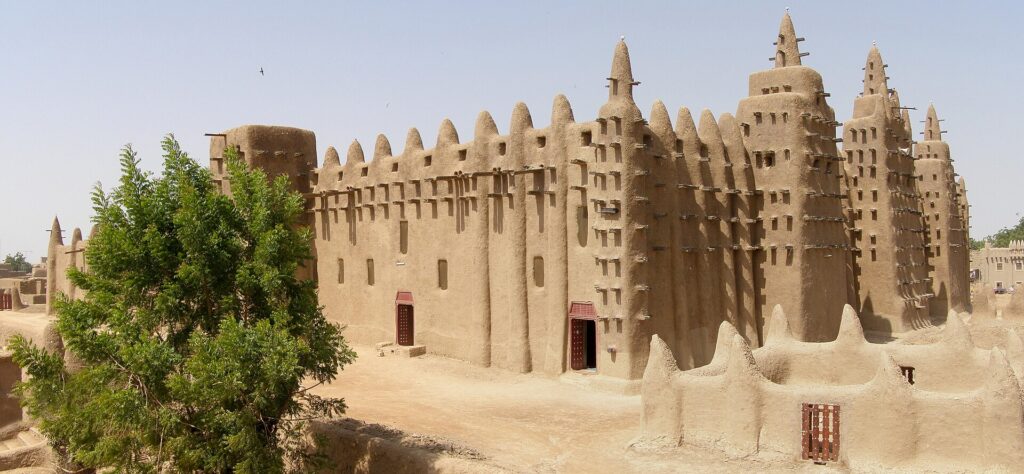
Mandé
The culture
The Mandé (Mandinka or Maninka, Bambara and Dyula) of the old Mali Empire: Mali, Guinea, Senegal, the Gambia, Burkina Faso
Where
Sahel and savannah zones of West Africa — the former territories of the Mali Empire (13th–17th century) and its successor states
Time depth
800+ years documented Jali/Griot tradition. Mali Empire founded 13th century CE. Oral traditions of the region considerably older.
Living tradition
Yes. UNESCO proclaimed the Sosso-Bala (balafon of the Griot of Niagassola) a Masterpiece of the Oral and Intangible Heritage of Humanity (2001). Griots perform across West Africa and far beyond it.
Language
Bambara, Mandinka (Maninka) and Dyula, the Manding languages of the Mande family. The kora (21-string harp-lute), balafon (xylophone), and djembe (drum) are the primary instruments. The Jali's voice, instrument, and genealogical knowledge are inseparable. Performance is simultaneously music, history, genealogy, and moral instruction.
The world of its stories
Cosmological Structure
The Mandé world is organized by nyama, the invisible energy or force that flows through all living things. Certain practitioners (the Jali/Griot, the blacksmith, the hunter) accumulate nyama through their specialized knowledge and practice. The world is also organized by the social hierarchy of the Manding: the horon (freeborn), the nyamakala (specialist castes including the Jali), and the jon (captives/servants). The Jali occupies a paradoxical position, low social status but enormous cultural power.
Creation
The Manden tradition does not have a single creation story comparable to Dogon or Yoruba cosmology. The founding narrative is historical-mythological: the founding of the Mali Empire by Sundiata Keita (c. 1217–1255 CE) is the central originary event, treated with the same weight as cosmological creation. The Manden Charter, proclaimed after Sundiata's victory, is understood as the founding of a moral universe as much as a political one.
Time
The griot holds time. Time for the Mandé is lived in the body. It lives in the griot's memory, in the genealogical chains that connect the present to the founding moment. Each performance is a re-membering, a literal re-assembling, of the community's time. When the griot performs, the past becomes present.
The Sacred
The nyama, the life force, is sacred and dangerous. The griot's ability to accumulate and direct nyama through music and words is both a gift and a responsibility. A griot's praise can elevate; a griot's satire can destroy. The kora itself holds nyama. The genealogical chains the griot preserves are sacred links between the living and the founding time.
Death / Afterlife
Distinguished community members must be properly mourned and their deeds must be added to the griot's repertoire. Through the griot, the dead go on living in the community's memory. To be forgotten by the griot is the final death. To be remembered in the griot's performance is a form of continued existence.
Why Spiral Architecture
The griot's performance spirals. It departs from a center (the patron's lineage, the present moment) into historical time, gathers meaning and weight, and returns to the center richer and heavier than when it left. Then it departs again, goes deeper, and returns again. Each return makes the center (the patron, the community, the present moment) more significant. The performance accumulates.
Structural Logic
The performance begins with the present (who is gathered, what is the occasion), spirals back into ancestral time to retrieve relevant precedents and genealogical connections, returns to the present with those precedents, spirals back again further or differently, returns again. The final return carries everything the spiral has gathered. The community at the end of the performance is weighted with everything the griot's spiral accumulated.
Structural Movement
Present moment (performance opening) → first spiral into ancestral time → return to present, enriched → second spiral (deeper, wider) → return, further enriched → crescendo (all spirals converge at their center) → sacred closing (what the community carries forward)
Key figures
Supreme Being / Creator
Allah (Islam arrived in the Mali Empire in the 11th century and has been integrated with traditional practice). But in the griot tradition, the supreme force is less theological than cosmological. It is the nyama that flows through everything.
Major Figures
- Sundiata Keita, the Lion King, founder of the Mali Empire. The central heroic figure of the Mandé tradition. His story is the griot's primary epic.
- Sogolon: Sundiata's mother, the "buffalo woman," carrier of the lineage's power. Often considered more powerful than the male heroes of the tradition.
- The Jali/Jaliba, the griot themselves. The hereditary keeper of memory. Every great family has its griot family that has served it for generations.
- Sumanguru Kante, the sorcerer-king antagonist of the Sundiata epic. A blacksmith (nyamakala) who accumulated too much nyama.
- Musa Molo, Almami Samory, later historical figures whose deeds the griots preserved.
Trickster / Culture Hero
The griot functions as a kind of institutionalized trickster, permitted to say what others cannot, to speak truth to power through the indirection of praise and genealogy. The griot's trickery is a social function, a role the community gives.
Ancestor Figures
The founding ancestors of each family are the griot's primary subject. The genealogical chain is the living connection between the present community and its ancestral source. The Jali speaks the ancestors into the room through their performance.
Who’s Who
Sacred elements
Sacred Objects
The kora, 21-string harp-lute, made from calabash and cowhide. The balafon: wooden-keyed xylophone, the oldest instrument of the tradition. The sosso-bala (the original balafon of Sumanguru Kante) held at Niagassola, Guinea, is UNESCO-recognized sacred heritage. The djembe drum.
Sacred Places
Niagassola (Guinea), home of the original balafon. Kangaba, the oldest existing Manding village, site of the Kamabolon sanctuary where the Sundiata epic is recited every seven years. Niani, the capital of the Mali Empire, now ruins.
Sacred Practices
The griot performance (jaliya): the full art of the Jali including music, genealogy, history, praise, and moral instruction. The Kamabolon ceremony at Kangaba, the Sundiata epic performed every seven years in the sacred house. Praise singing at life events, births, deaths, marriages, political ceremonies. The griot's right to demand gifts and the community's obligation to provide them.
Sacred Prohibitions
The griot must not be ignored or disrespected, to fail to acknowledge and recompense a griot's performance is a serious social transgression. The griot has the right to speak truth that others cannot; this right must be respected. The sacred objects (balafon, kora) must be handled with proper protocol.
How their stories are told
How Stories Are Told
In performance, music and words inseparable. The Jali plays kora or balafon, sings the genealogy and history, addresses the patron, calls on the ancestors, and builds to the performance's peak. The performance is circular: the griot returns to the patron's lineage, departs into historical narrative, returns to the patron's lineage, departs again. Each departure and return adds another layer.
Who Tells Them
The Jali, a hereditary specialist caste. Both men (Jali) and women (Jalimusolu) perform, though their repertoires differ. The Jalimusolu often perform at life ceremonies (weddings, naming ceremonies, funerals). The male Jali traditionally perform the great epics.
When They Are Told
At ceremonies marking life transitions (births, marriages, deaths). At political gatherings (when a chief or president receives visitors). At the Kamabolon ceremony (every seven years). At market days and community celebrations. On demand when a family wishes to hear its lineage praised.
The Purpose of Story
To preserve. To honor. To educate. To connect the present to its founding source. To speak truth through the indirection of praise. To make the ancestors present in the room. To give the community a mirror in which to see its own values and history.
Signature Story Types
The Sundiata epic (founding narrative), genealogical praise chains (lineage recitation), hunter's praise songs (donso donkili), historical chronicles of successive rulers, moral instruction through historical example.
How their stories are built, step by step
Bambara/Manding terms with English translations, preserving the linguistic register of the tradition
Kuma neemu (Performance Type)
Cultural meaning
The griot does not simply begin. They establish the context and purpose of this performance. What is the occasion? What does the community or patron need? What type of jaliya will serve this moment?
In brief
One word alone is not sweet; but one word can be bitter. The griot knows that every word carries the weight of generations.
Cultural teaching
The Jali's repertoire is vast, genealogical recitation, epic narrative, hunter's praise, political counsel, ceremonial song. Each type requires a different approach. Establishing which type is needed is the first act of wisdom.
Dugukolonin (Sacred Circle)
Cultural meaning
The sacred space of performance is established, the community gathers, the ancestors are invited, the kora or balafon begins. The circle is formed. What happened outside this circle is now held at distance. What happens inside it is sacred.
Cultural teaching
The griot performance creates a temporary sacred space, a container for memory and truth. The community enters this space by gathering. The ancestors enter through the griot's invocation. The performance can only happen when the circle is complete.
Donkili ngoni (Musical Foundation)
Cultural meaning
The music establishes the emotional and spiritual foundation before words begin. The kora's first notes set the tone, joy or mourning, celebration or warning, intimacy or grandeur. The community hears what kind of truth is coming before a word is spoken.
In brief
The kora speaks what words cannot hold. Before the story begins, the strings have already told you how to listen.
Cultural teaching
In jaliya, music is not accompaniment. It is the primary medium. The words ride on the music. The emotional truth of the story is carried in the rhythm and melody first. A listener who cannot understand the words still understands the griot's music.
Kumakan jamana (Call and Response)
Cultural meaning
The griot calls, the community responds. The performance is a dialogue between the griot and the community. The community's responses affirm, encourage, correct, and deepen the performance. The story lives in the exchange.
In brief
The father's village does not perish, and his father's village does not perish. Lineage is eternal, and it is affirmed when the community speaks it together.
Cultural teaching
In jaliya, silence from the audience means the griot has lost the connection. The call-and-response keeps the performance alive. The community is not receiving the story. They are co-creating it. Their responses shape what the griot says next.
Fadenw ka Tarikhi (Ancestral Chronicles)
Cultural meaning
The deep genealogy begins, the griot traces the lineage back through generations, naming each ancestor, their deeds, their connections. The ancestors arrive in the room as they are named. By the time the lineage chain reaches the present, the patron is standing in a long line of greatness.
In brief
The griot is a living library. Every name they speak is a book. Every genealogy they recite is a history of a people.
Cultural teaching
For the Mandé, lineage is not vanity. It is orientation. Knowing where you come from tells you who you are and what you owe. The ancestral chronicle connects the present moment to its founding source. Without the griot, this connection dissolves within two or three generations.
Kalan ni Donn (Teaching and Wisdom)
Cultural meaning
The teaching embedded in the chronicle. The griot does not simply recite history. They extract from it the wisdom the current moment needs. What did the ancestors do when they faced what this community is facing? What does their example teach?
Cultural teaching
In jaliya, the historical chronicle is always in service of the present moment. The griot chooses which ancestors to invoke, which deeds to emphasize, which precedents to establish, based on what the community needs to understand. History is a tool for living, not a museum.
Kunnafonidila (The Crescendo)
Cultural meaning
The performance reaches its peak, the griot's full skill, speed, and power at maximum expression. The ancestral chain, the teaching, the music, the call-and-response. All converge in a single moment of maximum weight and feeling. The community is fully inside the sacred circle now.
In brief
When the hunter speaks, all the wise ones speak. At the performance peak, all voices unite in truth.
Cultural teaching
The crescendo in jaliya is physical, the griot's voice rises, the kora's pace quickens, the praise names tumble faster. The patron may begin to weep or dance. Community members may call out gifts. The sacred circle is at maximum intensity.
Dusukunnataw (Sacred Closing)
Cultural meaning
The performance closes in a way that honors what has been shared. The ancestors are thanked and released. The patron is blessed. The community is sent back to ordinary time carrying what the sacred circle contained.
In brief
It is good to repeat a wise word twice. The griot's wisdom echoes long after the performance ends.
Cultural teaching
The closing is as important as the opening. The griot must properly release the sacred space, thank the ancestors, honor the patron, bless the community. An improperly closed performance leaves the sacred energy unresolved. The community carries the griot's words forward; the closing determines how they will carry them.
What makes this tradition distinct
What makes this tradition distinct
The griot tradition is the only narrative tradition in the world where the storyteller is a hereditary specialist caste with both low social status and extraordinary cultural power. The paradox, the griot serves but controls; the griot is outside the power hierarchy but determines how history is remembered, is unique. The performance's spiral structure (depart from the present into ancestral time, return enriched, depart again) is cosmological as well as formal: the griot calls the ancestors out of the past and into the room.
Cultural warnings
Keep the griot's spiral, the performance is an accumulation, each return adding to what came before. Do not separate the music from the story; in jaliya they are one. Do not reduce the patron-griot relationship to employer-employee. It is a sacred hereditary covenant between families.
The stories
Each story with its source, where to read it and why it fits.
The StoryWorld in Full
StoryWorld · Sahel and savannah zones of West Africa — the former territories of the Mali Empire (13th–17th century) and its successor states
MANDÉ / GRIOT — Performance Pattern
Mandinka, Wolof, Fula, Bambara, Dyula, Soninke — Mali, Guinea, Senegal, Gambia, Burkina Faso
Spiral architecture
The world as they see it
Cosmological Structure. The Mandé world is organized by nyama — the invisible energy or force that flows through all living things. Certain practitioners (the Jali/Griot, the blacksmith, the hunter) accumulate nyama through their specialized knowledge and practice. The world is also organized by the social hierarchy of the Manding — the horon (freeborn), the nyamakala (specialist castes including the Jali), and the jon (captives/servants). The Jali occupies a paradoxical position — low social status but enormous cultural power.
Creation. The Manden tradition does not have a single creation story comparable to Dogon or Yoruba cosmology. The founding narrative is historical-mythological: the founding of the Mali Empire by Sundiata Keita (c. 1217–1255 CE) is the central originary event, treated with the same weight as cosmological creation. The Manden Charter — proclaimed after Sundiata's victory — is understood as the founding of a moral universe as much as a political one.
Time. The griot holds time. Time for the Mandé is not abstract but embodied — it lives in the griot's memory, in the genealogical chains that connect the present to the founding moment. Each performance is a re-membering — a literal re-assembling — of the community's time. When the griot performs, the past becomes present.
The Sacred. The nyama — the life force — is sacred and dangerous. The griot's ability to accumulate and direct nyama through music and words is both a gift and a responsibility. A griot's praise can elevate; a griot's satire can destroy. The kora itself holds nyama. The genealogical chains the griot preserves are sacred links between the living and the founding time.
Death / Afterlife. Distinguished community members must be properly mourned and their deeds must be added to the griot's repertoire. The griot is the mechanism through which the dead continue to live in community memory. To be forgotten by the griot is the final death. To be remembered in the griot's performance is a form of continued existence.
The powers and figures
Supreme Being / Creator
Major Figures
Sundiata Keita — the Lion King, founder of the Mali Empire. The central heroic figure of the Mandé tradition. His story is the griot's primary epic.
Sogolon — Sundiata's mother, the "buffalo woman," carrier of the lineage's power. Often considered more powerful than the male heroes of the tradition.
The Jali/Jaliba — the griot themselves. The hereditary keeper of memory. Every great family has its griot family that has served it for generations.
Sumanguru Kante — the sorcerer-king antagonist of the Sundiata epic. A blacksmith (nyamakala) who accumulated too much nyama.
Musa Molo, Almami Samory — later historical figures whose deeds the griots preserved.
Trickster / Culture Hero
The griot functions as a kind of institutionalized trickster — permitted to say what others cannot, to speak truth to power through the indirection of praise and genealogy. The griot is not a trickster by nature but by social function.
Ancestor Figures
Sacred things and places
Sacred Objects. The kora — 21-string harp-lute, made from calabash and cowhide. The balafon — wooden-keyed xylophone, the oldest instrument of the tradition. The sosso-bala (the original balafon of Sumanguru Kante) held at Niagassola, Guinea, is UNESCO-recognized sacred heritage. The djembe drum.
Sacred Places. Niagassola (Guinea) — home of the original balafon. Kangaba — the oldest existing Manding village, site of the Kamabolon sanctuary where the Sundiata epic is recited every seven years. Niani — the capital of the Mali Empire, now ruins.
Sacred Practices. The griot performance (jaliya) — the full art of the Jali including music, genealogy, history, praise, and moral instruction. The Kamabolon ceremony at Kangaba — the Sundiata epic performed every seven years in the sacred house. Praise singing at life events — births, deaths, marriages, political ceremonies. The griot's right to demand gifts and the community's obligation to provide them.
Sacred Prohibitions. The griot must not be ignored or disrespected — to fail to acknowledge and recompense a griot's performance is a serious social transgression. The griot has the right to speak truth that others cannot; this right must be respected. The sacred objects (balafon, kora) must be handled with proper protocol.
How the stories are told
How Stories Are Told. In performance — music and words inseparable. The Jali plays kora or balafon, sings the genealogy and history, addresses the patron, calls on the ancestors, and builds to the performance's peak. The performance is circular — the griot returns to the patron's lineage, departs into historical narrative, returns to the patron's lineage, departs again. Each departure and return adds another layer.
Who Tells Them. The Jali — a hereditary specialist caste. Both men (Jali) and women (Jalimusolu) perform, though their repertoires differ. The Jalimusolu often perform at life ceremonies (weddings, naming ceremonies, funerals). The male Jali traditionally perform the great epics.
When They Are Told. At ceremonies marking life transitions (births, marriages, deaths). At political gatherings (when a chief or president receives visitors). At the Kamabolon ceremony (every seven years). At market days and community celebrations. On demand when a family wishes to hear its lineage praised.
Signature Story Types. The Sundiata epic (founding narrative), genealogical praise chains (lineage recitation), hunter's praise songs (donso donkili), historical chronicles of successive rulers, moral instruction through historical example.
The stories
The Sundiata Epic
Sundiata: An Epic of Old Mali
Source Djibril Tamsir Niane's transcription from Mamadou Kouyaté's performance (1960, French; English translation 1965)
" Summary and excerpts at Sacred Texts Archive.
Why it fits The definitive Mandé spiral narrative — the griot departs from the present into Sundiata's lineage, spirals through exile, allies, battles, and return, each spiral adding weight to the founding moment of the Mali Empire.
The Manden Charter
Source Oral tradition preserved by griots; UNESCO documented version from the griots of Niagassola (2009)
"
Why it fits The charter is the griot's closing — the sacred closing that sends the community back into ordinary life with the principles that will govern it. The full spiral completed: the performance of the war epic closes with the proclamation of the moral universe.
The Origin of the Balafon
Source Mandé oral tradition — the story of how Bala Faseke (Sundiata's griot) stole Sumanguru's sacred balafon (the sosso-bala) and brought it to the Mandé people
"
Why it fits Spiral structure — the griot spirals through the contest between Sundiata and Sumanguru, returns with the sacred instrument that becomes the foundation of the entire Jali tradition. The story explains why the griot has the power they have.
How their stories move
The griot's performance spirals — it departs from a center (the patron's lineage, the present moment) into historical time, gathers meaning and weight, and returns to the center richer and heavier than when it left. Then it departs again, goes deeper, and returns again. Each return makes the center — the patron, the community, the present moment — more significant. The performance accumulates rather than progresses.
This culture
People · Mandinka, Wolof, Fula, Bambara, Dyula, Soninke — Mali, Guinea, Senegal, Gambia, Burkina Faso
Place · Sahel and savannah zones of West Africa — the former territories of the Mali Empire (13th–17th century) and its successor states
Depth · 800+ years documented Jali/Griot tradition. Mali Empire founded 13th century CE. Oral traditions of the region considerably older.
Living · Yes — UNESCO proclaimed the Sosso-Bala (balafon of the Griot of Niagassola) a Masterpiece of the Oral and Intangible Heritage of Humanity (2001). Griots perform across West Africa and the global diaspora.
Spiral worlds
AMAZONIAN — Shamanic Vision Journey
CELTIC — The Spiral
FOREST PEOPLES — Mbuti / Baka
KOREAN PANSORI — Joseon Performance
NILOTIC — Dinka / Nuer / Maasai
SAN / KHOISAN — Bushmen Click Stories
SUFI / RUMI — Masnavi
The Guide
GriotsWell StoryWorlds · Guide
Griot Performance Pattern — West African Oral Tradition
Spiral architecture · 8 steps
How it moves
- Kuma neemu (The Performance Opening)
- Dugukolonin (Sacred Circle)
- Donkili ngoni (Musical Foundation)
- Kumakan jamana (Call and Response)
- Fadenw ka Tarikhi (Ancestral Chronicles)
- Kalan ni Donn (Teaching and Wisdom)
- Kunnafonidila (The Crescendo)
- Dusukunnataw (Sacred Closing)
Present moment (performance opening) → first spiral into ancestral time → return to present, enriched → second spiral (deeper, wider) → return, further enriched → crescendo (all spirals converge at their center) → sacred closing (what the community carries forward)
Why it is told this way
The performance begins with the present (who is gathered, what is the occasion), spirals back into ancestral time to retrieve relevant precedents and genealogical connections, returns to the present with those precedents, spirals back again further or differently, returns again. The final return carries everything the spiral has gathered. The community at the end of the performance is weighted with everything the griot's spiral accumulated.
To preserve. To honor. To educate.
What this StoryWorld asks
- Who is the griot of your story — the one who holds the lineage and can make the ancestors present?
- What genealogical chain stands behind your protagonist that they may not be fully aware of?
- How does your story accumulate weight with each spiral return — each pass through the ancestral chronicle adding more to the present moment?
- Where is the sacred circle — the temporary container where normal social rules are suspended and truth can be spoken?
- What gift does the community owe the story for what it has given them?
At a glance
People Mandinka, Wolof, Fula, Bambara, Dyula, Soninke — Mali, Guinea, Senegal, Gambia, Burkina Faso
Region Sahel and savannah zones of West Africa — the former territories of the Mali Empire (13th–17th century) and its successor states
Time depth 800+ years documented Jali/Griot tradition. Mali Empire founded 13th century CE.
Living tradition Yes — UNESCO proclaimed the Sosso-Bala (balafon of the Griot of Niagassola) a Masterpiece of the Oral and Intangible Heritage of Humanity (2001). Griots perform across West Africa and the global diaspora.
How it is carried Bambara, Mandinka, Fula, Wolof — Manding language family. The kora (21-string harp-lute), balafon (xylophone), and djembe (drum) are the primary instruments.
“Ko kelen ma diya, a ka kelen ma nyi.”— One word alone is not sweet; but one word can be bitter. The griot knows that every word carries the weight of generatio
Keep faith with it
Do not linearize the griot's spiral — the performance is not a progression but an accumulation. Do not separate the music from the story — in jaliya they are one. Do not reduce the patron-griot relationship to employer-employee — it is a sacred hereditary covenant between families.