
◎Web Architecture
An Architecture of Story
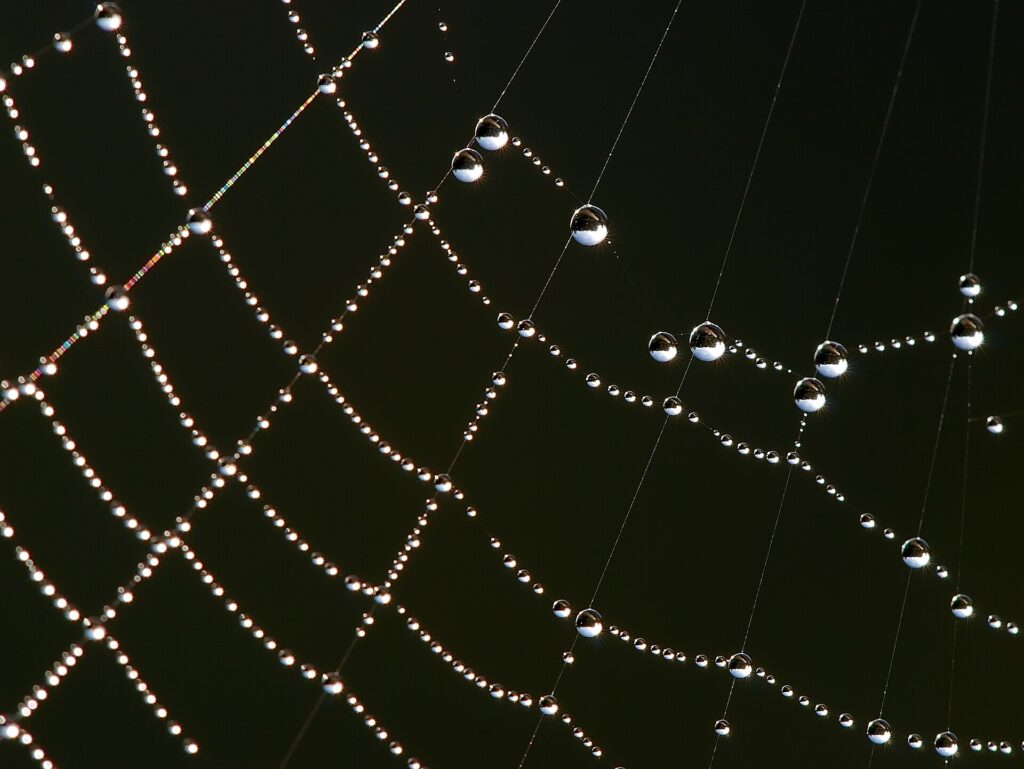
A world already woven: every member bound to every other by gift and obligation, and something living always moving along the threads. A strand fails, the failure travels the whole web, the whole is read, and the web is rewoven stronger, held by a practice and a telling for those who come after.
The web is the story. Every member of it (a person, an ancestor, a river, an animal, a power, the land) holds a thread, gives something and is owed something. When one thread is dropped, seized or torn, the whole web feels it. The story moves through reading the whole pattern to the reweaving that leaves the web wider and stronger than it was.
What Is an Architecture of Story?
An Architecture of Story is the shape of how a plot moves: not what happens, but the engineering logic of how it is built. It is not a genre, a theme or a style. It is the load-bearing shape underneath a plot, and it was found in the stories of the world's cultures, built up from the bottom.
Everything begins with a culture's own data: their stories themselves, their mythology, their nations and lineages, their history, their cosmology and the way they keep time. Each GriotsWell World Cultural (WC) StoryWorld is built from one culture's data and from no one else's. Lay the data of the StoryWorlds side by side and shapes show. Cultures on different continents, with no contact, move their stories the same way. Those shared shapes are the Architectures of Story.
Two stories from cultures who never met can answer the same four questions the same way. When they do, they share an architecture, however different their gods, landscapes and words.
- How does time move?
- Who is the protagonist?
- How does meaning build?
- What is resolution?
The shape of Web
Everything moves at once along the threads. A dropped offering, a withheld gift or a grief left untended pulls on every connected member at the same time. The web also holds the ancestors and the unborn in the same present: the Ori chosen before birth, whakapapa recited back to Te Kore, every decision weighed for the seventh generation.
The protagonist is the whole web and every member of it: people, and also ancestors, the land, rivers, living things and the powers. Each member has a gift and a duty. The smallest member often holds the thread the story turns on.
Meaning builds as the threads show themselves. A failure travels the web, and members who did nothing wrong are pulled with those who did. From inside it looks like many troubles. Meaning arrives when someone reads the whole and sees one knot.
The web is rewoven, wider and stronger than before. The one who tore it is given a place in it, what cannot be restored is kept in memory, and a practice and a telling hold the pattern for those who come after.
Nine movements, one thread
The thread passes through each movement and ends further out than it began: the web is wider at the close. Movement 4, where a strand fails, is marked in red.
Where the steps lead
Every step of an Architecture of Story leads to one goal: your story, made in that architecture. Each movement you work through becomes part of the plot, with your own people, places and events, and together the steps give you the whole plot blueprint, ready to write from.
It is a restructuring, not a retelling. Bring a story you know and the steps rebuild it in the architecture, moving, changing and adding events wherever the shape needs them. Bring your own idea and the steps build it from the start. Either way the blueprint is the plot, and the story is written from it.
That is the purpose of the work: to make stories, and to see one story made in different architectures, or in a culture's own WC StoryWorld.
A world already woven
In Web, the world comes into being already related, and it is made by many. The birds caught Sky Woman, the turtle gave his back, the muskrat died bringing up the mud. The children of Rangi and Papa pushed apart the dark so the light could come in. Seventeen Orisha were sent to set the earth in order, and one of them was Osun. Every member of that world has a gift and a duty: the waters quench thirst, the canoe-builder makes the fleet fast, the messenger carries words between people and the powers. And something is always moving along the threads: stories, wisdom, armshells and necklaces, ashe, mana, messages, the breath shared in a greeting.
Trouble enters when a thread is dropped, seized or torn. An offering at the crossroads is forgotten in prosperity. A woman is left out of every council. A brother is killed for a spell. Wisdom is hoarded in a pot, a guest is starved at the table, grief darkens a mind until it becomes war. The failure never stays where it started. It travels: every road closes at once, the rains stop, no one can plant in safety, the canoe will not rise. Those inside the web take it for many troubles. The turn comes when someone reads the whole (the diviner's Odu, Olodumare asking 'Where is Osun?', a child's word to the spider, the great gathering where every obligation is named) and sees one knot.
Reweaving is relational work: an offering that costs something real, a condolence that clears the eyes, ears and throat, a truth told between two rightful claims, a debt repaid in its own coin, an excluded member brought into every council. The one who tore the web is given a place in it: Tadodaho becomes keeper of the council fire, Sango is given the sky. Some losses are kept rather than undone. The canoes no longer fly, Rangi's tears still fall as rain, death has entered the world. The web that results is wider and stronger than before. It is held by a practice kept from then on, and by the telling itself, which passes along the threads to those not yet born.
How a Web story moves
The Web Before the Trouble
A Web story opens on a world that is already whole and already related. It was made by many hands, and it holds its ancestors and its unborn in the same present.
- Sky Woman fell from the Sky World. The geese and swans caught her on their wings, Great Turtle offered his back, and the little muskrat came up dead with a pawful of mud. She spread it and walked in a circle, singing, and the earth grew.
- Olodumare sent seventeen Orisha to set the world in order, and Osun was one of them.
- In the dark between Rangi and Papa the relationships of the world were all present (sea and forest, wind and food, people) but could not yet open into a world.
- Before his trouble, Adeolu's web was strong: twenty years of trade, the crossroads fed, the poor at the market gate given to, debts paid on time.
The web is the subject. It is made of real obligations: who feeds whom, who carries what, who must be greeted first. It was usually made by many hands. Sky Woman's earth needed the birds, the turtle and the muskrat; the Kula ring needs every island. And it reaches across time, back to the ancestors and forward to the unborn.
The Members and Their Gifts
Every member of the web holds a thread: a gift the web needs from them and a duty they owe. The members are people, and also ancestors, rivers, animals, powers and the land itself.
- The Thanksgiving Address greets each member of creation in turn: the waters, the plants, the animals, the winds, the Thunderers, the sun, Grandmother Moon, the stars. After each one the people agree: now our minds are one.
- Everything has whakapapa. The trees are Tāne's children and the fish are Tangaroa's, so to cut a tree is to fell a child of Tāne.
- Eshu has his share at the crossroads before any journey: palm oil, a little gin, a kola nut.
- Anansi's wife Aso, who knew the habits of every creature near the compound, planned the captures, and the tellers name her so that she is not forgotten.
A member can be a person, an ancestor, a river, a messenger, a creditor, a child, the land itself. Each one has a gift (what the web needs from them) and a duty (what they owe). The Thanksgiving Address greets each member in turn: the waters, the plants, the animals, the winds, the sun. Every member is greeted because every member matters. The smallest member often holds the thread the story turns on, like the child who teaches Anansi or the muskrat with the mud.
What Moves Along the Threads
Something living travels the web, and the web is alive because it moves. Whatever is kept moving strengthens the web; whatever is held back starves it.
- The stories were locked in Nyame's golden box until Anansi brought them down, and from then on every village could tell them.
- Kula armshells and necklaces circle the islands in opposite directions, each carrying the history of every hand it has passed through.
- Ashe flowed through Adeolu's life like water through a channel that has not been blocked.
- Mana flows from the atua through the ancestors to the living, and the hongi shares the breath of life at every greeting.
The web is alive because something circulates. Kula valuables carry the history of every hand. Stories came down from Nyame's box to every village. Ashe flows through every rightly kept relation, and mana flows from the ancestors to the living. Its health is in the movement: what is kept moving strengthens the web, and what is held back starves it. Name, too, the practice that keeps it moving: the morning offering, the greeting, the recitation, the night telling.
The Strand That Fails
The trouble begins inside the web, when a thread is dropped, seized or torn. It is rarely wickedness. More often it is forgetting in good times, envy, haste or grief, and sometimes the cut has to happen.
- Adeolu came home prosperous and forgot to feed Eshu's crossroads. Season after season he set out on the road without giving the guardian his due.
- The male Orisha met, made plans and made decisions, and left Osun out of every meeting.
- Mokatuboda's brothers killed him for the flying-canoe magic, believing they had learned it all by watching.
- Anansi tried to keep all the world's wisdom in one pot, and starved his guest Turtle at the table.
- Tāne pushed his parents apart so the light could come in. It was the separation that made the world possible, and it was a wound that never fully heals.
The trouble starts inside the web. It is often understandable. Adeolu forgot the crossroads because he came home prosperous. The brothers wanted the flying magic. The Orisha simply planned without Osun. Grief, not wickedness, darkened Hiawatha's mind. Sometimes the tear is necessary: Tāne had to part his parents for the light to come in, and the wound never fully healed. Know which kind your story carries.
The Pull Through the Web
The failure never stays where it started. It travels along every thread connected to it, and members who did nothing wrong are pulled with those who did. From inside, it looks like many troubles.
- Adeolu's carriers fell sick, a bridge washed out, buyers went elsewhere, his brother stopped answering, his mother's illness worsened, and even his words were misheard. When the messenger is not honoured, messages do not arrive.
- With Osun shut out, the rains stopped, the rivers dried, the crops failed and no children were born.
- Feud spread among the Five Nations until no one could hunt or plant in safety.
- The brothers' canoe would not rise, and they had to paddle, slow and heavy, like everyone else.
- At the darkest point Hiawatha sat alone by his fire with the strings of shell, and no one came to console him.
In Web, damage propagates. When Eshu went unhonoured, every road that ran through him closed at once: trade, kinship, health, even words. When Osun was left out, the rains stopped. Feud spread until no one could plant in safety. Track the pull member by member. Those inside the web usually take it for many separate troubles. That misreading is part of the story, and it is often where the darkest point comes.
Reading the Whole
The turn comes when someone sees the whole web at once, and with it the one knot beneath the many troubles.
- Baba Fakunle cast the opele and recognised the Odu. Adeolu's troubles were not many troubles but one: a blocked crossroads.
- Olodumare asked a single question: 'Where is Osun?'
- Anansi's son Ntikuma called up from the foot of the tree: 'Father, why don't you tie the pot to your back?'
- Laid side by side before Nyame's stool, the four captures showed a pattern no single one could: each creature was undone by the very quality that made it strong.
- Whakapapa recited back through the ancestors and the canoes to Rangi and Papa locates every person and every thing in the whole.
Seeing the pattern is the turning point. The diviner casts and recognises the Odu, and the querent hears his own life described. Olodumare asks one question: 'Where is Osun?' A child tells the spider how to climb. The great gathering names every obligation before everyone. The four captures laid side by side show a pattern no single thread could. Decide who reads, by what means, and what the reading names that no one saw before.
Between True Claims
Knowing the remedy is not the same as reaching it. Two real obligations pull against each other, and the way through has to honour both: truth told face to face, condolence, time asked, new terms.
- Adeolu's finest cloth was owed both to Eshu and to the chief of Ilorin, and the chief was no villain. Adeolu went to him in person and told him plainly that he had neglected the crossroads. The chief, who also honours Eshu, gave new terms and added a gift of his own toward the offering.
- The Orisha feared that Osun would always hold her power over them, and still they had to bring her back.
- The people of Oyo had to honour the king who had brought disaster on them without pretending the disaster had not happened.
Adeolu's finest cloth was owed both to Eshu and to the chief of Ilorin, and the chief was no villain. The Orisha feared what Osun's return would cost them. Web's obstruction is a crossing of rightful claims. It is passed by truth told face to face, by condolence, by asking for time, by a new agreement, never by force.
The Reweaving
The web is repaired by relational work that costs something real. The one who tore it is given a place in it, and what cannot be restored is kept inside the pattern as memory.
- The ebo called for the finest cloth in the caravan, not the leftovers.
- The Peacemaker took up the strings of shell and spoke the words of condolence, wiping the tears from Hiawatha's eyes, clearing his ears and clearing his throat.
- Hiawatha combed the snakes from Tadodaho's hair. Tadodaho was not destroyed but healed, and became the firekeeper of the Confederacy.
- 'Oba ko so', the king did not hang: Sango was given the sky, and the storms calmed.
- Turtle repaid Anansi in his own coin, and the custom of hospitality stands.
- The canoes never flew again. The three sisters became stones along the Kula route, and voyagers still make offerings as they pass. Rangi's tears still fall as rain.
The remedy costs something real: the best cloth, not the leftovers. It reaches the neglected member directly: the shrine fed, the council opened to Osun, the debt repaid in its own coin. The one who tore the web is not expelled. Tadodaho became keeper of the fire, Sango was given the sky, and the four creatures returned to the forest as characters in the stories they were taken to buy. Some things stay lost and are honoured as loss: the canoes no longer fly, and voyagers still make offerings at the stone sisters.
The Web Held Forward
The web ends wider and stronger than it began. A practice keeps it from then on, and the telling itself becomes a thread, carried to those not yet born.
- The Five Nations became one longhouse, stronger than any of the single houses were before. The Tree of Peace sends its roots in four directions so any nation can follow them to its shade, and every decision is weighed for the seventh generation.
- Adeolu built a larger shrine and thought of sending his youngest son to learn Ifá. The verse is chanted for every person who comes to the mat with every road blocked at once.
- Since the pot broke, wisdom lives in every house, and every plan is a web of many minds.
- A Māori introduction, the pepeha, names one's mountain, river, canoe and ancestor: the whole web traced in a single breath, and handed on in every greeting.
- Every Anansesem opens with 'We do not really mean, we do not really mean, that what we are about to say is true', and the listeners answer 'So!'
The longhouse is stronger than the separate houses were. Adeolu builds a larger shrine and sends his son to learn Ifá. Wisdom now lives in every house. The ending shows the new state of the whole web and the practice that keeps it. Then it hands the story itself along the threads: chanted for the next querent, told on the marae, opened with 'We do not really mean...', held for the seventh generation.
When Web holds, and when it tears
What makes it work
Name every member of the web, with a real gift and a real duty, and count the land, the ancestors, the animals and the powers among them. The failure should be understandable (forgetting in good times, envy, grief, pride in a new power), and its effects should be traceable, thread by thread, to members who did nothing wrong. The reading names one cause beneath many troubles. The remedy costs something real and brings the parties face to face, and the web that results is visibly different: wider, holding a new practice, keeping what was lost in memory.
What breaks it
The usual failure is a web that is only a mood: everyone is close, nobody owes anyone anything, so nothing can be dropped. An outside villain is the second, because if the trouble comes from beyond the web there is nothing to reweave. Watch, too, for a failure that touches only the one who caused it, for one member's arc swallowing everyone else, for a cheap remedy or a single blow of force, and for an ending that puts the old web back as if nothing happened.
The cultures' own ways of telling
Each WC StoryWorld under Web is one culture's own way of telling. The Haudenosaunee, the Yoruba, the Akan, the Trobriand Kula islanders and Māori whakapapa all tell a world held together by obligation.
Nyame kept all the stories in a golden box, and the world had none to tell. Anansi bought them with four captures, each creature undone by the very quality that made it strong, in a plan made with his wife Aso. Then he brought the stories down so that every village could tell them. When he later tried to hoard all wisdom in a pot, it broke and scattered into every house. When he starved his guest, Turtle collected the debt in the same coin. What belongs to everyone must keep moving, and the night telling, with the listeners answering, keeps it moving, across the Atlantic and back.
Anansesem are night stories, told communally, with the listeners answering "So!" throughout. Anansi's overreach matters as much as his cleverness, and the consequences of his tricks show the community something it needed to know.
Adeolu forgot the offering at Eshu's crossroads, and every road in his life closed at once: his trade, his mother's health, his brother, the peace of his house. All of it travelled by the messenger. The Ifá reading named one knot beneath many troubles. The ebo cost his finest cloth, and between his promise to the chief and his debt to Eshu he found the way by telling the truth. The road reopened wider, with a larger shrine and a son sent to learn Ifá. When the Orisha left Osun out of every council, the rains stopped and nothing they made could live until she was brought in. Here story is diagnosis and remedy at once.
The Orisha are forces, aspects of divine energy present in river, iron, thunder and crossroads. The spiritual, the political and the medical are one domain, and a story closes with alignment restored and obligation fulfilled.
The world was made by many: the birds, the turtle, the muskrat who died bringing up the mud. The Thanksgiving Address greets every member of creation until the people's minds are one. When feud tore the nations, grief darkened Hiawatha's mind until the Peacemaker condoled him with strings of shell, clearing his eyes, ears and throat. Tadodaho, at the centre of the tearing, was healed rather than destroyed and made keeper of the council fire. The Great Law bound five nations into one longhouse, stronger than any house before it, with every decision weighed for the seventh generation.
The Great Law is a living constitution that still governs the Confederacy. The Confederacy is a union of distinct nations (Mohawk, Oneida, Onondaga, Cayuga, Seneca and Tuscarora), and Haudenosaunee is their own name. Grief and condolence come before the reweaving.
The Kula ring binds islands across open water. Armshells and necklaces circle in opposite directions, each carrying the history of every hand it has passed through. When Mokatuboda's brothers killed him for the magic of the flying canoe, they had learned only half the spell. The canoes never flew again, and his three sisters became the stones that still stand along the Kula route, where voyagers make offerings as they pass. One act of envy changed the whole ring, and the loss is kept in the web, remembered at every passing.
Melanesia's hundreds of distinct cultures each hold their own traditions, and much ceremonial knowledge belongs to initiated custodians. This architecture is drawn from the Trobriand tellings.
Everything has whakapapa. Forest, sea, food and people all descend from Rangi and Papa through their children, so to know anything is to know its connections. The web opened through a separation that let in the light and left a wound that never heals: Rangi's tears are still the rain. Māui's deeds extended it, slowing the sun, fishing up the land and winning fire, and his death let death enter it. A person's identity is their place in the web, and mana flows through it by right action.
Whakapapa is the sacred web relating all of existence, more than a family tree. The separation of Rangi and Papa is grievous as well as necessary. Tapu, mana and specific whakapapa are sacred and particular, so the architecture is taught without taking specific genealogies or protocols. Māori are a specific people of distinct iwi and hapū.
Where a people understand the world as a web of members who owe each other, their stories move by the health of the web: what flows, what is withheld, what tears and what is rewoven. For a writer, Web is the architecture for stories whose subject is the whole (a family, a village, a trade route, a lineage, a nation, a world) and whose turning point is the moment someone finally reads it whole.
Words from the StoryWorlds
- AnansesemAkan
- "Spider stories": the Akan tales, named for Anansi, who won them from Nyame. Told at night, communally.
- NyameAkan
- The Sky God, who first held all the stories in a golden box.
- AsheYoruba
- The divine power flowing through all things; it flows freely through rightly kept relations.
- OriYoruba
- A person's head and chosen destiny, chosen before birth; it can be fulfilled or obstructed, not escaped.
- OrishaYoruba
- Sacred forces embodied in nature: river (Osun), iron (Ogun), thunder (Sango), the crossroads (Eshu).
- Eshu-ElegbaYoruba
- The messenger and guardian of the crossroads, greeted first, before anything else can move.
- Odu and ese IfáYoruba
- The 256 configurations read in Ifá divination, and the verses chanted for each, which are story, diagnosis and remedy at once.
- EboYoruba
- The prescribed offering: an acknowledgment of the neglected party, not a bribe.
- BabalawoYoruba
- An Ifá priest, who carries the verses in memory through years of apprenticeship.
- Thanksgiving AddressHaudenosaunee
- Ohén:ton Karihwatéhkwen, the Words That Come Before All Else: the greeting and thanking of every member of creation, opening and closing every gathering.
- CondolenceHaudenosaunee
- The ceremony that restores the web after grief: strings of shell and words that clear the eyes, ears and throat of the grieving.
- Great Law of PeaceHaudenosaunee
- Kayanerenkó:wa, which bound the nations into one Confederacy under the Tree of Peace.
- WampumHaudenosaunee
- Belts and strings of shell beads that record law, history and agreements, and carry condolence.
- Seventh generationHaudenosaunee
- The principle that every decision is weighed for its effect seven generations ahead.
- KulaTrobriand Islanders
- The ring of ceremonial exchange binding islands across open water; armshells and necklaces circle it in opposite directions.
- WhakapapaMāori
- The genealogical web relating all things, from the void through the atua to the land and the people.
- ManaMāori
- Authority, prestige and spiritual power, flowing through whakapapa and kept or increased by right action.
- Tapu and noaMāori
- The sacred and restricted, and the ordinary and free.
- WhenuaMāori
- Land, and also placenta: the child is bound to Papatūānuku from the first day of life.
- Te Kore, Te Pō, Te Ao MāramaMāori
- The void of potential, the long night, and the world of light let in by the separation of Rangi and Papa.
The stories behind Web
Stories as told in the GriotsWell Book of World Mythology, from the WC StoryWorlds under Web.
- Anansi and the Box of StoriesAkan oral tradition; Kwesi Yankah, The Akan Trickster Cycle: Myth or Folktale? (1983)
- Anansi and the Pot of WisdomAkan oral tradition (Anansesem)
- Anansi and the TurtleAkan oral tradition (Anansesem)
- How Eshu Cleared the RoadYoruba oral tradition, ese Ifá narratives; Wándé Abímbọ́lá, Ifá: An Exposition of Ifá Literary Corpus (1976)
- How Sango Became ThunderYoruba oral tradition, ese Ifá accounts; Wole Soyinka, Myth, Literature and the African World (1976)
- Osun and the Salvation of the WorldYoruba oral tradition
- Sky Woman and the Founding of the Great Law of PeaceHaudenosaunee creation tradition and the tradition of the Peacemaker and Hiawatha
- The Thanksgiving AddressHaudenosaunee tradition
- The Flying Canoe of KudayuriLinus S. Digim'Rina, Khalu Valam Obweyowa: Lamenting the Trobriand Heritage
- The Separation of Ranginui and PapatūānukuMāori cosmogonic tradition
- The Deeds of MāuiWiremu Maihi Te Rangikāheke, his Māori manuscripts, 1849–1854
Web at work
Tales set out in Web's steps: each one either in the form it is, or translated into Web from its own form.
Here Cinderella is translated into Web: the subject is the whole household and everything bound to it, including the mother in her grave, the hazel tree, the birds, the father and the court. Translated this way, the tale shows that the girl is never really alone, and the trouble is a torn household, not one wicked woman.
A live example of Web Architecture at work: the architecture's movements filled in for one story. In the form it is, The Fisherman and the Jinni is a Negotiation tale. Here it is set out as a web of oaths, mercies and debts running between people who never meet, with the nested tales of the Nights as threads of the same web.