Mandé — Sundiata Epic
Sundiata Epic Cycle: Mandé Heroic Structure
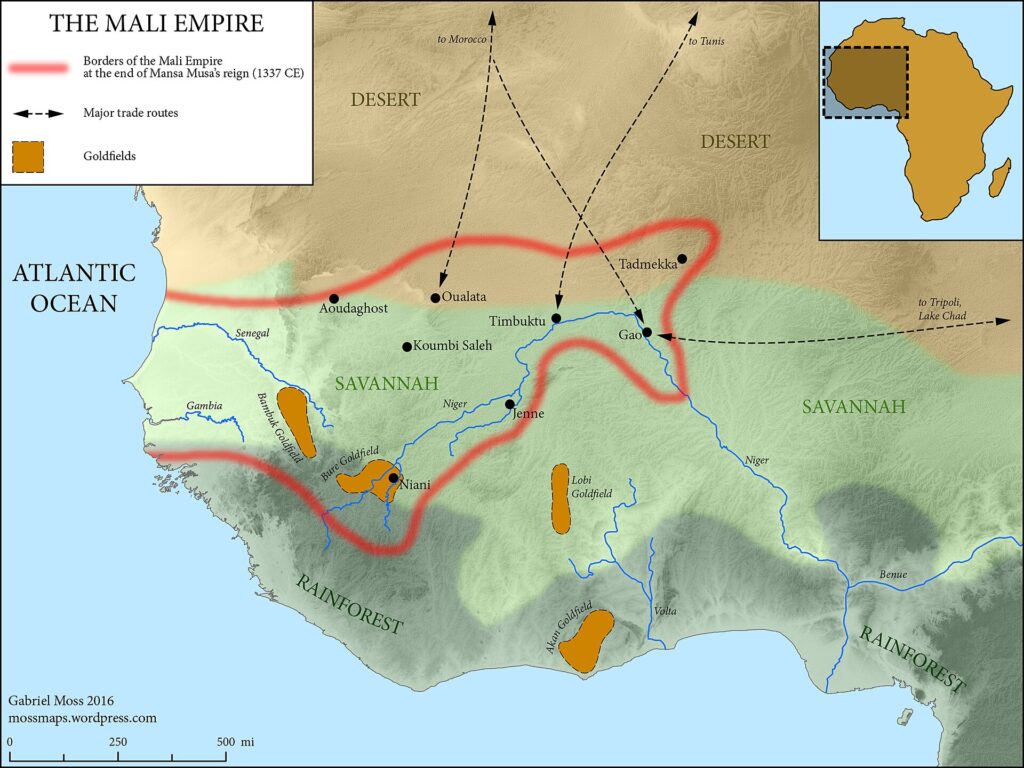
Mandinka, Bambara, Dyula: Mali Empire and successor states
Mandé
The culture
Mandinka, Bambara, Dyula: Mali Empire and successor states
Where
West Africa: the Manden heartland (modern Mali, Guinea, Senegal, Gambia, Burkina Faso)
Time depth
Historical figure Sundiata Keita c. 1217–1255 CE. Oral preservation by griots for 800+ years. UNESCO Masterpiece of Oral Heritage.
Living tradition
Yes: the Sundiata epic is performed by griots across West Africa. The Kamabolon ceremony at Kangaba (the oldest Manding village) performs the full epic every seven years in the sacred house.
Language
Bambara, Mandinka, and related Manding languages. Performed by Jali (griots) with kora and balafon accompaniment. Each performance re-creates the epic, and each griot brings their lineage's version.
The world of its stories
Cosmological Structure
The Mandé world is governed by nyama (sacred life force/energy) and organized by a social hierarchy in which the horon (freeborn nobles), nyamakala (specialist castes: griots, blacksmiths, leatherworkers), and jon (captives) each have their roles. Heroism in the Mandé tradition means fulfilling one's destiny in service to the community. The Manden Charter, proclaimed after Sundiata's victory, establishes the moral universe that the political victory made possible.
Creation
The Sundiata tradition centres on the founding of a moral and political civilisation, the Mali Empire. The Mali Empire's founding IS the creation event: the bringing of order (Mandé Ma'at equivalent) out of the chaos of Sumanguru Kante's sorcerer-kingdom.
Time
Historical-mythological time. The epic exists in a time that is both historical (specific dates, places, rulers) and mythological (the characters are larger than life, their mothers prophesied, their powers are supernatural). The griots hold this time: the epic lives again in each performance.
The Sacred
The founding moment: Sundiata's victory at the Battle of Kirina (c. 1235 CE): is sacred historical time. The Manden Charter is a sacred document. The Kamabolon (sacred house at Kangaba) is the sacred space where the full epic is performed. Prophecy is sacred: what has been foretold will unfold.
Death / Afterlife
The great heroes become part of the griot's repertoire: they achieve a form of continued existence through being remembered and performed. Sundiata's deeds live in every griot performance. The ancestors of great families are invoked in genealogical chains that extend back to the founding moment.
Why Multi-Trial Architecture
Sundiata's story is explicitly structured as a series of trials, each one revealing and developing his nature. He cannot walk (first trial). He is driven into exile (second trial: the separation trial). He must find allies in foreign lands (third trial: the gathering trial). He must discover Sumanguru's weakness (fourth trial: the intelligence trial). He must assemble his coalition and march home (fifth trial: the preparation trial). He must win the battle of Kirina (sixth trial: the climactic trial). Each trial strips away an illusion and reveals what was always there: the lion's power that the prophecy named before birth.
Structural Logic
The trials do not create the hero: they reveal what the hero always was. Sundiata's power was prophesied before birth. The trials are the mechanism by which that prophesied power becomes manifest. Each trial, no matter how it ends, contributes to the inevitable fulfillment of the prophecy. This is what distinguishes Mandé multi-trial from other trial structures: the trials are revelatory, not formative.
Structural Movement
Prophesy (destiny announced before birth) → impossible beginning (the hero who cannot walk) → great obstacle (the antagonist's power and the hero's displacement) → the exile journey (gathering strength and allies in foreign lands) → the sacred allies assembled (the coalition that makes victory possible) → the triumphant return (the hero comes home with what exile gave them) → the climactic confrontation (the battle that was always coming) → kingdom building (what the victory makes possible) → legacy (the griot's preservation: the hero lives forever in performance)
Key figures
Supreme Being / Creator
Allah (Islamic framework, integrated with traditional practice). But in the epic itself, the operative divine forces are ancestral power (nyama accumulated through lineage) and prophetic destiny.
Major Figures
- Sundiata Keita: the Lion King. Born unable to walk. Rose to found the Mali Empire. Called Sogolon Djata ("the lion child of Sogolon"). His story is the Mandé founding myth.
- Sogolon: Sundiata's mother. The "buffalo woman," described as ugly but carrying enormous nyama (sacred power). The prophecy was about her son, not about any powerful man's son. Her power is the source of Sundiata's power.
- Sumanguru Kante: the sorcerer-king of the Sosso. A blacksmith (nyamakala caste) who accumulated forbidden nyama. The antagonist whose powers must be broken through a specific magical weakness.
- Bala Faseke Kouyaté: Sundiata's griot, who became Sumanguru's griot and discovered his secret vulnerability. The first griot of the Kouyaté family, whose descendants still perform the Sundiata epic today.
- Sassouma Bérété: Sundiata's father's first wife, whose jealousy drives Sundiata and Sogolon into exile. The force that makes the exile necessary.
- The Twelve Kings: the allies Sundiata gathers in exile. The coalition that defeats Sumanguru.
Trickster / Culture Hero
Sundiata himself combines elements of the trickster (appearing weak, confounding expectations) with the hero. Bala Faseke, the griot, learns Sumanguru's weakness and carries it to Sundiata.
Ancestor Figures
The Keita dynasty's ancestors are invoked throughout the epic. Sundiata's father Naré Maghann Konaté's ancestors extend back into mythological time. The power of lineage, what the ancestors accumulated, flows through Sundiata and enables his rise.
Who’s Who
Sacred elements
Sacred Objects
Sundiata's iron staff: the first object Sundiata used when he finally stood and walked (he bent an iron staff straight). The baobab tree Sundiata uprooted and replanted before his mother's door (an act of power that proved the prophecy). The talisman that revealed Sumanguru's weakness (the white rooster's spur). The kora and balafon of the Jali.
Sacred Places
The Kamabolon at Kangaba: the sacred house where the full Sundiata epic is performed every seven years. The site of the Battle of Kirina. Niani: Sundiata's capital. The baobab tree of Sogolon's humiliation (which Sundiata uprooted).
Sacred Practices
The Kamabolon ceremony: the sacred house is renovated and the Sundiata epic performed in full, every seven years. The Jali's performance of genealogical chains connecting present noble families to Sundiata's founding moment. The transmission of the epic from Jali father to Jali son across 800 years.
Sacred Prohibitions
The Manden Charter proclaimed at Kurugan Fuga prohibited killing for no reason, collective punishment, and the destruction of food sources: the earliest documented human rights declaration. These prohibitions are sacred law.
How their stories are told
How Stories Are Told
By the Jali: in performance with kora or balafon accompaniment. The griot's version reflects their specific family's relationship to the events: different Jali families were present at different moments in Sundiata's story, and their accounts reflect that. The performance includes genealogical recitation, dramatic narration, direct address to the audience (as if they are present at the historical events), and praise of current patrons connected to Sundiata's lineage.
Who Tells Them
The Jali: specifically the Kouyaté family (Bala Faseke's descendants), though other griot families also carry versions of the epic.
When They Are Told
At the Kamabolon ceremony (every seven years). At political ceremonies when leaders connected to the Keita or related dynasties receive the griot's services. At celebrations where the founding myth needs to be invoked.
The Purpose of Story
To legitimize political authority (those who can trace descent to Sundiata have hereditary claim to leadership). To transmit the moral framework of the Manden Charter. To give the community its founding story. To show heroism as fulfilling a prophesied destiny through persistence, exile, alliance and return.
Signature Story Types
The prophecy, the impossible hero (who cannot walk), the exile that enables the gathering of allies, the discovery of the enemy's weakness, the coalition-building return, the climactic battle, the founding proclamation.
How their stories are built, step by step
Bambara/Manding terms: the same terms used in the existing StoryWorld
Kɛlɛ (Hero Type)
Cultural meaning
What kind of hero does this story require? The Mandé tradition has multiple heroic types: the destined king (like Sundiata), the warrior-hero, the wanderer, the wise elder. Each type has its own relationship to destiny and its own heroic code.
In brief
One word alone is not sweet; but together, words are good. Every hero's story begins with a prophecy spoken by the wise.
Cultural teaching
In Mandé tradition, the hero's type is destiny-given, not chosen. Sundiata did not decide to be the Lion King: he was prophesied to be before birth. The hero's first task is to recognise and accept the path that was always theirs.
Kiisɛ (The Prophecy)
Cultural meaning
The prophecy that names the hero before they can fulfill it. Sundiata was prophesied before Sogolon was even known: a hunter found the buffalo-woman who would bear the lion's child. The prophecy creates the expectation against which the hero's apparent weakness is so shocking.
Cultural teaching
The prophecy in Mandé tradition is always specific and often paradoxical, a child who cannot walk will be the greatest warrior. The paradox is the teaching: what appears to be a deficiency is actually the mark of the prophesied one. The impossible child is the destined hero precisely because they are impossible.
Gɛlɛya (The Great Obstacle)
Cultural meaning
The obstacle that makes the prophecy seem impossible: the hero's own limitation or their circumstances. For Sundiata: he could not walk. The first trial is the hero's own apparent incapacity.
Cultural teaching
The great obstacle in Mandé heroic tradition is always what the community sees as a deficiency, weakness, ugliness, low birth, disability. The community's judgment is always wrong. The apparent deficiency is exactly what makes the hero suited for the prophesied task. Sogolon's ugliness was her power.
Taama (The Great Journey / The Exile)
Cultural meaning
The exile. Sundiata and Sogolon were driven from Niani and wandered through the kingdoms of the Sahel for years: visiting Mema, Wagadou, the kingdoms of the forest. The exile is the crucible in which the hero gathers what the homeland could not provide.
Cultural teaching
The exile is necessary, not accidental. Sundiata could not have gathered his allies from within Niani: he needed to travel the world to build the coalition that would defeat Sumanguru. The exile is the school. What looks like defeat (being driven out) is actually the preparation that the victory requires.
Sababu (Sacred Allies)
Cultural meaning
The allies gathered through the exile. Sundiata's coalition of twelve kings represented cultures across West Africa: he united across clan and nation lines through the personal relationships built in exile. The coalition is the hero's true weapon.
Cultural teaching
In Mandé tradition, the hero's power is always collective. Sundiata did not defeat Sumanguru alone: he could not. The coalition he built across twelve kingdoms was the actual instrument of victory. Heroism in the Mandé tradition is the ability to unite others, not to overpower them individually.
Segin (The Triumphant Return)
Cultural meaning
The hero returns from exile as what the exile made them. The return is the moment when the prophecy becomes visible to those who doubted it.
Cultural teaching
Sundiata's return was announced before he arrived, the griots sang of his coming, the people who remembered the prophecy began to hope again. The return is a performance as much as a military movement. The hero's arrival declares what they have become.
Jamana Dabɔ (Kingdom Building)
Cultural meaning
After the battle, the work of building what the victory made possible. The Manden Charter. After Kirina, Sundiata's task was to found the moral order the victory made possible.
Cultural teaching
The Manden Charter is the founding declaration of rights and responsibilities in the new empire: "Every human life is a life... Hunger is not a good thing... Submit to your elders... Do not harm women... Protect the nyamakala..." The charter is what the battle was for. Without it, the victory is just conquest.
Tariku (Legacy and Memory)
Cultural meaning
The story enters the griot's repertoire, it will be performed for 800 years. The hero lives in performance. What the griots remember is what continues to exist. Legacy lives in performance.
Cultural teaching
The Jali Kouyaté family has performed the Sundiata epic for 800 years without interruption. This is the Mandé form of immortality. There are ruins at Niani, but the founding is kept alive by performance in each new generation. Your hero's legacy depends on who will tell the story.
What makes this tradition distinct
What makes this tradition distinct
In the Sundiata epic the hero's weakness, his inability to walk, marks him as the prophesied one. The hero does not become great through the trials: the trials reveal that the greatness was always there. The Manden Charter makes this the only heroic epic that ends with a human rights declaration rather than just a victory. The coalition-building structure (twelve kingdoms united) makes this a collective heroism story rather than an individual one.
Cultural warnings
Do not make Sundiata's weakness a character flaw to be overcome: it is a mark of the prophecy. Do not make the coalition-building a side plot: it IS the hero's path. Do not end the story at the battle: the Manden Charter is as important as Kirina.
The stories
Each story with its source, where to read it and why it fits.
The StoryWorld in Full
Identity
Language / Oral Medium
Bambara, Mandinka, and related Manding languages. Performed by Jali (griots) with kora and balafon accompaniment. The performance is not recitation but re-creation — each griot brings their lineage's version of the epic.
What makes this tradition distinct
The Sundiata epic is unique among world heroic traditions in that the hero's weakness (inability to walk) is not a deficit to be overcome but a mark of the prophesied one. The hero does not become great through the trials — the trials reveal that the greatness was always there. The Manden Charter makes this the only heroic epic that ends with a human rights declaration rather than just a victory. The coalition-building structure (twelve kingdoms united) makes this a collective heroism story rather than an individual one.