THE ACADEMY
Our world is a world of stories. GriotsWell’s Academy is where they are learned, across GriotsWell, DarkerSpace and AfricanBookMarket: the Architectures of Story and the WC StoryWorlds, World Mythology and the skies, African lore and its literature, in writing, video, audio and reading paths. Membership opens every WC StoryWorld and the whole Academy.
The three sites
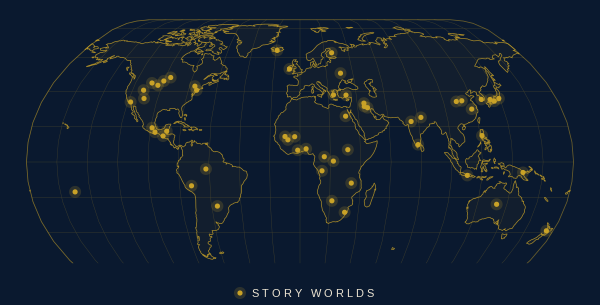
Our world and the worlds of stories. Each culture’s stories, mythology and history are the source: from one culture’s data GriotsWell builds that culture’s GriotsWell World Cultural (WC) StoryWorld, with its world and its sky, where a writer’s idea is made into a plot in that culture’s shape. The GriotsWell Modern Synthesis (MS) StoryWorlds stand last, in their own group.
griotswell.com →
Visions of past and future from the deeper parts of space. A magazine that reads world science fiction at its source, beside the mythology and the skies it grows from: the World Mythology Catalog, culture by culture within each region; the Cosmological Record, the skies each culture recorded, by region; and the World Sci-Fi Catalog, by region. Told in the first person by I/O.C.
darkerspace.com →
We stand on the shoulders of the past to see into the future. The African literary catalogue and its magazine: the African Lore Universes, built on the continent’s cultures, and the African Writers Catalog, the continent’s writers and their books filed by region and by the culture they were written from.
africanbookmarket.com →What the Academy teaches
The Architectures of Story
How the world’s cultures built their stories: each culture’s stories, mythology, nation and history; the GriotsWell World Cultural (WC) StoryWorlds built from them; and the Architectures of Story that show when those StoryWorlds are laid side by side. Its reference is the Cultural Origin Library, each culture’s origin with the diagram of its architecture.
Everything on this topic →
World Mythology & the Cosmological Record
Each culture’s origin stories and the figures in them, and the skies each culture read and recorded. Its references are DarkerSpace’s World Mythology Catalog and Cosmological Record, each by region.
Everything on this topic →African Lore & Literature
African cultures’ lore and origin stories, then the literature built on them: the writers and books that carry them.
Everything on this topic →
Joining
The GriotsWell World Cultural (WC) StoryWorlds. Each GriotsWell World Cultural (WC) StoryWorld is built from one culture’s stories, mythology, nation and history, and makes any idea a writer brings into a plot in that culture’s shape. Alongside them stand the GriotsWell Modern Synthesis (MS) StoryWorlds — the Hero’s Journey, Three-Act, Seven-Point and Four-Act.
The Academy. Everything it teaches across the three topics — writing, video, audio and reading paths — including the members’ pieces.
- The WC StoryWorlds Akan — Anansi Web, Dogon — Creation Cycle, Irish & Welsh — The Celtic Spiral, Sumerian — Gilgamesh / Inanna, Chinese (Taoist) — Zhuangzi Parables, Sanskrit Epic — Mahābhārata, K'iche' Maya — Popol Vuh Hero Twins, Guaraní — The Land Without Evil, Diné — Hózhó / Blessingway and Māori — Whakapapa, and the four GriotsWell Modern Synthesis (MS) StoryWorlds
- The Academy’s free pieces
- The GriotsWell Newsletter
- Every GriotsWell World Cultural (WC) StoryWorld, and new ones first
- The whole Academy, with the members’ pieces and reading paths
- Across all three sites
- Everything in membership
- For those who join in the first year, held while you stay
The GriotsWell Newsletter
The Architectures of Story

⚖Balance-Seeking Architecture
An Architecture of Story
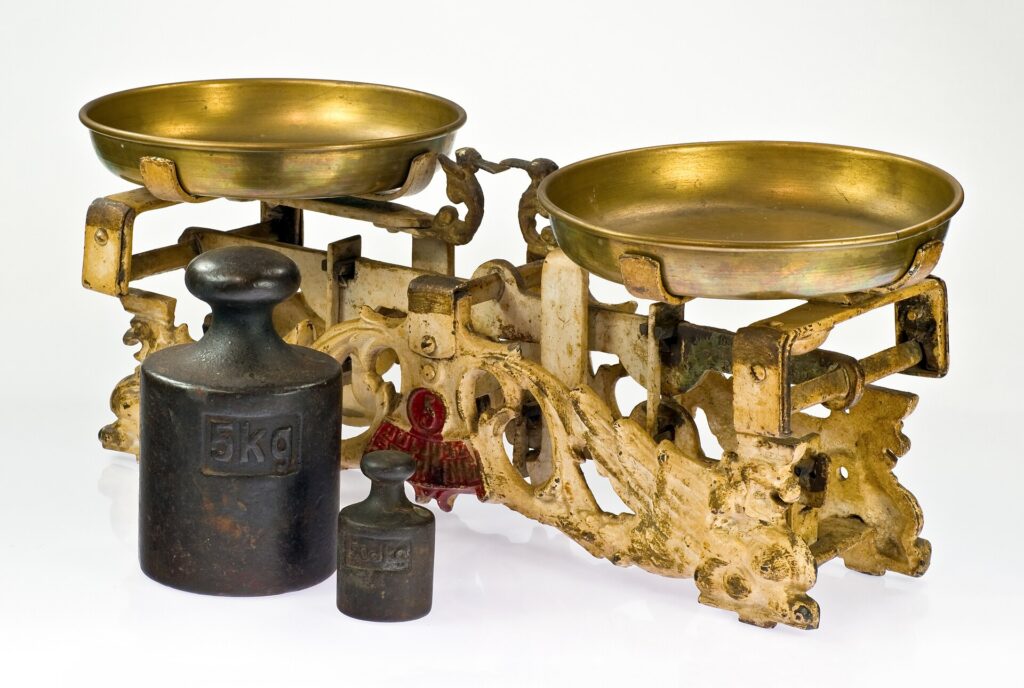
An order made of complementary parts, each in its place and kept by daily practice. The order tips, the imbalance spreads through the whole, and the story travels the full round of the parts, with counterweights high and low, to a weighing of truth. Both poles are kept, and the balance is renewed, to be kept again.
Order itself is what the story protects. Disruption is an imbalance inside the order, and even the forces of disorder belong to the whole. The story moves from disruption to restoration: every part is set back in its place, truth is weighed and recognised, and the balance is renewed, ready to be kept again.
Time moves out of balance and back into it. The order stands, tips, and is walked back into its places stage by stage, and the turning repeats: the sun-boat crosses the night every night, Changing Woman grows old in winter and young in spring, the cycle of love begins again with the rains.
The protagonist is the order: Ma'at, hózhó, the balanced cosmos of the shadow-play, the held tension of akam and puram, the savoured whole of a rasa. The people who act are its keepers and restorers, agents of something larger than themselves.
Meaning builds as each part is set against its complement and back in its place: the heart against the feather, the refined against the coarse, union against separation, the noble helper beside the clown. It gathers toward a weighing in which truth is recognised.
The order is restored in every part, with both poles kept and the force of disorder given its place. It is renewed and handed on to be kept again.
The beam stands level, tips at the disruption, and the thread travels the full round below the beam until it lies level again. Movement 3, where the order tips, is marked in red.
⇄The Fisherman and the Jinni in Negotiation, the form it is
Negotiation Architecture, at work
A live example of Negotiation Architecture at work: the architecture's movements filled in for one story. This is the tale in the form it is. The Thousand and One Nights is built of exchange from its frame inward, a tale given for a night of life, and the fisherman's bargain with the jinni is that frame in small.
In the form it is, the story's centre is the bargaining itself. The fisherman's trick is not a victory but an opening move, the tale of Yunan is a round of the exchange rather than a digression, and the ending is a set of terms both sides keep. The frame of the Nights becomes visible as the same shape at a larger size: Shahrazad buying each day with a story, just as the fisherman buys his life with one.
See it worked through The Fisherman and the Jinni translated into Web The Fisherman and the Jinni translated into Non-Conflict Learn Negotiation
The Cultural Origin Library
Hawaiian, Tahitian & Māori — Wayfinding
Polynesian wayfinding: the voyaging tradition of navigating the great ocean by the stars, sea, and sky
The voyaging cultures of the Pacific: Hawaiian (Kānaka Maoli), Tahitian (Mā'ohi), Māori, Samoan, Tongan, Marquesan and others, each with its own language and tellings. They were master voyagers who settled the Pacific across immense distances by non-instrument navigation.
A world of the great ocean and its islands, a vast, navigable space crossed by voyaging, read through the stars (the star compass), the swells, the winds, the birds, and the signs of the sea and sky. The Polynesian world is spatial and oceanic: the crossing from island to island, the reading of the sea and sky to find the way, the discovery and settlement of new lands. The story is geographic, the voyage mapped across the ocean, the movement…