
⚖Balance-Seeking Architecture
An Architecture of Story
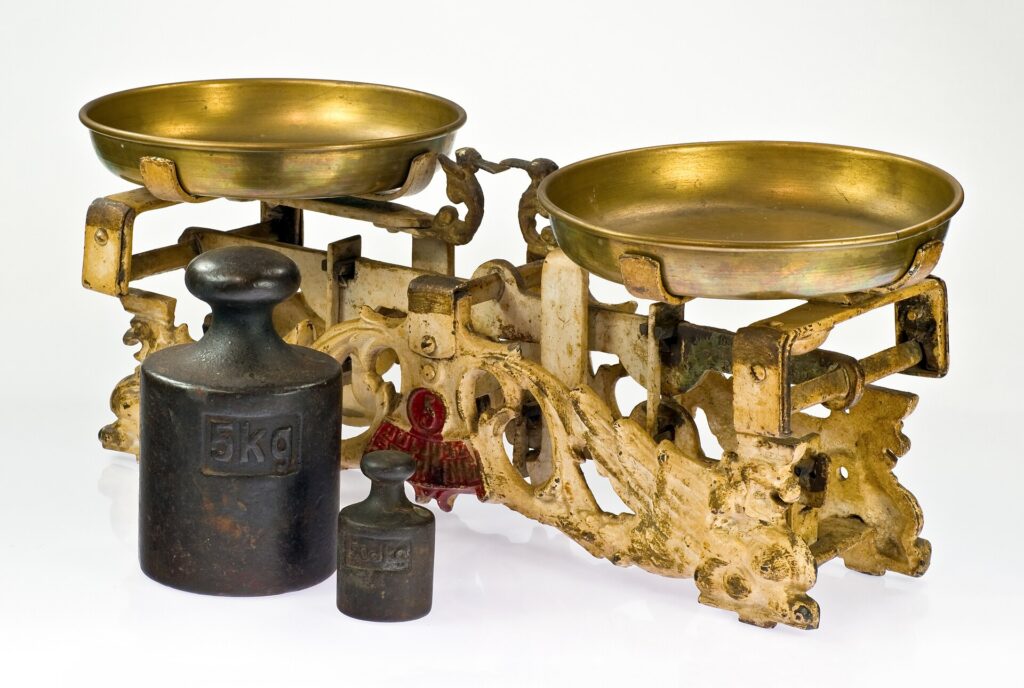
An order made of complementary parts, each in its place and kept by daily practice. The order tips, the imbalance spreads through the whole, and the story travels the full round of the parts, with counterweights high and low, to a weighing of truth. Both poles are kept, and the balance is renewed, to be kept again.
Order itself is what the story protects. Disruption is an imbalance inside the order, and even the forces of disorder belong to the whole. The story moves from disruption to restoration: every part is set back in its place, truth is weighed and recognised, and the balance is renewed, ready to be kept again.
What Is an Architecture of Story?
An Architecture of Story is the shape of how a plot moves: not what happens, but the engineering logic of how it is built. It is not a genre, a theme or a style. It is the load-bearing shape underneath a plot, and it was found in the stories of the world's cultures, built up from the bottom.
Everything begins with a culture's own data: their stories themselves, their mythology, their nations and lineages, their history, their cosmology and the way they keep time. Each GriotsWell World Cultural (WC) StoryWorld is built from one culture's data and from no one else's. Lay the data of the StoryWorlds side by side and shapes show. Cultures on different continents, with no contact, move their stories the same way. Those shared shapes are the Architectures of Story.
Two stories from cultures who never met can answer the same four questions the same way. When they do, they share an architecture, however different their gods, landscapes and words.
- How does time move?
- Who is the protagonist?
- How does meaning build?
- What is resolution?
The shape of Balance-Seeking
Time moves out of balance and back into it. The order stands, tips, and is walked back into its places stage by stage, and the turning repeats: the sun-boat crosses the night every night, Changing Woman grows old in winter and young in spring, the cycle of love begins again with the rains.
The protagonist is the order: Ma'at, hózhó, the balanced cosmos of the shadow-play, the held tension of akam and puram, the savoured whole of a rasa. The people who act are its keepers and restorers, agents of something larger than themselves.
Meaning builds as each part is set against its complement and back in its place: the heart against the feather, the refined against the coarse, union against separation, the noble helper beside the clown. It gathers toward a weighing in which truth is recognised.
The order is restored in every part, with both poles kept and the force of disorder given its place. It is renewed and handed on to be kept again.
Nine movements, one beam
The beam stands level, tips at the disruption, and the thread travels the full round below the beam until it lies level again. Movement 3, where the order tips, is marked in red.
Where the steps lead
Every step of an Architecture of Story leads to one goal: your story, made in that architecture. Each movement you work through becomes part of the plot, with your own people, places and events, and together the steps give you the whole plot blueprint, ready to write from.
It is a restructuring, not a retelling. Bring a story you know and the steps rebuild it in the architecture, moving, changing and adding events wherever the shape needs them. Bring your own idea and the steps build it from the start. Either way the blueprint is the plot, and the story is written from it.
That is the purpose of the work: to make stories, and to see one story made in different architectures, or in a culture's own WC StoryWorld.
An order of complementary parts
In Balance-Seeking, the world begins in order, and order is made of complementary parts. The sun crosses the sky by day and the Duat by night; the Nile floods and recedes in its season. Four sacred mountains stand at the edges of Dinétah, each with its colour, its time of day and its stage of life, and male rain balances female rain. The refined and the coarse, Pandawa and Kurawa, are held together under one teacher. The hermitage balances the court, akam balances puram, and five landscapes each hold one mood of love. No part is better than another; the whole needs all of them. And the order has to be kept, day after day: temple rites each day, the Blessingway sung over a new home, the dalang's all-night play, the poet's conventions of landscape and season.
Then the order tips. Set kills Osiris and the throne stands empty. Men and women quarrel and live apart across a river, and the separation gives birth to monsters. Coyote flings the unplaced stars across the sky. A sage's curse makes a king forget his wife, and a husband comes home at dawn from a courtesan's house. The disruption is an imbalance born inside the order, and its forces cannot simply be destroyed: Apophis is driven back every night and returns every night. The imbalance spreads through the whole. For eighty years the land has no rightful king, the monsters devour the people, the sun-boat runs aground in the seventh hour, and Shakuntala is turned away from the court.
Restoration is a path through every part, taken in the right order and done precisely. Ani names every gate and each of the forty-two judges. The Hero Twins pass the crushing rocks and cutting reeds with Spider Woman's feather. Bima searches the mountain, then the ocean. Each landscape of love is entered fully for itself. Counterweights come from high and low together: Isis and Neith's letter, Thoth with his pen, Semar the god living as a clown-servant, the confidante who speaks for the heroine, the fisherman who finds the ring. At the centre is a weighing of truth: Ani's heart against the feather until the beam lies level, Set condemning himself out of his own mouth, Bima meeting his own soul at the bottom of the sea, the ring that returns a king's memory. The verdict is a recognition: Ani is declared true of voice, which is a long way short of perfect.
The restored order keeps both poles. Set is taken into the sky to fight Apophis at the prow of the sun-boat. The Twins spare Old Age, Cold, Poverty and Hunger, and must themselves be sung back into balance. The Kurawa still rule Astina, and the teacher who plotted is still a teacher. Then the balance is renewed and handed on: hózhó náhásdlíí', beauty restored in all directions; the kayon planted upright; Khepri rolling the new sun over the horizon; every coronation repeating the gods' verdict; the jasmine opening as the cycle of love begins again.
How a Balance-Seeking story moves
The Order in Its Places
A Balance-Seeking story opens on an order that is whole: complementary parts, each in its place, none better than another, the whole needing all of them.
- First Man and First Woman placed the four sacred mountains at the edges of Dinétah: white shell in the east for dawn, turquoise in the south for day, abalone in the west for evening, jet in the north for darkness and rest.
- Ma'at is everything in its right place: the sun's barque crossing the sky by day and the Duat by night, the Nile flooding in its season, a scribe's accounts kept honest.
- At the start of the wayang, Pandawa and Kurawa, the refined knights and the coarse warriors, are held together under one teacher, Durna.
- Sangam poetry holds akam, the inner world of love, in balance with puram, the outer world of kings and war, and gives each of love's moods its own landscape.
- Kalidasa balances two worlds: the hermitage by the river Malini, where deer are not hunted, and the king's court of duty and memory.
The order is right relationship, kept up by practice, and it has parts: four mountains with their colours and times of day, the sun's day crossing and night crossing, the refined and the coarse, the inner world and the outer, five landscapes with five moods. No part is better than another; the whole needs every one.
The Keeping
Order has to be kept, day after day. A Balance-Seeking world shows its keepers and the practice they repeat.
- Priests wash, dress and feed the god's statue three times a day, and the king offers the figure of Ma'at to the gods on temple walls up and down the Nile.
- The Blessingway is sung for a new home, for a mother-to-be and for a girl at her Kinaaldá, to keep beauty as well as to restore it.
- The dalang keeps the cosmos for a whole night, voicing every figure and moving every shadow from evening to dawn.
- The Sangam poets keep the conventions: which landscape suits which phase of love, which flower, season and hour belong to each.
- Every night Ra's boat must travel the twelve hours of the dark to rise again; one good night does not buy the dawn.
The temple rites are performed each day; the sun-boat must cross the night every night; the Blessingway is sung over a new home and a girl at her Kinaaldá; the dalang keeps the cosmos through the night. Show who keeps the order and how, because the tipping will come through a gap in the keeping.
The Tipping
The order tips. The disruption is born inside the order, as imbalance, and its forces belong to the whole: they can be driven back, but not simply destroyed.
- Set killed his brother Osiris, and the throne of Egypt stood empty between a just young heir and a strong usurper.
- In the world below, men and women quarrelled and lived apart across a river, and the separation gave birth to the monsters.
- Coyote watched First Man and Black God placing the stars one by one, said it was taking too long, and flung the rest across the sky.
- The sage Durvasa, unheard by a woman lost in thoughts of her husband, cursed her: the one you are thinking of will not remember you.
- Apophis, the serpent of chaos, attacks the sun-boat every night; he cannot be destroyed, only driven back.
- The demon king Niwatakawaca, whom no god can kill, threatens heaven for desire of the nymph Supraba, while the Pandawa, having lost their kingdom at dice, live in exile.
- In Ujjayini, under a weak and cruel king, the king's brutal brother-in-law Samsthanaka strangles Vasantasena and accuses the good, poor Charudatta of her murder.
The disruption is an imbalance that starts inside the order. Men and women quarrelled and their separation gave birth to monsters. Set's violence, Coyote's impatience, a sage's wounded pride, a husband's night away. The forces of disorder belong to the whole and cannot simply be destroyed: Apophis is driven back every night and returns every night.
The Lopsided World
The imbalance spreads. Every part that depended on the one pushed out of place is pulled with it, until the whole seems about to fall.
- For eighty years the gods could not decide, and while they argued the land was without its rightful king.
- The monsters roamed the Glittering World and devoured the people until almost none were left; the people hid, and the land was unsafe.
- In the seventh hour Apophis lies across the river and drinks it dry, and the sun-boat runs aground; if it stops, the sun will not rise.
- At court the king did not know Shakuntala; her ring was lost in a river, and she was turned away and carried off into the sky.
- Bima, sent by his own teacher's plot, walked into the ocean and sank into the deepest water, where there was nothing left to fight.
- The jewels Vasantasena heaped into a child's little clay cart fall from a friend's cloak in court, and Charudatta is condemned to die.
When the throne stood empty, the land had no rightful king for eighty years. When the monsters were born, they devoured the people until almost none were left. When Apophis drinks the river, the sun-boat runs aground and the dawn is in danger. Show the imbalance in every part it reaches, and the moment when the whole seems about to fall.
The Path Through the Parts
Restoration is a path through every part, taken in the right order and done precisely. Each stage sets one part back in its place.
- Ani names every gate of the Duat, its bolts, its lintel and its keeper, and declares before each of the forty-two judges the wrong he has not done.
- The Hero Twins pass the rocks that crush, the reeds that cut, the cactus that tears and the boiling sands, then go out direction by direction against the monsters.
- Bima tears apart the mountain looking for the water of life, and when it is not there, walks into the sea.
- The Sangam lovers live each landscape fully in turn: union, waiting, quarrel, longing, separation.
- In the rasa of Shakuntala, love is tasted through every cause, sign and passing mood, from delight through grief, before it can rest.
Ani names every gate, its bolts and its keeper, and each of the forty-two judges. The Twins pass the crushing rocks, the cutting reeds and the boiling sands in turn. Bima searches the mountain and then the ocean. The lovers live each landscape fully. Ceremony is precise: done wrongly, it harms instead of heals. The path visits every part the imbalance reached.
The Counterweights
Help comes from high and low together. The noble carry knowledge and authority; the earthy carry wisdom, laughter and the lost token.
- Isis would not let the court forget the truth; Neith wrote that the throne belongs to Horus; Thoth recorded every word.
- Spider Woman gave the Twins a sacred feather and the words to pass the dangers on the road.
- Semar, the round white-faced clown-servant, is in truth a god, and knows more than any knight; his sons' jokes keep the play human.
- The tozhi, the heroine's confidante, carries her messages and speaks for her when she will not speak.
- A fisherman finds the king's lost ring in the belly of a fish, and memory comes back.
- Semar and his sons joke and grumble at the foot of Mount Indrakila while Arjuna's meditation shakes heaven and earth.
Isis refuses to let the court forget, Neith writes her letter, Thoth records every word. Spider Woman gives the Twins a feather. Semar, a god living as a clown-servant, knows more than any knight, and the confidante speaks for the heroine. A fisherman finds the ring in a fish. The noble and the earthy are both needed; the clowns' laughter keeps the story human and their wisdom keeps it true.
The Weighing
At the centre is a weighing of truth. What has been lived is measured against the order's measure, and the verdict is a recognition of what is true.
- Anubis sets Ani's heart on the scale against the feather of Ma'at; the beam lies level, and Thoth writes that he is true of voice. He is not declared perfect; he is declared true.
- Isis, disguised as a widow, tells Set a stranger has taken her son's inheritance, and Set declares the son should be restored, condemning himself out of his own mouth.
- At the bottom of the sea Bima meets Dewa Ruci, a tiny figure who looks exactly like him: his own inner self.
- In the heavenly hermitage the boy's amulet falls, the king touches it and nothing happens, and he knows his son; then Shakuntala enters.
- Indra comes to Arjuna as an old sage and weighs his austerity: why seek power, if austerity aims at release? Arjuna answers that he seeks the gods' weapons for duty, to protect the world and restore his brothers' right, and Indra is satisfied.
Ani's heart is placed on the scale against the feather, and the beam lies level: he is declared true of voice, not perfect. Set condemns himself out of his own mouth. Bima meets his own soul at the bottom of the sea. The ring returns the king's memory. The climax is a recognition, pronounced and witnessed.
Both Poles Kept
The order is restored without destroying either pole. Disorder is given its place, some hardships are kept, and the restorers are brought back into balance.
- Set was not destroyed. Ra took him into the sky to thunder and to spear Apophis at the prow of the sun-boat.
- The Twins spared Old Age, Cold, Poverty and Hunger, because without them people would not value life; then they themselves had to be sung back into balance.
- The Kurawa still rule in Astina, the Pandawa in Amarta, and Durna is still a teacher. Nothing has been destroyed.
- The Diné say that without Coyote the world would be too orderly to live in, and that his disorder is part of the balance too.
- In the farmland landscape, the quarrel and the sulk are kept as real parts of love; the reconciliation is sweeter for them.
- Asked to sentence Samsthanaka, Charudatta forgives him and sets him free. Every rasa the play has stirred comes to rest in that act of mercy.
Set is taken into the sky to fight Apophis at the prow of the sun-boat. The Twins spare Old Age, Cold, Poverty and Hunger, because people would not value life without them, and must themselves be sung back into balance after so much killing. The Kurawa still rule Astina and the plotting teacher is still a teacher. Coyote's disorder is part of the balance too.
The Balance Renewed
The order stands again in every direction, renewed and handed on to be kept.
- The Blessingway closes: with beauty before me, behind me, below me, above me and all around me; hózhó náhásdlíí', beauty has been restored.
- At dawn the dalang plants the kayon upright in the centre of the screen: the tree of life restored and the cosmos whole.
- Khepri rolls the new sun above the eastern horizon; Horus is crowned, and every pharaoh after him is the living Horus.
- The man returns from the desert with the rains, the jasmine opens, and the cycle of love begins again.
- Shakuntala's story rests in shanta: love deepened by separation, quieter and wiser than the first meeting.
- Arjuna returns from heaven with the Pasupati arrow, and the dalang plants the kayon; the lakon of his austerity is performed at weddings as a story of desire mastered and duty kept.
The Blessingway closes: beauty has been restored, before, behind, below, above and all around. The dalang plants the kayon upright. Khepri rolls the new sun over the horizon. Every coronation repeats the gods' verdict, and every girl at her Kinaaldá becomes Changing Woman. The jasmine opens and the cycle of love begins again. Show the order whole, and the practice that will keep it.
When Balance-Seeking holds, and when it tips
What makes it work
Start with an order that is concrete, made of named parts that need each other, and show it being kept by a practice before it tips. The disruption should grow from inside (a quarrel, a curse, a dropped duty, an appetite), and its imbalance should be traceable into every part it reaches. Restoration follows a precise path through those parts, with help from both high and low, and the climax is a weighing in which the truth is recognised. In the end both poles keep their places, and the order is renewed and handed on to be kept.
What breaks it
If the order is only a vague harmony with no parts, nothing can be set back in its place. Two other mistakes are turning the disruption into a villain whose death ends the story, and wiping out the forces of disorder instead of returning them to their place. Restoration that skips parts, helpers who are all noble with no earthy counterweight, and a fight where the weighing should be all weaken it. So does an ending that treats the order as fixed for ever, with no practice to keep it.
The cultures' own ways of telling
Each WC StoryWorld under Balance-Seeking is one culture's own way of telling. Kemet keeps Ma'at, the Diné restore hózhó, Rasa brings an audience to rest, the Tamil Sangam poets hold akam and puram, and Javanese wayang balances a whole night's play.
Ma'at is the right place of everything: the sun's crossing, the Nile's flood, honest measures, a decent life. When Set killed Osiris, the throne stood empty for eighty years while the gods argued, until Isis tricked Set into condemning himself and the Ennead spoke the verdict together. Set was taken into the sky to fight Apophis at the prow of the sun-boat. At the Weighing, Ani names every gate and each of the forty-two judges, and his heart lies level with the feather: he is declared true of voice, not perfect. Every night the sun-boat passes the twelve hours, and every dawn Ma'at is renewed.
Ma'at is a cosmic principle of order and right relationship, more than good against evil. The judgment of the dead is diagnostic: it reveals what the heart actually carried. The king's just rule and the cosmic order are one.
In Kalidasa's Recognition of Shakuntala, the hermitage balances the court and love in union balances love in separation. There is no villain: a sage's curse makes the king forget, and the real antagonist is forgetting. The ring lost in a river returns in a fish, memory comes back, and in the heavenly hermitage the family is restored. The rasa of love is savoured through every one of its causes, signs and passing moods until it rests in peace, shanta, deepened by the separation it passed through.
Rasa theory distinguishes precisely between rasa, the savoured flavour, and bhava, the underlying emotion, and its terms are used exactly. Rasa lives at the centre of the Indian classical arts today.
Sangam poetry holds akam, the inner world of love, in balance with puram, the outer world of kings and war. Five landscapes each carry one mood: union in the mountains, patient waiting in the forest, quarrel and reconciliation in the farmland, longing on the shore, separation in the wasteland. Each is entered fully for itself, and none is chosen over the others, because love is all of them. When the man returns from the desert with the rains, the jasmine opens and the cycle begins again.
Each of the five tinai has its own mood: the mountain is union, the wasteland is separation. The flower, bird and season are the emotional meaning, not scenery. Sangam poetry is Dravidian and its own tradition, older in written form than most Sanskrit epic.
The dalang's all-night play holds the refined and the coarse in balance under the lamp. Bima, sent to his death by his own teacher's plot, tears apart the mountain and walks into the ocean, and at the bottom of the sea meets Dewa Ruci, his own inner self. Semar, a god living as a clown-servant, knows more than any knight. At dawn the kayon is planted upright again and nothing has been destroyed: the Kurawa still rule, the teacher is still a teacher, and the balance has been restored through one man's understanding.
Wayang keeps both poles, the refined and the coarse, because both belong to the cosmic order. Semar and the Punakawan are the sacred heart of the play. Wayang is a Javanese synthesis of indigenous, Hindu-Buddhist and Islamic strands, and its meditation on shadow and reality is its philosophical core.
Hózhó is the active presence of right relationship within the four sacred mountains. When men and women quarrelled and lived apart, the separation gave birth to monsters, disorder born of broken relationship. Changing Woman's twins passed the dangers of the road with Spider Woman's help and killed the monsters direction by direction, but spared Old Age, Cold, Poverty and Hunger, which have their place, and were themselves sung back into balance. Coyote, who scattered the stars, is part of the balance too. The Blessingway closes: hózhó náhásdlíí', beauty has been restored.
Hózhó is a rich concept of beauty, balance, order, health and right relationship, beyond any single English word. The chantways and sandpaintings are sacred and precise and belong to the trained hataałii, so the architecture is taught without reproducing ceremony. Matters of death are handled with care and restraint.
Where a people understand the world as an order of complementary parts that must be kept, their stories move from disruption to restoration: the order tips, every part is visited and set back in its place, truth is weighed, and the balance is renewed. For a writer, Balance-Seeking is the architecture for stories about justice, healing and right relation, whose protagonist is the order itself and whose climax is the recognition of what is true.
Words from the StoryWorlds
- Ma'atAncient Egyptian
- Truth, justice, order and balance: at once a goddess with an ostrich feather, a moral code and the fundamental law of reality.
- IsfetAncient Egyptian
- Chaos, dissolution and wrongdoing: the disorder that creeps in whenever people stop holding to Ma'at.
- The Weighing of the HeartAncient Egyptian
- The judgment in the Hall of the Two Truths, where the heart of the dead is weighed against the feather of Ma'at.
- Maa-kheruAncient Egyptian
- "True of voice": the title of the justified, written after their name forever.
- The DuatAncient Egyptian
- The hidden realm below, crossed by the sun-boat each night and by the dead on their way to judgment.
- RasaIndian (Sanskrit theatre)
- The emotional flavour savoured by the audience, arising from the artful composition and balance of emotional states.
- BhavaIndian (Sanskrit theatre)
- The underlying emotion from which a rasa arises; the durable bhava is the sthayi bhava.
- Vibhava, anubhava, vyabhichari bhavaIndian (Sanskrit theatre)
- The causes of an emotion, its outward signs, and the passing moods that play across it.
- ShantaIndian (Sanskrit theatre)
- Peace: the flavour that balances and resolves the others.
- Akam and puramTamil
- The inner world of love and the private, and the outer world of war, kings and the public, held in balance.
- TinaiTamil
- The five landscapes of Sangam poetry (mountain, forest, farmland, seashore, wasteland), each with its mood, season, hour and flowers.
- TozhiTamil
- The heroine's friend and confidante, who carries messages and speaks for her.
- DalangJavanese
- The master puppeteer who narrates, voices every character and moves the shadows through the night.
- Alus and kasarJavanese
- The refined and the coarse, held in necessary balance in the wayang.
- Kayon (gunungan)Javanese
- The tree-of-life figure planted at the centre of the screen to open, divide and close the cosmos of the play.
- PunakawanJavanese
- Semar and his sons Gareng, Petruk and Bagong, the clown-servants whose humour and hidden wisdom balance the noble heroes.
- HózhóDiné
- Beauty, harmony, balance, order, health and rightness: the state in which all things are in their proper relationship.
- Hóchxǫ'Diné
- Disorder, ugliness and imbalance: the complement of hózhó.
- Blessingway (Hózhóójí)Diné
- The central ceremony that keeps and restores hózhó, closing with hózhó náhásdlíí', beauty has been restored.
- KinaaldáDiné
- The ceremony of a girl's becoming a woman, first held for Changing Woman.
The stories behind Balance-Seeking
Stories as told in the GriotsWell Book of World Mythology, from the WC StoryWorlds under Balance-Seeking.
- The Weighing of the Heart: the Journey of the Scribe AniThe Papyrus of Ani, New Kingdom Egypt (c. 1250 BCE), British Museum
- The Contendings of Horus and SetPapyrus Chester Beatty I (c. 1150 BCE), Egyptian Museum Cairo
- The Solar Barque: Ra's Nightly Journey Through the DuatThe Amduat (tomb of Thutmose III, Valley of the Kings, c. 1450 BCE)
- The Recognition of ShakuntalaKalidasa; rasa theory from the Nāṭyaśāstra attributed to Bharata Muni
- A Love Through the Five Landscapes: the Lovers of the KuruntokaiSangam akam poetry, the Kuruntokai; the akam/puram system codified in the Tolkāppiyam
- Avvaiyar and the Gooseberry of Long LifePurananuru, the poems on Atiyaman Neduman Anci
- Dewa Ruci: Bima's Search for the Water of LifeJavanese wayang lakon and the Serat Dewaruci
- Changing Woman, the Hero Twins and the Restoration of BeautyDiné tradition: Changing Woman (Asdzą́ą́ Nádleehé) and the Blessingway (Hózhóójí)
- The Emergence: the Journey Up Through the WorldsDiné Bahaneʼ
- Coyote and the Entry of DisorderDiné tradition; Diné Bahaneʼ, the Diné story of the beginning
- Arjuna Wiwaha: Arjuna's Austerity on Mount IndrakilaMpu Kanwa, Arjunawiwaha (Old Javanese kakawin, 11th century), and the wayang lakon Begawan Ciptaning / Mintaraga
- The Little Clay Cart (Mrichchhakatika)Sanskrit drama attributed to Shudraka
Balance-Seeking at work
Tales set out in Balance-Seeking's steps: each one either in the form it is, or translated into Balance-Seeking from its own form.
This is The Tongue-Cut Sparrow translated into Balance-Seeking from the form it is, Non-Conflict. Here the same events are told as an order of kindness tipped by cruelty and weighed back into balance. Every movement is filled in below.