
○Cyclical Architecture
An Architecture of Story
Time as a wheel. A fullness hidden in the dark opens into a turning world, rises to its height, turns down into the dark half, crosses through a death, and comes back overturned. The ending is also a beginning: the wheel is set to turn again.
The story is one turning of the wheel. Nothing that goes down is lost: what withdraws is drawn back, what dies crosses over, what was low is raised. The return is never the same as the departure, and the last movement opens the first again.
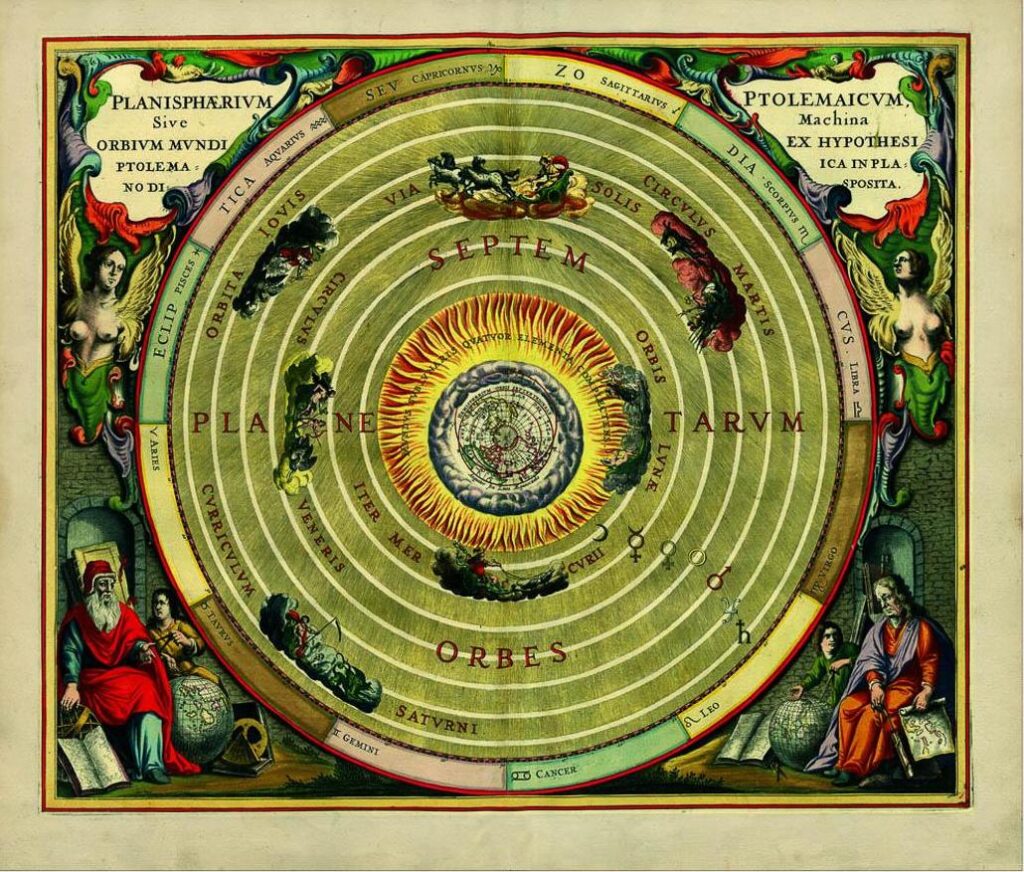
What Is an Architecture of Story?
An Architecture of Story is the shape of how a plot moves: not what happens, but the engineering logic of how it is built. It is not a genre, a theme or a style. It is the load-bearing shape underneath a plot, and it was found in the stories of the world's cultures, built up from the bottom.
Everything begins with a culture's own data: their stories themselves, their mythology, their nations and lineages, their history, their cosmology and the way they keep time. Each GriotsWell World Cultural (WC) StoryWorld is built from one culture's data and from no one else's. Lay the data of the StoryWorlds side by side and shapes show. Cultures on different continents, with no contact, move their stories the same way. Those shared shapes are the Architectures of Story.
Two stories from cultures who never met can answer the same four questions the same way. When they do, they share an architecture, however different their gods, landscapes and words.
- How does time move?
- Who is the protagonist?
- How does meaning build?
- What is resolution?
The shape of Cyclical
Time turns in rounds: the sun's four moments, the turning year, the 260-day count, the sixty-year Sigui, the life that goes from seed to ancestor and back. Each round passes through its height and its dark half, and comes back to the place it began.
The protagonist is the community or the forces that turn the world: the kami and the light, the gods of the Suns, the four winds, the clan and its ancestors, the Cloud People with their rain. When one person carries the story, they carry the turning for their people, and come home to them.
Meaning builds as the wheel comes back round. What withdrew is drawn back, what crossed over returns, and the difference between the first beginning and the second is where the meaning lives: the same day returns, and the one standing in it has changed.
The round completes and opens again. What returns comes back overturned, the force that turned it down is given its place, and a rite, a count or a telling sets the wheel turning toward its next seed.
Nine movements, one turning
The thread runs once around the wheel: up to the fullness at the top, down the dark side to the crossing at the bottom, back up through the return and the overturning, and round to where it began. Movement 6, the crossing, is marked in red.
Where the steps lead
Every step of an Architecture of Story leads to one goal: your story, made in that architecture. Each movement you work through becomes part of the plot, with your own people, places and events, and together the steps give you the whole plot blueprint, ready to write from.
It is a restructuring, not a retelling. Bring a story you know and the steps rebuild it in the architecture, moving, changing and adding events wherever the shape needs them. Bring your own idea and the steps build it from the start. Either way the blueprint is the plot, and the story is written from it.
That is the purpose of the work: to make stories, and to see one story made in different architectures, or in a culture's own WC StoryWorld.
Time as a wheel
In Cyclical, the world begins as a fullness held in the dark. Amma's egg held everything folded in its smallest seed. The Makers of the Popol Vuh lay in the still water with the whole world in their thought. Apsu and Tiamat lay mingled before anything had a name. Below the Kalunga, at midnight, a life waits among the ancestors to be sent up. From that hidden seed the world opens into order and begins to turn: Tate's four sons set their lodges at the quarters and time can begin, the first islands rise from the brine, the days are counted from the first dawn, and every member of the world takes its place on the wheel.
The round rises to its fullness, and the fullness already holds the turn. Amaterasu's light ripens the rice; Mpanzu stands at noon as healer of the district and begins giving his knowledge away, because noon does not last. Then something within the round turns it downward: a brother's pollution, a being born incomplete, a message that dawdles while death's message runs, a season whose rain comes late, a fire put out. The story goes down into the dark half: the sun shut in the Rock-Cave, Izanagi in Yomi, Vasilisa at the hut of bones, Quetzalcoatl in Mictlan, the people waiting in the dark at the New Fire.
At the bottom of the wheel is a crossing: a death, a sacrifice, a passage through water or fire. Mpanzu is sung across the water; Nanahuatzin leaps into the fire; Lam-ang is swallowed by the fish; the dun horse falls. The crossing is the doorway, and what went down comes back, often drawn rather than forced: Uzume dances and heaven laughs, the rooster crows over the bones, the boy mourns and the horse stands. What returns comes back overturned. The humble becomes the sun and the proud the moon, the scarred man comes home smooth-faced, the servant sent for fire returns a bride, chaos's body becomes the sky. The end opens the beginning again: the epic is recited at the next New Year, a new mask is carved for the next Sigui, Ise is rebuilt beside itself, and a new seed is already forming in the dark.
How a Cyclical story moves
The Seed in the Dark
A Cyclical story begins before anything shows: a fullness held in the dark, the whole of what is to come already present and not yet seen.
- Below the Kalunga, at Musoni, the old healer Mpanzu gathers what he knew among the ancestors and sends it toward the water; on the living side a young woman dreams of a white river and a figure walking out of it.
- Inside Amma's egg the whole of creation lay folded in the smallest seed, po, the signs of every thing written in the dark.
- Before the first dawn of the Popol Vuh all was still, the sea calm under the empty sky, and the Makers lay in the water under quetzal feathers with the whole world in their thought.
- When on high heaven was not named, Apsu and Tiamat, the sweet water and the salt, lay mingled as one body: everything present, nothing yet distinguished.
- Old Man Coyote was alone in a world of water, with only the ducks for company, wanting land to walk on. The first K'iche' fathers, made from yellow and white maize, lived and waited in a world that had no sun yet.
Cyclical stories begin in a darkness that is already full. Amma's egg held the whole creation in its smallest seed; the Makers held the world in their thought under the still water; below the Kalunga a life waits among the ancestors to be sent up. Begin with what is forming unseen, and know which turning of the wheel this is.
The Round Set Turning
The world opens into its order and the turning begins: things are named, the quarters fixed, the count of days set, and every member takes its place on the wheel.
- Tate's four sons travelled the edge of the world and each set his lodge at a quarter; when the four were fixed, the world was complete and time could begin.
- Izanagi and Izanami stirred the brine with a jewelled spear, the drops became the first island, and they walked around a pillar to meet and marry.
- From the first dawn on the mountain Hacavitz, the K'iche' daykeepers have counted the days in the 260-day round.
- At Kala the child is born at first light, given the name of the ancestor who sent him, touched with white chalk and red camwood, and held at the centre of the cross drawn at the threshold.
- Malakas and Maganda stepped out of the split bamboo, and from their children came the cultures of the islands.
- Nanabozho laid the muskrat's pawful of mud on the great turtle's back and blew on it, and it grew into the earth. Napi walked up from the south making the world as he went, putting the bighorn in the mountains and the antelope on the prairie. When Donají was born, the priests read the signs of her day, and the Valley of Oaxaca turned as it always had.
Tate's four sons set their lodges at the quarters, and only then could time begin. Izanagi and Izanami walked around a pillar; the daykeepers count from the first dawn; the child born at Kala is given the ancestor's name and held at the centre of the cross. Show the order and the members who hold it, so the reader learns the round's shape.
The Fullness
The round reaches its height: light, harvest and power stand full. And the fullness already holds the turn, because noon does not last.
- At Tukula Mpanzu stands at noon in the full power of his life, the healer of the district, and takes an apprentice and begins giving his knowledge away: the peak is also the beginning of the descent.
- Amaterasu shines at the centre of heaven, tending the rice fields, presiding over the first-fruits and weaving with her maidens; when she shines, everything grows.
- Lam-ang grows to manhood in nine months, and the town of Nalbuan prospers by the river.
- Tsar Vyslav's garden bears golden apples, loved above everything.
- In the first times of the Dogon, the very old did not die; they became serpents and lived on among the rocks. Lukeni crossed the river and built his capital on the hill that became Mbanza Kongo. Unanana's children were so beautiful that everyone passing her homestead stopped to look at them.
At noon nothing casts a shadow, and noon does not last. Amaterasu's light ripens the rice and fills the weaving hall; Mpanzu stands in full power and takes an apprentice, because the peak is also the beginning of the descent. Make the fullness real enough that its loss will be a true loss.
The Turn Downward
Something in the round turns the wheel toward its dark half. It comes from inside the turning: a power out of place, a being born incomplete, a slowness, a theft, a season that fails.
- Susanoo broke the ridges of his sister's rice fields and threw a flayed horse through the roof of the weaving hall, and a weaving maiden died.
- Born without his twin, the Pale Fox tore away from the egg before it was ripe and brought drought and disorder into the world.
- The young gods' clamour troubled Apsu; when he plotted to silence them, Ea put him to sleep with a spell and slew him, and the world could never return to the time before.
- The chameleon dawdled with the word that people would not die; the lizard ran with the word that they would, and arrived first.
- When the rain came late to the Valley of Oaxaca, the Cloud People knew the sky was withholding its gift.
- One autumn evening Vasilisa's stepmother put out every fire but one candle, and contrived that it go out.
- An elephant with one tusk swallowed Unanana's children and their cousin. Tangalimlibo's father-in-law sent her to the river by day, against the way she had always lived. The old Dogon serpent scolded the young men in the language of the living instead of the sigi so, and broke the order between the living and the dead. Adapa broke the South Wind's wing, and for seven days it did not blow over the land.
The turn comes from inside the turning: Susanoo's pollution, the Pale Fox born without his twin, Apsu's hatred of the young gods' noise and Ea's quiet spell, the chameleon's slowness and the lizard's haste, rain that comes late, a fire put out by a stepmother. It is part of the wheel, and it will have a place in the round by the end.
The Dark Half
The story goes down into the night side of the wheel: a withdrawal, a descent, a long darkness in which the loss is felt in full.
- Amaterasu shut herself in the Heavenly Rock-Cave; endless night reigned, and the eight hundred myriad kami gathered in the dry riverbed, at a loss.
- Izanagi went down to Yomi after Izanami and, breaking his promise not to look, saw what death had made of her.
- Vasilisa walked all night through the forest to the hut fenced with bones, and served Baba Yaga night after night.
- Quetzalcoatl went down to Mictlan, the land of the dead, to ask its lord for the precious bones of the people of the past age.
- Scarface travelled west asking every animal the way to the Sun; Burnt Face fasted alone above the trees, laying out stones.
- Every fifty-two years, at the New Fire, the Mexica put out every fire and waited in the dark to see whether the sun would rise.
- Unanana walked into the bush and found everyone the elephant had swallowed inside it, hungry and frightened, and fed them from her pot. The river took Tangalimlibo. The first K'iche' fathers crossed the sea and climbed into the mountains, hungry, smelling the ends of their staffs for food. Adapa went up to heaven in a garment of mourning.
Give the dark half its full weight. The sun is shut in the cave and the kami sit in the dry riverbed at a loss; Izanagi waits in Yomi; Vasilisa serves night after night in the house of bones; the Mexica wait in the dark at the New Fire. Grief, trial and waiting belong here, and so does the beauty of what is missed.
The Crossing
At the bottom of the wheel is a crossing: a death, a sacrifice, a passage through water or fire. It is the pivot, the doorway through which the return comes.
- At Luvemba Mpanzu dies; the people sing him across the Kalunga as the sun sinks into the water, and he takes his place among the ancestors.
- At Teotihuacan the small, poor Nanahuatzin closed his eyes and leapt into the fire; the proud Tecuciztecatl, who had drawn back four times, followed in shame.
- Lam-ang dived for the rarang and was swallowed by a giant fish, and only his bones came up. Ivan lay dead in the field for thirty days.
- The dun horse was killed under the boy on the fifth charge it had told him not to make.
- One of the Nommo was sacrificed, his body scattered across the world so that the earth would be purified.
- Marduk split Tiamat in two like a dried fish.
- Lukeni died as every king dies and crossed the Kalunga into the country of the ancestors. Quetzalcoatl, startled by a quail, fell into the pit the Lord of the Dead had dug and died, and the bones were scattered. The Pawnee Bear Man was killed with his whole war party and his body hacked almost to pieces. At the Atoyac the Mixtecs cut off Donají's head.
The crossing is the doorway through which the return comes. Mpanzu is sung across the Kalunga at sunset; Nanahuatzin closes his eyes and leaps; Lam-ang is swallowed by the fish; the dun horse falls on the forbidden fifth charge; a Nommo is sacrificed and scattered. Make the crossing real and costly, and make it the point on which the wheel turns.
The Return
What went down comes back. The return is drawn, called, mourned and danced back as often as it is won.
- Ame-no-Uzume danced on an overturned tub until the kami's laughter shook heaven; Amaterasu, curious, saw a shining kami in the mirror and stepped out.
- Ines had Lam-ang's bones gathered and covered with a cloth; the rooster crowed, the dog barked, and he lived again.
- The grey wolf had a raven bring the water of death and the water of life, and Ivan woke: 'How long I have slept.'
- The boy mourned the dun horse through a night of storm, and by morning it stood up alive: 'I came back because you mourned me.'
- The gods gave their own lives, the wind blew, and the Fifth Sun began to move.
- The Nommo was brought back to life and came down with the eight ancestors in an ark that was also a granary.
- Quetzalcoatl came to life again, gathered the broken bones and carried them to Tamoanchan, where the gods bled on them and people were made. The great star went before the sun over Hacavitz, and the sun rose. The bears put the Bear Man's body together and warmed it, and he lived. Unanana cut a way out through the elephant's side and brought everyone out into the sunlight. White Buffalo Calf Woman came across the plain to the hungry people, carrying the sacred pipe.
Uzume dances, heaven laughs, and Amaterasu steps out to see her own light in the mirror. The rooster crows over Lam-ang's bones; the wolf brings the water of life; the boy mourns and the horse stands up. The gods give their lives and the Fifth Sun moves. Decide what draws the return and what it costs.
The Overturning
What returns is not what left. The round comes back turned over: the low raised, the high lowered, the scar taken away, the force of the turn given a place in the order.
- The humble Nanahuatzin became the sun; the proud Tecuciztecatl became the moon, with a rabbit thrown in his face.
- Scarface came home by the Wolf Road as Smooth Face; Burnt Face came down from the mountain no longer ashamed; the poor boy who walked behind the camp became a chief who fed the poor.
- Vasilisa, pushed out as a servant to fetch fire, came back with death's own fire, which burned away the house that cast her out, and became a bride.
- From Tiamat's divided body Marduk made the sky and the earth, and the rivers from her eyes: chaos defeated became the structure of the world.
- The Pale Fox was not destroyed: his tracks in the divination sand became a way of reading what is to come. Banished Susanoo slew the eight-headed serpent and gave its sword to his sister.
- Since the lizard's word and the stone rolled across the pass from Yomi, people die, and more are born; the dead become amadlozi, called home to watch over the living.
- Adapa, offered the bread and water of life, did as his master told him and refused them; he was sent back to earth, and people do not live forever. When the first sun rose, the gods and the fierce animals of that time were turned to stone. The Dogon carved the Great Mask as a dwelling for the dead ancestor's force. Unanana went home rich and became the most honoured woman in the land. Wisahketchahk's shut-eye dance turned on him: the wolves ate his feast while he slept. White Buffalo Calf Woman walked away as a white buffalo calf, and the buffalo came back.
The humble Nanahuatzin is the sun and the proud god the moon. Scarface comes home as Smooth Face; the poor boy becomes a chief who feeds the poor; the servant sent for fire returns a bride. Tiamat's body becomes the sky; the Pale Fox's tracks become a way of reading the future; Susanoo becomes a protector. Show what has been turned over, and the place the force of the turn now holds in the order.
The Wheel Begins Again
The ending opens the next beginning. A rite, a count or a telling turns the wheel again, and the story closes where a new seed is already forming.
- Already in the dark a new Musoni forms: the apprentice, now the healer, has a wife with child, and she dreams of a white river and a figure walking out of it.
- The Enuma Elish was recited at every Akitu New Year, because order, won once, had to be renewed with every new year.
- Every sixty years the Sigui moves along the escarpment and a new Great Mask is carved, so the cave holds a mask for every generation.
- The shrine of Amaterasu at Ise is rebuilt every twenty years in fresh cypress beside the old one, and kagura still remembers Uzume's dance.
- In the Zapotec round the same day returns and the person standing in it has changed; the honoured dead rise as cloud and come back as rain on the maize.
- Each year the four winds go round again, and the Blackfoot tell Scarface as the origin of their summer honouring of the Sun.
- Lukeni remains among the ancestors as the first of the royal dead. The Bear Man began the Bear Dance the Pawnee still danced in the 1880s. The Blackfoot say that when Napi returns he will bring back the buffalo. A shepherd found Donají's head beneath a white lily, and the lily is on the coat of arms of Oaxaca. Nanabozho's stories are told each winter, when the snow is on the ground.
The Enuma Elish was recited at every New Year; a new mask is carved for every Sigui; Ise is rebuilt every twenty years; the same day returns in the Zapotec round to a changed person; below the Kalunga a new seed forms as the apprentice's wife dreams of a white river. End where the first movement began, changed, with the next turning ready.
When the wheel turns, and when it stalls
What makes it work
Let the reader feel the rhythm before it breaks, whether that is a count of days, the seasons or the four quarters. The fullness has to be real so its turning down is a true loss, and the dark half needs its full weight of grief. Make the crossing a real death or sacrifice that opens a door. The return should be drawn back, mourned, danced or paid for, and what comes back should be overturned. End on an image that puts the reader at a beginning again: a new seed, a renewed rite, the same day dawning on a changed person.
What breaks it
A wheel with no felt rhythm turns the return into a mere repeat. The shape also fails when the downturn is an outside enemy to beat, when the dark half is hurried, or when the crossing is undone as if it cost nothing. A return that comes back unchanged, or an ending that shuts the circle instead of opening the next turn, loses it too.
The cultures' own ways of telling
Each WC StoryWorld under Cyclical is one culture's own way of telling. The Dogon, the K'iche' Maya, the BaKongo, Babylon, the Slavic year, the Zapotec count and the Lakota hoop each keep time as a wheel.
The dikenga is the sun's road and the soul's road at once: Musoni, the seed at midnight among the ancestors; Kala, birth at dawn; Tukula, full power at noon; Luvemba, death at sunset, crossing the Kalunga. The healer Mpanzu is sent up from the ancestors, born, gives his power away at its height, dies, and is already forming as a new seed below the water. Every death on this side is a conception on the other.
Death in the dikenga is a crossing, and the wheel always turns toward rebirth. The four moments are specific and named: Musoni, Kala, Tukula, Luvemba. Minkisi are instruments of spiritual mediation, activated by the nganga.
Amma's egg held the whole world folded in its smallest seed. The Pale Fox, born without his twin, tore the first creation; a Nommo was sacrificed and restored, and came down in the ark-granary with the eight ancestors. The broken beginning was healed without being undone, and the Fox was given his place as the voice in the divination sand. Every sixty years the Sigui carries the creation to a new generation, with a new mask carved each time.
Dogon cosmology holds far more than the debated star accounts: Amma, the Nommo, the Pale Fox, the Sigui, and a world built as an image of the cosmos. The Pale Fox is incomplete rather than evil, and the Sigui is a system of knowledge passed between generations; deeper knowledge is initiatory and stays with its keepers.
The chameleon dawdled with the word that people would not die; the lizard ran with the word that they would, and the first word became the law. Since then the dead become amadlozi, called home and fed, so death does not cut them off from the living. The story circle comes round the same way: the community gathers, makes visible what tore it, and turns back to itself, changed by the turning.
Ubuntu is a claim about what a person is: a person is a person through other people. The community is the protagonist, the indaba is the resolution, and the community heals itself from within.
The year itself is the wheel: winter's death in Morana, drowned or burned at winter's end, and spring's return in Jarilo. Vasilisa is sent from the warm home into the autumn dark for fire, serves at the threshold of Baba Yaga's hut, is thrown out at the lowest point with death's own fire, and comes back to a home made new, the mother's doll still in her pocket. Ivan lies dead thirty days and wakes to the water of life.
Baba Yaga is the ambiguous guardian of the threshold, devouring the unprepared and aiding the worthy. Winter's death in Morana is the pivot toward spring. East, West and South Slavs share a heritage and each keep their own traditions.
Before names, Apsu and Tiamat lay mingled as one water. The first irreversible act was done with a spell; chaos rose with eleven monsters and the Tablet of Destinies; Marduk split Tiamat and built the sky and earth from her body, and received fifty names. Then the poem opens back to its beginning: it was recited at every Akitu New Year, because order, won once, must be renewed with every year.
The sevenfold cycle is taught as Babylon preserved it, in its own tablets and its own festival.
When Susanoo polluted heaven, Amaterasu withdrew into the Rock-Cave and the world fell into endless night. No one forced her out: the kami made a mirror and jewels, Uzume danced, heaven laughed, and the sun was drawn back by joy and her own reflection. Izanagi's descent to Yomi set the balance of death and birth, and the shrine at Ise is rebuilt every twenty years, so the sacred is always new and always the same.
The cave story is a withdrawal and an invitation back: Amaterasu is danced and delighted out, never forced. Kegare and purification are serious and central, and Shinto is its own tradition, distinct from the Buddhism that also shapes Japan.
Lam-ang, born speaking, goes up into the mountains to answer his father's death, returns, marries, dives for the rarang and is swallowed by a giant fish; his bones are gathered, the rooster crows, the dog barks, and he lives again. The epic is still sung, and each telling turns the wheel again: birth, journey, grief, union, death, return. The first people stepped out of Bathala's split bamboo, and every joint of bamboo still remembers it.
Bathala, the diwata, the anito and the babaylan are honoured in their own terms. The babaylan is a central spiritual authority, and the Tagalog, Visayan, Ilocano and the islands' other cultures each have their own deities and tellings. Death in the epics is a passage, and the hero returns.
The Be'ena' Za'a, the Cloud People, say their ancestors were born from the clouds and return to them at death. The honoured dead rise as cloud and fall as rain on the maize, and when the rain comes late the people know the sky is withholding its gift. Destinies are read in the 260-day round, and the same day returns with the person standing in it changed.
The Zapotec are a living people. This StoryWorld draws on the archaeological and calendrical record.
The world has been made and destroyed four times, each Sun named for the day of its ending. After the flood, Quetzalcoatl brought the bones of the past people up from Mictlan; the small, poor Nanahuatzin leapt into the fire and became the sun, and the proud god who hesitated became the moon; the sun moved only when the gods gave their lives. Every fifty-two years the New Fire was kindled while the people waited in the dark to see whether the Fifth Sun would rise.
The painted book is a sacred, calendrically ordered medium of knowledge. The few codices that survive the burnings after 1521 are a precious inheritance, and the Nahua, Mixtec and Maya traditions are each their own.
The Makers tried again and again: animals that could not speak their names, people of mud that dissolved, people of wood without hearts who were swept away. Only after the false sun fell and the lords of death were outwitted did Xmucane grind the maize and the people of maize stand up and give thanks. From the first dawn the days are counted, the maize dies and is replanted, and each era is a creation.
The Popol Vuh is a living, sacred inheritance of the K'iche' Maya, who are living cultures with enduring languages. The creation cycle and the Hero Twins' trials are distinct emphases of the same sacred source.
A poor Pawnee boy cares for a worn-out dun horse, and the horse teaches him; when he charges a fifth time against its word the horse is killed, and when he mourns it through a night of storm it stands up alive. A scarred Blackfoot man asks every animal the way to the Sun, is carried over the water by swans, and comes home by the Wolf Road as Smooth Face. The seeker leaves in need and returns, changed, to the people.
Sacred animal teachings, ceremonies and restricted knowledge belong to the living, sovereign nations that hold them, and the Pawnee and the Blackfoot are distinct cultures with their own traditions.
In the Oglala teaching, Tate's four sons travelled the edge of the world and each set his lodge at a quarter; the eldest lost the first place for his harshness, and when the four were fixed, time could begin. The brothers blow in their seasons, and every circle the Lakota make, the camp, the hoop, the year, remembers their journey round to the centre.
The sacred hoop lives within the living Lakota tradition.
Burnt Face, scarred as a child, went up Medicine Mountain alone to fast, laid out a great wheel of stones with spokes from its centre, saved the eagles' young, and came down with his face made smooth. The wheel is still on the mountain, and many nations come to pray at it. The story travels the circle and closes at its centre.
The medicine wheel and the four directions are sacred within living traditions.
Where a people measure time in turnings (the sun's road, the year, the count of days, the life of a soul), their stories move as the wheel moves: down into the dark and back, never returning the same. For a writer, Cyclical is the architecture for stories of transformation at the scale of a world, a lineage or a life, whose ending must feel like a beginning.
Words from the StoryWorlds
- DikengaBaKongo
- The Kongo cosmogram, a cross within a circle: the sun's road and the soul's road through four moments.
- Musoni, Kala, Tukula, LuvembaBaKongo
- The four moments of the sun: midnight and the seed, dawn and birth, noon and full power, sunset and death.
- KalungaBaKongo
- The great water dividing the land of the living from Ku Mpemba, the white land of the dead.
- BakuluBaKongo
- The ancestors, an active community on the far side of the Kalunga, who return through rebirth.
- Nganga and minkisiBaKongo
- The ritual specialist, and the sacred medicine objects the nganga activates to heal, protect and restore order.
- AmmaDogon
- The one God, whose egg held the whole world folded in its smallest seed.
- NommoDogon
- The twin water beings who brought the word, the crafts and the grains, and restored the disordered creation.
- Yurugu, the Pale FoxDogon
- The being born without his twin, whose disorder became, through his tracks in the divination sand, a way of reading what is to come.
- SiguiDogon
- The ceremony held once every sixty years, which renews the world and carries its knowledge to a new generation.
- AmadloziZulu
- The ancestors, the dead who are called home and remain part of the family.
- IndabaNguni and Sotho
- The community council in a circle, where everyone speaks until the full story of the situation emerges.
- Morana and JariloSlavic
- Winter and death, drowned or burned at winter's end, and the spring that returns.
- AkituBabylonian
- The New Year festival at which the Enuma Elish was recited, renewing the order of the world each year.
- Tablet of DestiniesBabylonian
- The tablet that grants the power to decree the fates of all things.
- KamiJapanese
- The sacred powers present in nature, ancestors and remarkable things.
- Misogi and haraeJapanese
- Purification by water and by ritual, the central act of Shinto.
- Mono no awareJapanese
- The sorrowful beauty of things that pass.
- ShimenawaJapanese
- The sacred straw rope stretched behind Amaterasu so she could not go back into the cave, and hung at every shrine.
- BabaylanPhilippine cultures
- The healer and ritual specialist, most often a woman, who mediates between the human and spirit worlds.
- Diwata and anitoPhilippine cultures
- The nature deities and spirits, and the ancestral spirits, kept in right relationship.
- TonalpohualliMexica
- The 260-day sacred count, which with the 365-day year turns through a fifty-two-year round.
- New FireMexica
- The ceremony at the end of each fifty-two-year round, when every fire was put out and the people waited for the sun to rise.
- PiyeZapotec
- The 260-day sacred round of twenty day-signs and thirteen numbers, in which destinies were read.
- CocijoZapotec
- Lightning, the power of rain and storm whose visits turn the agricultural year.
- The four directionsLakota
- Wiyóhinyanpata (East), Itókagata (South), Wiyóhpeyata (West) and Wazíyata (North), with Čhokáta, the centre.
The stories behind Cyclical
Stories as told in the GriotsWell Book of World Mythology, from the WC StoryWorlds under Cyclical.
- The Sun's Journey Around the DikengaBaKongo cosmological tradition — the teaching of the four moments, documented by Kongo scholars including Kimbwandende Kia Bunseki Fu-Kiau
- Amma and the Creation of the WorldDogon tradition as told by Ogotemmêli
- Unkulunkulu and the Chameleon — How Death CameMagema Fuze, The Black People and Whence They Came (Abantu Abamnyama), 1922
- Unanana and the ElephantMagema Fuze, The Black People and Whence They Came (Abantu Abamnyama), 1922
- Vasilisa the Beautiful and Baba YagaRussian folktale — Vasilisa's journey to Baba Yaga's hut, her trials, and her transformed return
- Tsarevich Ivan, the Firebird and the Grey WolfAleksandr Afanasyev, Russian Folk Tales (1855–1863)
- Marduk and Tiamat — the Making of the Ordered WorldThe Enuma Elish, the Babylonian creation epic
- Amaterasu and the Heavenly Rock-CaveKojiki — Amaterasu's withdrawal into the heavenly rock-cave and her being drawn back by Ame-no-Uzume's dance
- Izanagi and Izanami — the Making of the Islands and the Land of YomiKojiki (712)
- Susanoo and the Eight-Headed SerpentKojiki (712)
- Biag ni Lam-ang (The Life of Lam-ang)Ilocano epic — the hero Lam-ang, born speaking, who avenges his father, wins his bride, dies, and is revived
- The Creation by Bathala — and the First People from the BambooTagalog creation tradition (Malakas at Maganda)
- Hinilawod — the Adventures of Labaw DonggonSulodnon epic of central Panay, chanted by binukot and babaylan
- The Popol Vuh — the Making of the World and the People of MaizeK'iche' Maya sacred book — the primordial stillness, the gods' council, and the creation of the world
- The Legend of the Five SunsThe Mexica cosmology of the succeeding cosmic ages ("suns"), each created and destroyed in turn
- The Cloud People — the Origin of the Be'ena' Za'aAndrés Henestrosa, Los hombres que dispersó la danza, 1929
- Nanabozho and the Remaking of the Earth — the Muskrat's DiveWilliam Jones, Ojibwa Texts (1917–1919); Jane Johnston Schoolcraft (Bamewawagezhikaquay), The Sound the Stars Make Rushing Through the Sky, writings 1815–1842
- Blackfoot Genesis — Napi Makes the WorldPercy Bullchild, The Sun Came Down: The History of the World as My Blackfeet Elders Told It, 1985
- Scarface — the Journey to the SunPercy Bullchild, The Sun Came Down: The History of the World as My Blackfeet Elders Told It, 1985
- Wisahketchahk and the Shut-Eye DancersLeonard Bloomfield, Sacred Stories of the Sweet Grass Cree (1930), from Plains Cree tellers
- Old Man Coyote Makes the WorldJoseph Medicine Crow, From the Heart of the Crow Country, 1992
- Burnt Face and the Medicine WheelCrow tradition of the Bighorn Medicine Wheel, Medicine Mountain, Wyoming
- The Four Winds — the Sons of Tate and the Making of the DirectionsLuther Standing Bear, Land of the Spotted Eagle, 1933
- The Dun HorseJames R. Murie, Ceremonies of the Pawnee, 1981
- The Bear ManJames R. Murie, Ceremonies of the Pawnee, 1981
- Quetzalcoatl and the Bones of the Dead — the People of the Fifth SunLeyenda de los Soles (1558), the Nahuatl Legend of the Suns preserved in the Codex Chimalpopoca
- Adapa and the South WindThe myth of Adapa, from the Amarna tablets and the library of Ashurbanipal
- Lukeni Crosses the River — the Founding of KongoKongo royal tradition, recorded by Giovanni Antonio Cavazzi da Montecuccolo, Istorica descrizione de' tre regni Congo, Matamba et Angola (1687), and in later Kongo tellings; versions differ on many details
- The Old Man Who Became a Serpent — How Death and the Great Mask CameDogon tradition of the Bandiagara cliffs, the origin of death and of the Sigui; Denis Amadine Douyon, Parlons dogon: langue et culture, 2010
- The First Dawn — Waiting for the Sun on HacavitzPopol Vuh, the K'iche' Maya sacred book, written in K'iche' c. 1554–58 and copied by Francisco Ximénez (c. 1701)
- White Buffalo Calf Woman and the Coming of the Sacred PipeLakota sacred tradition; Luther Standing Bear, Land of the Spotted Eagle, 1933
- Tangalimlibo — the Bride the River TookXhosa oral tradition; tellings vary in their details
- Donají — the Princess Whose Head Became a LilyZapotec tradition of the Valley of Oaxaca, as recorded by José Antonio Gay, Historia de Oaxaca (1881)
Cyclical at work
Tales set out in Cyclical's steps: each one either in the form it is, or translated into Cyclical from its own form.
Vasilisa's own tellers already turn her story on the Slavic year: the warm home of the dawn, the autumn night when every fire goes out, the house of bones at the bottom of the wheel, and spring's return in a new home. In the form it is, Cyclical, the tale is told the way it already moves: the round goes down into the dark half and comes back up, and the doll carries the mother's blessing all the way round.