← The Cultures Behind the StoryWorlds
Mesoamerica, central Mexico (Nahua/Mexica)
Mexica (Nahua) — Codex (Amoxtli)
StoryWorld comingThe Mexica (Aztec) and wider Nahua of central Mexico, and the broader Mesoamerican codex tradition (Mixtec and others): makers of the painted books (amoxtli) that recorded history, calendar, cosmology, and sacred knowledge.
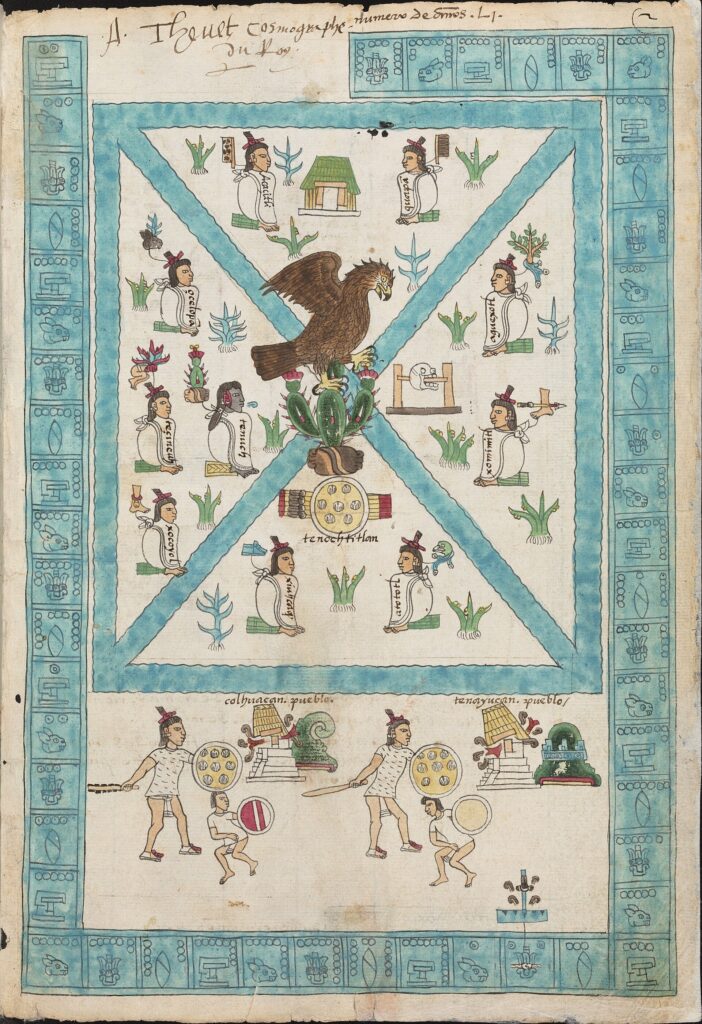
The World As They See It
Cosmological Structure. A cosmos ordered by the sacred calendar and by cycles: the tonalpohualli (the 260-day sacred count) and the interlocking calendrical cycles governing time, fate, and the sacred. The Mexica cosmos moved through cyclical ages (the "suns"), each created and destroyed in turn, the present age itself one in a series. Time is cyclical, ordered by the calendar. The codices record that order, setting history, prophecy and cosmology into the sacred count.
Time. Cyclical and calendrical: the tonalpohualli and the interlocking cycles ordering time and fate; the cosmic ages (suns) succeeding one another; the recurring rounds of the calendar. The codex records time cyclically, the sacred count turning through its rounds.
The Sacred. The sacred calendar (tonalpohualli) and the cycles. The painted book (amoxtli) and the sacred art of the tlahcuilo (the painter-scribe). The sacred colors (the "black and red," tlilli tlapalli, a Nahua metaphor for wisdom and writing). The gods and the cosmic order. The pictographic sacred language.
Death / Afterlife. The Mexica had complex understandings of the afterlife, the destination depending on the manner of death. Within the codex tradition, the emphasis relevant here is the cyclical cosmic order (the succession of ages, the turning of the calendar) recorded and enacted in the painted books.
The Figures
Sacred Elements
Sacred Objects. The amoxtli (the painted book/codex). The sacred colors and materials of the tlahcuilo. The tonalpohualli calendar.
Sacred Practices. The art of the tlahcuilo (painting the sacred books). The keeping and reading of the codices. The reckoning of the sacred calendar and its cycles.
Sacred Language. The pictographic and glyphic language of the codices: image, symbol, and glyph combined to record and tell. "Tlilli tlapalli" (the black and the red) as the metaphor for the wisdom and writing of the sacred books.
Sacred Prohibitions. The sacred books and their knowledge are precious and sacred; the calendar and its reckoning carry sacred weight. (Few painted books survive from before 1521; those that do are an irreplaceable inheritance.)
The Shape This StoryWorld Shares
`cyclical`
The Aztec codex tradition is ordered by the sacred calendar and its cycles: the tonalpohualli turning through its rounds, the cosmic ages (suns) succeeding one another, time reckoned cyclically. The codex records this order and tells its story through the turning calendar. The story is a cyclical ordering: the sacred count and the cosmic cycles turning, the painted book carrying the living teaching through the rounds. Here the cyclical shape is calendrical and painted.
Amoxtli Ipampa (the codex's sacred purpose) → Tlilli Tlapalli (the sacred visual language established) → Tonalpohualli (the sacred calendar framework, the cyclical order) → Tetlacuilolli (the character pictographs) → Tlahcuilolli Nepantla (the sequential narrative panels) → Teoxihuitl (sacred symbol integration) → Nemiliztli (the living teaching legacy, the cycle preserved and renewed).