← The Cultures Behind the StoryWorlds
Middle East: Baghdad, Cairo and Persia (with Indian roots)
Persian & Arabic — Thousand and One Nights
StoryWorld comingThe Arabic and Persian storytellers of Baghdad, Cairo and the Persian lands, drawing on older Indian story-frames, whose tales flowed together into the great compilation of the Thousand and One Nights, a cross-cultural masterwork of nested storytelling.
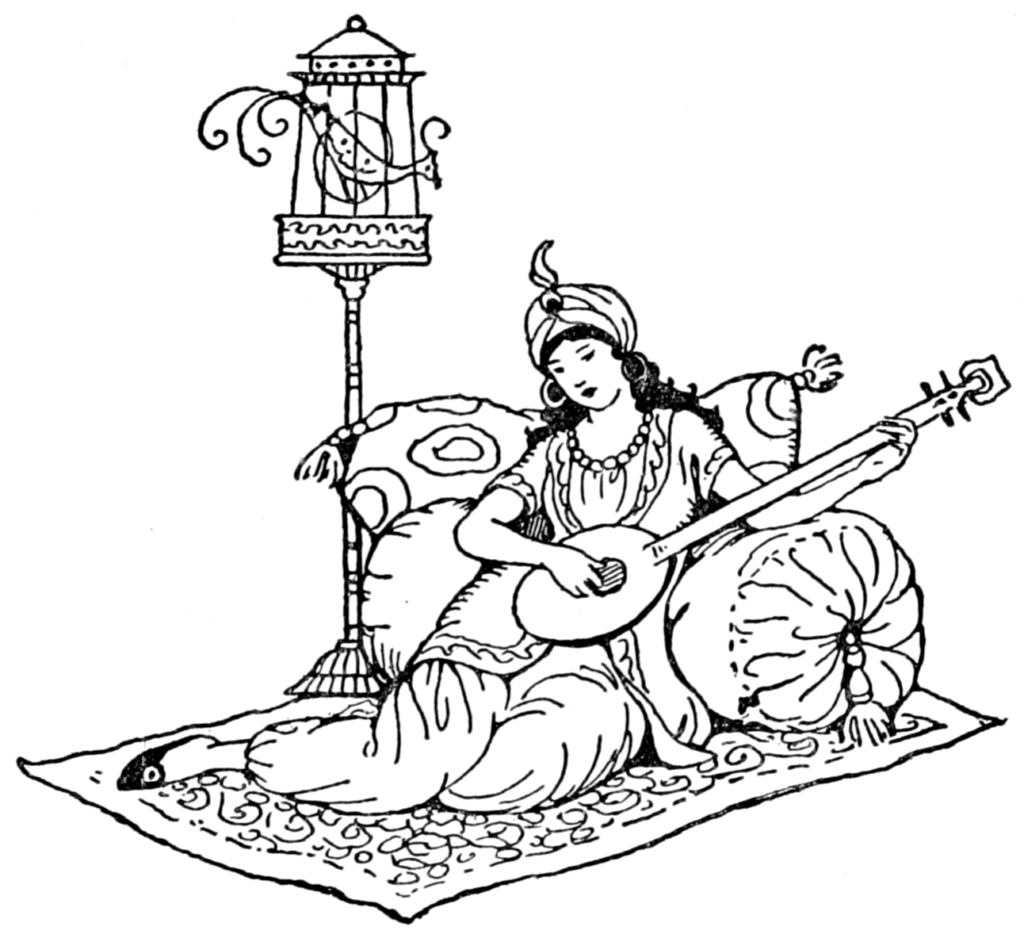
The World As They See It
Structural / Narrative Vision. A world in which a life is bought one night at a time. Shahrazad marries a king who kills each bride at dawn, and every night she tells him a tale and stops before the end, so that he spares her to hear the rest. Inside her tales, characters bargain the same way: a merchant's life is ransomed with three stories told to a jinni, a fisherman talks his way out of a jar. The tales nest inside one another, and each one is a payment.
Time / Structure. Nested and exchanged: a frame holding tales and tales holding tales, each story a payment that buys one more night. The structure branches and nests, story within story.
The Valued. The tale as currency. The frame that sets the terms (Shahrazad's life against the king's curiosity). The ending withheld, so the next night has to be granted. Characters inside the tales who buy time, mercy or freedom with a story. The art of the teller, who keeps the exchange going.
The Figures
Sacred Elements
Valued Structural Elements. The frame (Shahrazad's night-by-night telling). The nested tales. The story-triggers (a life to ransom, a wonder to explain, a question to answer). The recurring figures who carry a debt or a promise from tale to tale. The themes the bargains turn on: fate, justice, wit, mercy.
The Storyteller's Art. The ending held back each dawn, so the king has to grant another night. The nesting of tale within tale, each told for a price. The judgment of how much to give and how much to keep for tomorrow.
The Shape This StoryWorld Shares
`negotiation`
The Thousand and One Nights is built on exchange. Shahrazad never defeats the king. Each night she offers a tale and keeps back its ending, and he grants her another day to hear it. The tales inside do the same: a merchant's life is bought from a jinni with three stories. Over a thousand nights the terms change, and the king who meant to kill her keeps her.
Frame Narrative (the first bargain: a tale a night for a life) → Story Triggers (what each inner tale is told to buy) → Nested Architecture (bargains inside bargains) → Character Web (the figures who carry debts and promises across tales) → Thematic Resonance (what the bargains turn on: fate, justice, wit, mercy) → Resolution Cascade (the bargains settled innermost first, up to new terms at the frame).