Chinese (Taoist) — Zhuangzi Parables
Taoist philosophical narrative: the parables of Zhuangzi
Chinese Taoist tradition: Zhuangzi (Zhuang Zhou, c. 369–286 BCE) and Laozi (traditionally 6th century BCE), of the Warring States period of ancient China.
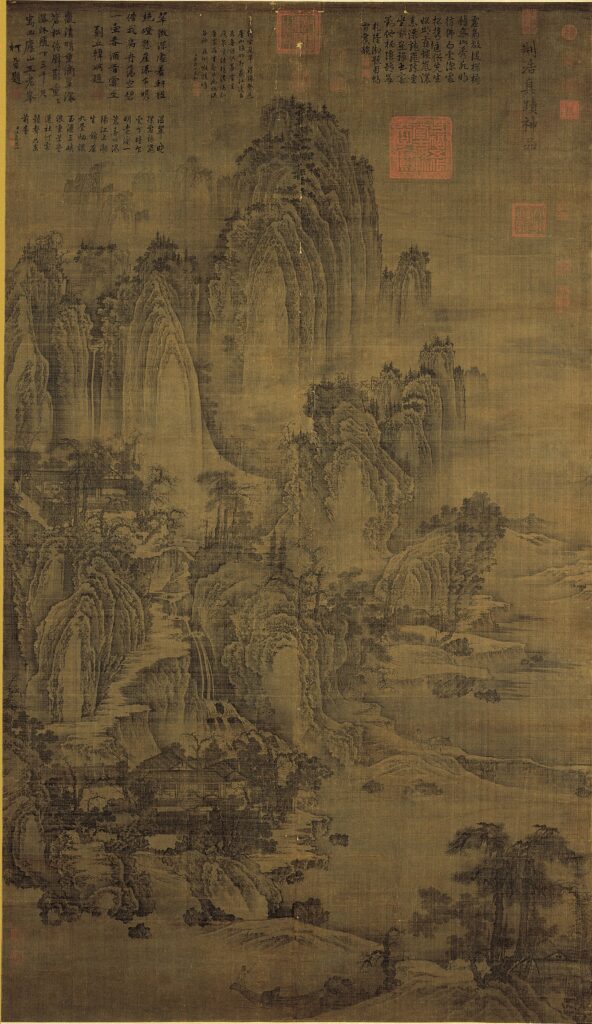
Chinese (Taoist)
The culture
Chinese Taoist tradition: Zhuangzi (Zhuang Zhou, c. 369–286 BCE) and Laozi (traditionally 6th century BCE), of the Warring States period of ancient China.
Where
East Asia: China
Time depth
The Zhuangzi and the Dao De Jing (attributed to Laozi) date to the Warring States period (5th–3rd centuries BCE). Taoism has been continuously influential for over two millennia and remains a living philosophical and religious tradition.
Living tradition
Yes: philosophical Taoism deeply shapes Chinese thought, art, and literature; religious Taoism is actively practiced. Zhuangzi's parables are read worldwide, some of the most playful philosophy ever written.
Language
Classical Chinese. The Zhuangzi is a collection of parables, dialogues, and philosophical fragments, written with extraordinary literary artistry, humor, and paradox. Its method is the story that shifts your perspective rather than the argument that compels your assent.
The world of its stories
Cosmological Structure
The Dao (the Way): the ineffable source and pattern of all things, which cannot be named or grasped but only harmonized with. All things arise from the Dao and return to it. The cosmos is a spontaneous, self-generating flow; there is no cosmic conflict of good against evil, only the ceaseless transformation of things (wu hua) and the possibility of moving with or against the flow.
Creation
A spontaneous arising with no creator: the Dao gives rise to the one, the one to the two (yin and yang), the two to the ten thousand things. Nothing is made; everything unfolds. The world is self-so (ziran): naturally and spontaneously what it is.
Time
Cyclical transformation without fixed direction: things arise, change, and return; life becomes death becomes life in the great flux. Zhuangzi's serenity in the face of death comes from seeing it as one more transformation in an endless flow, no more to be feared than the turn of the seasons.
The Sacred
The Dao itself, and the state of harmony with it. Wu wei: non-action, or more precisely effortless action, acting in accord with the natural flow rather than against it. Ziran: spontaneity, naturalness, being self-so. The sage who has emptied the self and moves with the Dao. The uselessness that preserves, the emptiness that is full.
Death / Afterlife
Death is transformation, not tragedy: Zhuangzi famously drummed on a pot and sang at his wife's funeral, seeing her death as a natural change like the seasons. The self dissolves back into the great flow of things. There is no judgment, no heaven or hell in the philosophical tradition: only the endless transformation of which each life is a passing form.
Non-Conflict Architecture
An Architecture of Story
The Non-Conflict Architecture GuideWhy Non-Conflict Architecture
The Zhuangzi parable follows the East Asian four-movement form of qǐ-chéng-zhuǎn-hé: introduction, development, the unexpected turn, harmonisation. There is no antagonist, no rising conflict, no climactic battle. Instead: a situation is established, it develops, an unexpected turn shifts the perspective entirely, and the shift resolves into a new harmony of understanding. The meaning comes from the turn, the sudden change of view that shows the situation differently. Zhuangzi's butterfly dream is the model: established (Zhuangzi dreams he is a butterfly), developed (he is fully the butterfly, knowing nothing of Zhuangzi), turned (he wakes, but is he Zhuangzi who dreamt a butterfly, or a butterfly now dreaming Zhuangzi?), harmonized (the boundary dissolves, and this is called the transformation of things).
Structural Logic
Meaning through the turn, not through conflict. A situation is set, it develops, an unexpected shift of perspective transforms it, and the transformation resolves into a new and deeper harmony. No enemy is defeated; a fixation is dissolved.
Structural Movement
The Frame (the situation set as things are, the ordinary frame) → Xiāoyáo (wandering deeper: the situation elaborated, the frame filled in) → Jué (the waking: the turn, the sudden shift of perspective that changes everything) → Wùhuà (the transformation of things: the turn resolves into a new, deeper understanding, the parts reconciled at a higher level).
Key figures
Supreme Being / Creator
None in the theistic sense. The Dao is the impersonal Way, the source and pattern of all things. It does not command, judge, or intervene; it simply is the flow with which one may harmonize.
Major Figures
- Zhuangzi (Zhuang Zhou): the philosopher-storyteller himself, who appears in his own parables as a character (dreaming he is a butterfly, refusing high office to drag his tail in the mud like a free turtle).
- Laozi: the traditional founder of Taoism, author of the Dao De Jing, the "Old Master."
- The sages, fools, and craftsmen of the parables: Cook Ding who carves the ox effortlessly, the useless tree that survives because it is useless, the cicada and the great bird Peng, the skilled swimmer, the woodcarver.
- Huizi (Hui Shi): the logician and Zhuangzi's friend, his partner in argument on the bridge over the Hao and at his wife's death.
- Hundun: the Emperor of the Centre who had no openings, and Shu and Hu, who bored them.
- Kun and Peng: the great fish and the great bird it becomes.
Trickster / Culture Figure
Zhuangzi himself is the great trickster-philosopher, using humor, paradox, absurdity, and reversal to jolt the reader out of fixed perspectives. His method is playful subversion: the story that makes you laugh and, in laughing, see differently.
Ancestor Figures
The legendary sages and the Yellow Emperor appear, often gently mocked or reinterpreted. The tradition honors the nameless sages who embody the Dao without seeking recognition.
Who’s Who
Sacred elements
Sacred Objects
No sacred objects in the ritual sense in philosophical Taoism: the tradition distrusts attachment to forms. The emblematic images instead: the uncarved block (pu, natural simplicity), the empty vessel (useful for its emptiness), the butterfly, the useless tree.
Sacred Places
Nature itself: mountains, rivers, the wilderness where the sage wanders free. In the philosophical tradition, the natural world itself is where one finds harmony with the Dao.
The bridge over the Hao river, where Zhuangzi and Huizi watch the fish. The shrine at Crooked Shaft, with its useless oak. The Centre, Hundun's realm, between the South Sea and the North Sea. The Northern Darkness and the Southern Darkness, between which Peng flies.
Sacred Practices
Wu wei: effortless action in accord with the flow. Sitting in forgetfulness (zuowang), the meditative emptying of the self. The cultivation of ziran, naturalness. The reading and contemplation of the parables as perspective-shifting devices. Wandering free and easy (xiaoyao you).
Sacred Prohibitions
Do not force, strive, or impose the will against the natural flow: this is the root error. Do not cling to fixed perspectives, rigid categories, or the illusion of a permanent self. Do not seek usefulness, status, and cleverness at the cost of wholeness: the tradition warns that the "useful" tree is cut down while the "useless" one lives.
How their stories are told
How Stories Are Told
As parable and paradox: short, vivid stories that shift the reader's perspective rather than arguing a point. A Zhuangzi parable typically sets up an ordinary or expected frame, then turns it: the great bird whose flight the little quail cannot comprehend, the butterfly dream that dissolves the boundary between waking and dreaming, the cook whose blade never dulls because he follows the natural lines. The turn, the unexpected shift of view, is the whole point.
Who Tells Them
Zhuangzi and the Taoist sages; the tradition of commentators and storytellers who carried the parables forward; Chinese literary and artistic culture broadly, which absorbed Taoist perspective-shifting deeply.
When They Are Told
In philosophical teaching, in literature and art, in the ordinary cultivation of a Taoist sensibility. The parables function wherever a fixed perspective needs loosening.
The Purpose of Story
To shift perspective: to loosen the grip of fixed views, rigid categories, and the striving ego, and to open the reader to the natural flow of the Dao. The story does not resolve a conflict; it dissolves a fixation. Its meaning arrives through the unexpected turn that makes you see the whole situation differently. There is no antagonist and no battle; the turn alone shows the meaning.
Signature Story Types
The perspective-shifting parable (butterfly dream, Cook Ding, the useless tree, the frog in the well, the happiness of fishes), the philosophical dialogue, the paradox, the gentle mockery of Confucian earnestness.
How their stories are built, step by step
The four movements of the Zhuangzi parable: the frame set as things are, the wandering that deepens it, the waking that turns the view, and the transformation of things.
The Frame: Things as They Are
Cultural meaning
The first movement establishes the situation, quietly, without announcing a conflict. A scene, a character, an ordinary frame is set. In Zhuangzi, this is Zhuangzi lying down to sleep, or Cook Ding standing before the ox, or the great bird preparing to fly. There is no problem to be solved, no enemy introduced: simply a situation, presented as it is.
Wisdom quote
"Once Zhuang Zhou dreamt he was a butterfly, a butterfly flitting and fluttering around, happy with himself and doing as he pleased.": Zhuangzi, the butterfly dream, Watson translation basis, public domain sources
Cultural teaching
In non-conflict architecture, you open by simply establishing a situation, not a problem, not a conflict, not a threat. Set the scene as it is, quietly and completely. Opening with tension or a hook works against this form. Instead, present an ordinary frame the reader can settle into, so that the coming turn can transform it.
Xiāoyáo (逍遙): Wandering Deeper into the Frame
Cultural meaning
The second movement develops the situation, deepening, elaborating, filling in the frame. Zhuangzi becomes fully the butterfly, knowing nothing of having been a man. Cook Ding's blade moves through the ox. The development deepens immersion: the reader settles further into the established frame, which gives the coming turn its force.
Wisdom quote
"He didn't know he was Zhuang Zhou. Suddenly he woke up and there he was, solid and unmistakable Zhuang Zhou.": Zhuangzi, the butterfly dream
Cultural teaching
The development in non-conflict architecture is deepening, not escalation. You elaborate and immerse rather than raise the stakes toward a clash. Let the reader settle fully into the established frame: believe it, inhabit it, take it as the whole reality. The more completely they accept this frame, the more powerful the turn will be. Deepen; do not complicate toward conflict.
Jué (覺): The Waking / The Turn of View
Cultural meaning
The third movement is the turn, the zhuǎn, the unexpected shift of perspective that changes everything. Zhuangzi wakes: but is he a man who dreamt he was a butterfly, or a butterfly now dreaming he is a man? The turn does not resolve the situation by force or conflict; it transforms it by revealing it from an angle no one anticipated. This is the heart of non-conflict architecture: the meaning is made here, in the shift of view.
Wisdom quote
"But he didn't know if he was Zhuang Zhou who had dreamt he was a butterfly, or a butterfly dreaming he was Zhuang Zhou.": Zhuangzi, the butterfly dream, the turn
Cultural teaching
This is the defining move of the entire architecture: the unexpected turn. Not a climax, not a battle, not a resolution of conflict: a sudden shift of perspective that transforms how everything before it is understood. The turn should be genuinely unexpected and should recontextualize the whole established situation. This is where your story's meaning is created. Spend your invention here.
Wùhuà (物化): The Transformation of Things
Cultural meaning
The fourth movement harmonizes, the turn resolves into a new, deeper understanding. The butterfly dream concludes: "This is called the transformation of things." Zhuangzi and the butterfly are reconciled, and the apparent contradiction settles into a new whole. Harmony and understanding. The situation, transformed by the turn, comes to rest in a deeper peace.
Wisdom quote
"Between Zhuang Zhou and the butterfly there must be some distinction! This is called the transformation of things.": Zhuangzi, the butterfly dream, the harmonization
Cultural teaching
End with a harmonisation: the turn settles into a new understanding and the apparent contradictions are reconciled. In non-conflict architecture, the close is a settling into a wiser peace, not a triumph. Let the transformation the turn produced come to rest in serenity and insight. Nothing was defeated; something was understood.
What makes this tradition distinct
What makes this tradition distinct from all others
In a Zhuangzi parable the meaning comes entirely from a turn of perspective. Nobody opposes anyone and nobody wins. Its method is the story that shifts your view rather than the argument that compels your assent, or the battle that resolves your tension. Its serenity toward death, its delight in paradox and reversal, and its valorization of "uselessness" and effortless action (wu wei) invert nearly every assumption of conflict-driven storytelling. The butterfly dream is a complete model of the qǐ-chéng-zhuǎn-hé form.
Cultural warnings — what NOT to do
- Do not import a conflict structure: the entire point of this architecture is the absence of antagonistic conflict; a villain or a climactic battle destroys it.
- Do not treat wu wei as passivity or laziness: it is effortless action in accord with the natural flow, an active harmony.
- Do not resolve the turn into a "moral" or a lesson imposed from outside: the harmonization is an insight that arises naturally, not a message delivered.
- Do not confuse philosophical Taoism with later religious Taoism's pantheon: the Zhuangzi is philosophical parable, not deity-myth.
The stories
Each story with its source, where to read it and why it fits.
The StoryWorld in Full
StoryWorld · East Asia — China
TAOIST PARABLES — Zhuangzi
Chinese Taoist tradition — Zhuangzi (Zhuang Zhou, c. 369–286 BCE) and Laozi (traditionally 6th century BCE), of the Warring States period of ancient China.
Non Conflict architecture
The world as they see it
Cosmological Structure. The Dao (the Way) — the ineffable source and pattern of all things, which cannot be named or grasped but only harmonized with. All things arise from the Dao and return to it. The cosmos is a spontaneous, self-generating flow; there is no cosmic conflict of good against evil, only the ceaseless transformation of things (wu hua) and the possibility of moving with or against the flow.
Creation. Not a deliberate creation by a creator but a spontaneous arising — the Dao gives rise to the one, the one to the two (yin and yang), the two to the ten thousand things. Nothing is made; everything unfolds. The world is not designed but self-so (ziran) — naturally, spontaneously what it is.
Time. Cyclical transformation without fixed direction — things arise, change, and return; life becomes death becomes life in the great flux. Zhuangzi's serenity in the face of death comes from seeing it as one more transformation in an endless flow, no more to be feared than the turn of the seasons.
The Sacred. The Dao itself, and the state of harmony with it. Wu wei — non-action, or more precisely effortless action, acting in accord with the natural flow rather than against it. Ziran — spontaneity, naturalness, being self-so. The sage who has emptied the self and moves with the Dao. The uselessness that preserves, the emptiness that is full.
Death / Afterlife. Death is transformation, not tragedy — Zhuangzi famously drummed on a pot and sang at his wife's funeral, seeing her death as a natural change like the seasons. The self dissolves back into the great flow of things. There is no judgment, no heaven or hell in the philosophical tradition — only the endless transformation of which each life is a passing form.
The powers and figures
Supreme Being / Creator
None in the theistic sense — the Dao is not a being but the impersonal Way, the source and pattern of all. It does not command, judge, or intervene; it simply is the flow with which one may harmonize.
Major Figures
Zhuangzi (Zhuang Zhou) — the philosopher-storyteller himself, who appears in his own parables as a character (dreaming he is a butterfly, refusing high office to drag his tail in the mud like a free turtle).
Laozi — the traditional founder of Taoism, author of the Dao De Jing, the "Old Master."
The sages, fools, and craftsmen of the parables — Cook Ding who carves the ox effortlessly, the useless tree that survives because it is useless, the cicada and the great bird Peng, the skilled swimmer, the woodcarver.
Trickster / Culture Figure
Zhuangzi himself is the great trickster-philosopher, using humor, paradox, absurdity, and reversal to jolt the reader out of fixed perspectives. His method is playful subversion — the story that makes you laugh and, in laughing, see differently.
Ancestor Figures
Sacred things and places
Sacred Objects. No sacred objects in the ritual sense in philosophical Taoism — the tradition distrusts attachment to forms. The emblematic images instead: the uncarved block (pu, natural simplicity), the empty vessel (useful for its emptiness), the butterfly, the useless tree.
Sacred Places. Nature itself — mountains, rivers, the wilderness where the sage wanders free. Not built temples (in the philosophical tradition) but the natural world as the site of harmony with the Dao.
Sacred Practices. Wu wei — effortless action in accord with the flow. Sitting in forgetfulness (zuowang), the meditative emptying of the self. The cultivation of ziran, naturalness. The reading and contemplation of the parables as perspective-shifting devices. Wandering free and easy (xiaoyao you).
Sacred Prohibitions. Do not force, strive, or impose the will against the natural flow — this is the root error. Do not cling to fixed perspectives, rigid categories, or the illusion of a permanent self. Do not seek usefulness, status, and cleverness at the cost of wholeness — the tradition warns that the "useful" tree is cut down while the "useless" one lives.
How the stories are told
How Stories Are Told. As parable and paradox — short, vivid stories that shift the reader's perspective rather than arguing a point. A Zhuangzi parable typically sets up an ordinary or expected frame, then turns it: the great bird whose flight the little quail cannot comprehend, the butterfly dream that dissolves the boundary between waking and dreaming, the cook whose blade never dulls because he follows the natural lines. The turn — the unexpected shift of view — is the whole point.
Who Tells Them. Zhuangzi and the Taoist sages; the tradition of commentators and storytellers who carried the parables forward; Chinese literary and artistic culture broadly, which absorbed Taoist perspective-shifting deeply.
When They Are Told. In philosophical teaching, in literature and art, in the ordinary cultivation of a Taoist sensibility. The parables function wherever a fixed perspective needs loosening.
The Purpose of Story. To shift perspective — to loosen the grip of fixed views, rigid categories, and the striving ego, and to open the reader to the natural flow of the Dao. The story does not resolve a conflict; it dissolves a fixation. Its meaning arrives through the unexpected turn that makes you see the whole situation differently. This is non-conflict architecture in its purest form: no antagonist, no battle — just the turn that reveals.
Signature Story Types. The perspective-shifting parable (butterfly dream, Cook Ding, the useless tree, the frog in the well, the happiness of fishes), the philosophical dialogue, the paradox, the gentle mockery of Confucian earnestness.
The stories
The Butterfly Dream
Source Zhuangzi, Chapter 2 ("On the Equality of Things") — Zhuangzi dreams he is a butterfly and wakes unsure which is the dream
Why it fits The complete model of qǐ-chéng-zhuǎn-hé non-conflict architecture — establishment, development, the turn (which is the dream/waking), and the harmonization ("the transformation of things")
Cook Ding Carves the Ox
Source Zhuangzi, Chapter 3 ("The Secret of Caring for Life") — the cook whose blade never dulls because he follows the natural structure of the ox
Why it fits Wu wei made narrative — effortless action in accord with the flow; the "conflict" of butchery dissolved into harmony with the natural lines, resolving in a serene understanding of how to live
The Useless Tree
Source Zhuangzi, Chapter 4 ("In the World of Men") — the great tree that survives precisely because it is useless, teaching the value of "uselessness"
Why it fits The turn of perspective that inverts a fixed category (useful/useless), resolving into a deeper harmony — non-conflict meaning created entirely by the shift of view
How their stories move
The Zhuangzi parable is the purest expression of non-conflict structure — the East Asian four-movement form of qǐ-chéng-zhuǎn-hé (introduction, development, the unexpected turn, harmonization). There is no antagonist, no rising conflict, no climactic battle. Instead: a situation is established, it develops, an unexpected turn shifts the perspective entirely, and the shift resolves into a new harmony of understanding. The meaning is created not by conflict and resolution but by the turn — the sudden change of view that reveals the situation differently. Zhuangzi's butterfly dream is the model: established (Zhuangzi dreams he is a butterfly), developed (he is fully the butterfly, knowing nothing of Zhuangzi), turned (he wakes — but is he Zhuangzi who dreamt a butterfly, or a butterfly now dreaming Zhuangzi?), harmonized (the boundary dissolves, and this is called the transformation of things).
Qǐ (establishment — the situation set, the ordinary frame) → Chéng (development — the situation elaborated, the frame filled in) → Zhuǎn (the unexpected angle — the turn, the sudden shift of perspective that changes everything) → Hé (harmonization — the turn resolves into a new, deeper understanding, the parts reconciled at a higher level).
This culture
People · Chinese Taoist tradition — Zhuangzi (Zhuang Zhou, c. 369–286 BCE) and Laozi (traditionally 6th century BCE), of the Warring States period of ancient China.
Place · East Asia — China
Depth · The Zhuangzi and the Dao De Jing (attributed to Laozi) date to the Warring States period (5th–3rd centuries BCE). Taoism has been continuously influential for over two millennia and remains a living philosophical and religious tradition.
Living · Yes — philosophical Taoism deeply shapes Chinese thought, art, and literature; religious Taoism is actively practiced. Zhuangzi's parables are read and beloved worldwide as some of the most profound and playful philosophical writing ever produced.
Non Conflict worlds
JAPANESE — Ma (間)
JAPANESE — Kishōtenketsu (起承転結)
CHINESE — Tang Dynasty Qǐchéngzhuǎnhé (起承轉合)
What makes this tradition distinct
The Zhuangzi parable is perhaps the purest non-conflict architecture in world literature — meaning created entirely through the turn of perspective, with no antagonist, no rising action, no climactic conflict, no victory. Its method is the story that shifts your view rather than the argument that compels your assent, or the battle that resolves your tension. Its serenity toward death, its delight in paradox and reversal, and its valorization of "uselessness" and effortless action (wu wei) invert nearly every assumption of conflict-driven storytelling. The butterfly dream is a complete model of the qǐ-chéng-zhuǎn-hé form.
Mythology Catalog
- Why it fits: The turn of perspective that inverts a fixed category (useful/useless), resolving into a deeper harmony — non-conflict meaning created entirely by the shift of view
GriotsWell · Simplified Lore Library · Taoist Parables (Zhuangzi) · July 2026
The Guide
GriotsWell StoryWorlds · Guide
Taoist philosophical narrative — the parables of Zhuangzi
Non Conflict architecture · 4 steps
How it moves
- Qǐ — Establishment / The Situation Set
- Chéng — Development / The Situation Elaborated
- Zhuǎn — The Unexpected Angle / The Turn
- Hé — Harmonization / The New Understanding
Qǐ (establishment — the situation set, the ordinary frame) → Chéng (development — the situation elaborated, the frame filled in) → Zhuǎn (the unexpected angle — the turn, the sudden shift of perspective that changes everything) → Hé (harmonization — the turn resolves into a new, deeper understanding, the parts reconciled at a higher level). ---
Why it is told this way
Meaning through the turn, not through conflict. A situation is set, it develops, an unexpected shift of perspective transforms it, and the transformation resolves into a new and deeper harmony. No enemy is defeated; a fixation is dissolved.
To shift perspective — to loosen the grip of fixed views, rigid categories, and the striving ego, and to open the reader to the natural flow of the Dao. The story does not resolve a conflict; it dissolves a fixation. Its meaning arrives through the unexpected turn that makes you see the whole situation differently.
What this StoryWorld asks
- Can your story create its meaning through a turn of perspective rather than a conflict?
- Have you resisted introducing an antagonist or a rising clash entirely?
- Is your third movement a genuine shift of view that recontextualizes everything, not a climax?
- Does your story end in harmony and understanding rather than victory?
At a glance
People Chinese Taoist tradition — Zhuangzi (Zhuang Zhou, c. 369–286 BCE) and Laozi (traditionally 6th century BCE), of the Warring States period of ancient China.
Region East Asia — China
Time depth The Zhuangzi and the Dao De Jing (attributed to Laozi) date to the Warring States period (5th–3rd centuries BCE). Taoism has been continuously influential for over two millennia and remains a living philosophical and religious tradition.
Living tradition Yes — philosophical Taoism deeply shapes Chinese thought, art, and literature; religious Taoism is actively practiced. Zhuangzi's parables are read and beloved worldwide as some of the most profound and playful philosophical writing ever produced.
How it is carried Classical Chinese. The Zhuangzi is a collection of parables, dialogues, and philosophical fragments, written with extraordinary literary artistry, humor, and paradox.
“Once Zhuang Zhou dreamt he was a butterfly, a butterfly flitting and fluttering around, happy with himself and doing as he pleased.”— Zhuangzi, the butterfly dream (Watson translation basis, public domain sources)
Keep faith with it
- Do not import a conflict structure — the entire point of this architecture is the absence of antagonistic conflict; a villain or a climactic battle destroys it. - Do not treat wu wei as passivity or laziness — it is effortless action in accord with the natural flow, a sophisticated and active harmony.