Yamato Japanese — Kojiki / Amaterasu
Shinto mythological tradition, the Kojiki and the cycle of the kami
Yamato Japanese, the Kojiki ("Record of Ancient Matters") compiled in 712 CE by Ō no Yasumaro from older oral tradition, drawing on myths far predating writing in Japan.
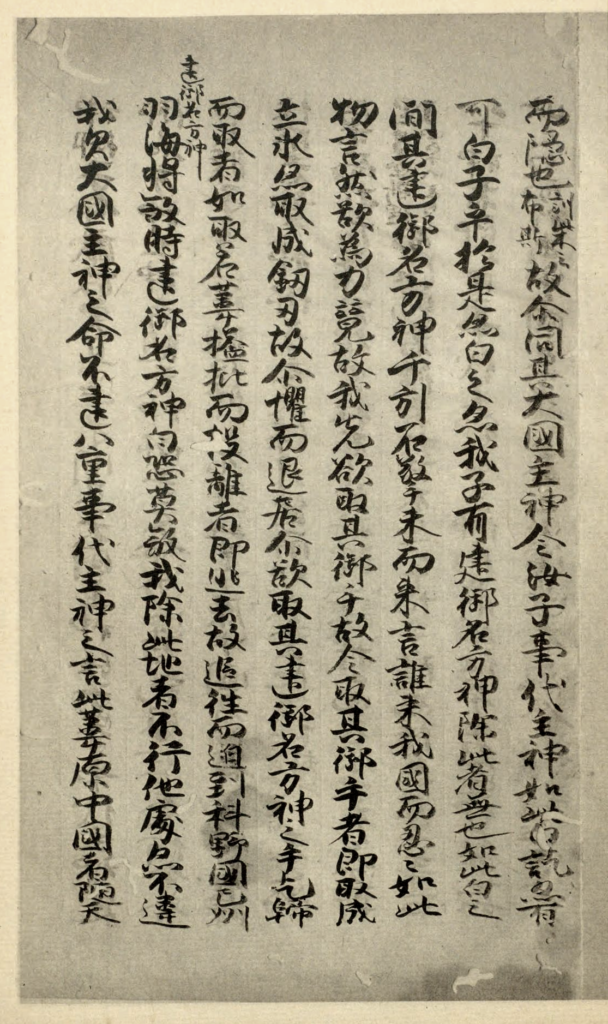
Yamato Japanese
The culture
Yamato Japanese, the Kojiki ("Record of Ancient Matters") compiled in 712 CE by Ō no Yasumaro from older oral tradition, drawing on myths far predating writing in Japan.
Where
East Asia — Japan
Time depth
The Kojiki was compiled in 712 CE, but preserves oral traditions reaching back into Japanese prehistory. Shinto is the indigenous spiritual tradition of Japan, continuously practiced for well over a millennium.
Living tradition
Yes. Shinto is practised today at tens of thousands of shrines across Japan, in seasonal festivals (matsuri) and in daily life. The kami are actively honored.
Language
Old Japanese, recorded in a complex early script. The Kojiki blends narrative prose, genealogy, and song. Shinto tradition is carried through shrine ritual, oral transmission, seasonal festival, and the recitation of norito (ritual prayers).
The world of its stories
Cosmological Structure
A layered cosmos: Takamagahara (the High Plain of Heaven, home of the heavenly kami), the Nakatsukuni (the Central Land, the earthly world of Japan), and Yomi (the land of the dead) and Ne-no-kuni (the root-land). The kami (the sacred powers, gods, spirits, and forces present in nature, ancestors, and remarkable things) pervade all. The sacred is immanent, everywhere, in the mountain, the waterfall, the ancient tree, the emperor's line.
Creation
From the formless, the first kami came into being in Takamagahara. Izanagi and Izanami, the divine pair, descended and, standing on the floating bridge of heaven, stirred the primordial ocean with a jeweled spear; the brine that dripped formed the first island. They gave birth to the islands of Japan and to many kami: until Izanami died giving birth to fire, and the cycle of life, death, and renewal entered the world.
Time
Cyclical and renewing, the seasons, the festivals, the perpetual renewal of purity through misogi (purification). The great shrine of Ise is ritually rebuilt every twenty years, an act of eternal renewal that embodies the Shinto sense of time: the sacred perpetually made new. The cave of Amaterasu, the sun withdrawing and being drawn back, is the mythic model of death-and-return that structures the cosmos.
The Sacred
The kami above all: immanent, countless ("eight million kami"), present in nature and remarkable things. Purity and pollution (kegare), the central Shinto concern, and purification (misogi, harae) the central practice. The sun (Amaterasu). The sacred renewal. The shrine (jinja) and the sacred boundary (torii). Musubi, the mysterious creative-generative force that binds and produces life.
Death / Afterlife
Death is pollution (kegare) requiring purification, and the dead pass to Yomi, the shadowy land. Izanagi's descent to Yomi to recover Izanami, and his flight and the sealing of the passage, establishes the boundary between the living and the dead. Yet the dead become ancestral kami, honored and present. Death is a transition within the great cycle, not a final ending; renewal follows.
Why Cyclical Architecture
Shinto is a religion of renewal, the seasons, the festivals, the twenty-year rebuilding of Ise, the perpetual restoration of purity through misogi. Its central myth, the cave of Amaterasu, is a perfect cycle: the sun-goddess withdraws (the light and life of the world with her), the world falls into darkness and disorder, the kami act to draw her back, and the sun returns, light and life renewed. This is a restoration of the cycle, a return of what withdrew. Shinto stories move through withdrawal and return, pollution and purification, ending always in renewal that reopens the cycle. Nothing concludes; everything is made new.
Structural Logic
Withdrawal and return, pollution and purification, ending in renewal that reopens the cycle. The sacred (light, life, purity, order) withdraws or is polluted; through right action and ritual it is drawn back and renewed; the renewal restores the cycle, which will turn again.
Structural Movement
Kunitokotachi (the first stirring, the world coming into being) → Kotoamatsukami (the heavenly deities, the sacred order established) → Musubi (the creative force, life generated) → Kakuriyo (the spirit world, the withdrawal, the sacred hidden, the world in darkness) → Mono no Aware (the pathos of things, the grief and beauty of the withdrawal felt) → Misogi (purification, the ritual action that draws the sacred back) → Musubi again (return and renewal, the sacred restored, the cycle made new and reopened).
Key figures
Supreme Being / Creator
No single supreme creator, the kami arise in succession. The primal creative pair are Izanagi ("He who invites") and Izanami ("She who invites"), who create the islands and many kami. Above them, the first formless kami, including Amenominakanushi (the central master of heaven).
Major Deities (Kami)
- Amaterasu Ōmikami: the sun goddess, the most exalted kami, ancestress of the imperial line; her withdrawal into the cave and return is the central myth.
- Susanoo, the storm god, Amaterasu's tempestuous brother, whose violence drives her into the cave and who later slays the eight-headed serpent Yamata-no-Orochi.
- Tsukuyomi, the moon kami.
- Izanagi and Izanami, the creator pair.
- Ame-no-Uzume, the kami of dawn and mirth, whose dance lures Amaterasu from the cave.
Trickster / Culture Figure
Susanoo is the disruptive, ambivalent force: sometimes destructive (driving Amaterasu into hiding), sometimes heroic (slaying the serpent). Ame-no-Uzume's bawdy, joyous dance is a form of sacred trickery that restores light to the world.
Ancestor Figures
The imperial line descends from Amaterasu through her grandson Ninigi. The ancestral kami are honored at shrines. The dead become kami within the cycle of renewal.
Who’s Who
Sacred elements
Sacred Objects
The Three Sacred Treasures: the mirror (Yata-no-Kagami, associated with Amaterasu and the cave myth), the sword (Kusanagi, drawn from the serpent's tail by Susanoo), and the jewel (Yasakani-no-Magatama), the imperial regalia. The shimenawa (sacred rope), the sakaki tree, the mirror in the shrine.
Sacred Places
Ise Grand Shrine (dedicated to Amaterasu, rebuilt every twenty years). Izumo Shrine. Mount Fuji and sacred mountains. Waterfalls, ancient trees, and stones where kami dwell. Every shrine (jinja) marked by the torii gate.
Sacred Practices
Misogi and harae, purification by water and ritual, the central Shinto act. Matsuri, seasonal festivals renewing the bond with the kami. Offerings and norito (prayers) at the shrine. The twenty-year renewal of Ise. Kagura, sacred dance, descended from Ame-no-Uzume's dance at the cave.
Sacred Prohibitions
Avoid kegare (pollution), contact with death, blood, and impurity requires purification before approaching the sacred. Do not enter sacred space impure. Respect the boundary between the living and the dead (the lesson of Izanagi's flight from Yomi). Honor the kami and the renewal.
How their stories are told
How Stories Are Told
As myth-cycle, the Kojiki narrates the succession of kami and the great mythic episodes (creation, Izanami's death and Izanagi's descent, the cave of Amaterasu, Susanoo and the serpent, the descent of the heavenly grandson) as a connected cycle moving from the age of the kami into the age of the emperors. The stories are also enacted in festival, dance (kagura), and shrine ritual.
Who Tells Them
Originally the reciters of the court and the shrine priests (kannushi); the compilers of the Kojiki; and today the priests, festival participants, and kagura performers who keep the myths alive in ritual.
When They Are Told
In shrine ritual, seasonal festival, and the great renewals. The cave-of-Amaterasu myth is enacted in kagura; the myths structure the ritual year.
The Purpose of Story
To renew, to restore purity, to draw the sacred back into the world (as Amaterasu is drawn from the cave), to maintain the cycle of relationship between the human world and the kami. Story participates in the perpetual renewal that is the heart of Shinto. The great myths are re-enacted every year.
Signature Story Types
The creation cycle (Izanagi and Izanami), the descent to Yomi, the cave of Amaterasu (withdrawal and return of the sun), Susanoo and the serpent, the descent of the heavenly grandson and the origin of the imperial line, kami-origin and shrine-origin tales.
How their stories are built, step by step
Shinto and Kojiki concepts in Japanese, following the cycle of withdrawal and renewal.
Kunitokotachi (The First Stirring / The World Comes Into Being)
Cultural meaning
Named for one of the first kami to arise, this step is the world coming into being, the primordial stirring, the emergence of form from formlessness. Before any drama, the cosmos itself takes shape: the islands formed, the kami arising, the ground of the story established as sacred and alive.
From the Kojiki (paraphrase)
When heaven and earth began, three deities came into being in the High Plain of Heaven.
Cultural teaching
In Shinto cyclical architecture, begin with the world itself coming into being, the sacred ground established before any conflict. The kami are immanent; the world is alive with the sacred from the first. Open with a living, sacred world coming into being, the world the cycle will move through.
Kotoamatsukami (The Heavenly Deities / The Sacred Order)
Cultural meaning
The heavenly kami establish the sacred order, the offices, the relationships, the powers that govern the world. Amaterasu takes her place as the sun; the order of the cosmos is set. This step establishes the sacred order that will be disrupted and then restored, the harmony whose loss and recovery is the story's cycle.
From the Kojiki (paraphrase)
Amaterasu, the Heaven-Shining-Great-August-Deity, is given charge of the Plain of High Heaven.
Cultural teaching
Establish the sacred order (the harmony, the right relationship, the light-giving center) that the cycle will lose and restore. In Shinto, the sun-goddess at the center of heaven is the model: the source of light and life whose withdrawal will plunge the world into darkness. What is the ordering, life-giving center of your story's world, whose loss will drive the cycle?
Musubi (The Creative Force / Life Generated)
Cultural meaning
Musubi is the mysterious generative force that binds and produces life, the creative power flowing through the ordered world. This step is the flourishing: the world alive and generative, relationships producing life, the sacred order bearing fruit. It is the fullness before the withdrawal, the world as it should be, so that its darkening will matter.
In brief
By the power of musubi, all things are bound together and brought forth.
Cultural teaching
Show the world flourishing through its creative force before the withdrawal comes. The fullness of life, the generative bond, the world as it should be, establish this so that the coming darkness has something to take away. In cyclical architecture the loss matters only if the fullness was real. Let the world be genuinely alive and generative here.
Kakuriyo (The Spirit World / The Withdrawal)
Cultural meaning
The sacred withdraws, Amaterasu, offended and grieved by Susanoo's violence, hides in the heavenly cave, and the world falls into darkness. Kakuriyo is the hidden world the sacred withdraws into. This is the cycle's crisis: the light-giving center withdraws, and the world is plunged into darkness and disorder. Not defeated by an enemy, withdrawn, hidden, grieved away.
From the Kojiki (paraphrase)
Terrified, Amaterasu opens the door of the heavenly rock-cave and hides inside, and heaven and the Central Land go dark.
Cultural teaching
The crisis of Shinto cyclical architecture is a withdrawal, not a defeat. The sacred center retreats (grieved, offended, polluted) and the world darkens in its absence. It is a hiding, a turning-away. Let your story's crisis be the withdrawal of its light-giving center, and let the world feel the darkness of that absence.
Mono no Aware (The Pathos of Things / The Grief Felt)
Cultural meaning
Mono no aware, the bittersweet awareness of the impermanence and poignancy of things, names the grief and beauty of the withdrawal. The world feels the absence of the sacred: the darkness, the loss, the poignant longing for the light that has gone. This step dwells in the felt experience of the withdrawal, the sorrow that makes the return meaningful and that is itself a form of beauty.
From the Kojiki (paraphrase)
The eight hundred myriad deities gather in the dry bed of the Peaceful River of Heaven to decide what to do.
Cultural teaching
Dwell in the pathos of the withdrawal, the grief, the poignant beauty of the loss. Japanese aesthetics treasures mono no aware, the bittersweet feeling of impermanence, and Shinto story lets the absence be genuinely felt before it is remedied. Do not rush to fix the darkness; let its sorrow be experienced, for the grief is what makes the return matter and is itself a kind of beauty.
Misogi (Purification / The Sacred Drawn Back)
Cultural meaning
Misogi is purification, the ritual action that restores purity and draws the sacred back. At the cave, the kami do not force Amaterasu out; they create a joyous commotion (Ame-no-Uzume's ecstatic dance, the laughter of the gods, the mirror held ready) and Amaterasu, curious, peers out and is drawn back into the world. The return is achieved through purification, festivity, and invitation, not force. Light returns.
From the Kojiki (paraphrase)
Ame-no-Uzume dances on an upturned tub, the deities laugh until heaven shakes, and Amaterasu, curious, opens the rock-door a crack.
Cultural teaching
The sacred is drawn back through purification, joy, and invitation, never force. This is a distinctive Shinto teaching: the light returns because it is invited, delighted and made curious. Let your story's restoration be an act of purification and invitation, a drawing-back of the sacred through beauty, joy, and ritual, not a conquest.
Musubi (Return and Renewal / The Cycle Reopened)
Cultural meaning
The sun returns; light and life are restored, but renewed, not merely replaced. The passage is sealed so the darkness cannot simply return; the world is made new. And this renewal reopens the cycle: the world will darken again, and be renewed again, as Ise is rebuilt every twenty years. The return restores the cycle and makes the sacred new again.
From the Kojiki (paraphrase)
Amaterasu comes out, and the High Plain of Heaven and the Central Land of Reed Plains are bright again.
Cultural teaching
End with return and renewal: the sacred made new, and the cycle ready to turn again. In Shinto, renewal is perpetual: Ise is rebuilt every twenty years precisely because renewal never ends. Let your story close on the light restored, and on a sign that darkness and return, pollution and purification, will come round again.
What makes this tradition distinct
What makes this tradition distinct from all others
Shinto's genius is renewal, the sacred perpetually made new rather than achieved once, embodied in the twenty-year rebuilding of Ise and the cave-of-Amaterasu cycle of withdrawal and return. Its crisis is a withdrawal, not a defeat; its restoration is invitation and joy, not force (the sun is danced back into the world, not compelled). Its aesthetic of mono no aware treasures the poignant beauty of impermanence and loss. The immanence of the kami, the sacred everywhere in nature, and the central concern with purity and pollution shape a cosmology unlike any other.
Cultural warnings — what NOT to do
- Do not make the crisis a battle against a villain, the cave myth is a withdrawal and an invitation-back, not a war.
- Do not have the sacred compelled or forced back, the distinctive teaching is that Amaterasu is danced and delighted out, drawn by curiosity and joy.
- Do not treat Shinto death/pollution casually, kegare and purification are central and serious concerns.
- Do not conflate Shinto with Buddhism (which also shapes Japan): the Kojiki cycle is specifically Shinto, indigenous, kami-centered.
The stories
Each story with its source, where to read it and why it fits.
The StoryWorld in Full
StoryWorld · East Asia — Japan
KOJIKI / SHINTO — Amaterasu
Yamato Japanese — the Kojiki ("Record of Ancient Matters") compiled in 712 CE by Ō no Yasumaro from older oral tradition, drawing on myths far predating writing in Japan.
Cyclical architecture
The world as they see it
Cosmological Structure. A layered cosmos: Takamagahara (the High Plain of Heaven, realm of the heavenly kami), the Nakatsukuni (the Central Land, the earthly world of Japan), and Yomi (the land of the dead) and Ne-no-kuni (the root-land). The kami — the sacred powers, gods, spirits, and forces present in nature, ancestors, and remarkable things — pervade all. The sacred is immanent, everywhere, in the mountain, the waterfall, the ancient tree, the emperor's line.
Creation. From the formless, the first kami came into being in Takamagahara. Izanagi and Izanami, the divine pair, descended and, standing on the floating bridge of heaven, stirred the primordial ocean with a jeweled spear; the brine that dripped formed the first island. They gave birth to the islands of Japan and to many kami — until Izanami died giving birth to fire, and the cycle of life, death, and renewal entered the world.
Time. Cyclical and renewing — the seasons, the festivals, the perpetual renewal of purity through misogi (purification). The great shrine of Ise is ritually rebuilt every twenty years, an act of eternal renewal that embodies the Shinto sense of time: not linear progress but the sacred perpetually made new. The cave of Amaterasu — the sun withdrawing and being drawn back — is the mythic model of death-and-return that structures the cosmos.
The Sacred. The kami above all — immanent, countless ("eight million kami"), present in nature and remarkable things. Purity and pollution (kegare) — the central Shinto concern, and purification (misogi, harae) the central practice. The sun (Amaterasu). The sacred renewal. The shrine (jinja) and the sacred boundary (torii). Musubi — the mysterious creative-generative force that binds and produces life.
Death / Afterlife. Death is pollution (kegare) requiring purification, and the dead pass to Yomi, the shadowy land. Izanagi's journey to Yomi to recover Izanami — and his flight and the sealing of the passage — establishes the boundary between the living and the dead. Yet the dead become ancestral kami, honored and present. Death is a transition within the great cycle, not a final ending; renewal follows.
The powers and figures
Supreme Being / Creator
No single supreme creator — the kami arise in succession. The primal creative pair are Izanagi ("He who invites") and Izanami ("She who invites"), who create the islands and many kami. Above them, the first formless kami, including Amenominakanushi (the central master of heaven).
Major Deities (Kami)
Amaterasu Ōmikami — the sun goddess, the most exalted kami, ancestress of the imperial line; her withdrawal into the cave and return is the central myth.
Susanoo — the storm god, Amaterasu's tempestuous brother, whose violence drives her into the cave and who later slays the eight-headed serpent Yamata-no-Orochi.
Tsukuyomi — the moon kami.
Izanagi and Izanami — the creator pair.
Ame-no-Uzume — the kami of dawn and mirth, whose dance lures Amaterasu from the cave.
Trickster / Culture Figure
Susanoo is the disruptive, ambivalent force — sometimes destructive (driving Amaterasu into hiding), sometimes heroic (slaying the serpent). Ame-no-Uzume's bawdy, joyous dance is a form of sacred trickery that restores light to the world.
Ancestor Figures
Sacred things and places
Sacred Objects. The Three Sacred Treasures — the mirror (Yata-no-Kagami, associated with Amaterasu and the cave myth), the sword (Kusanagi, drawn from the serpent's tail by Susanoo), and the jewel (Yasakani-no-Magatama) — the imperial regalia. The shimenawa (sacred rope), the sakaki tree, the mirror in the shrine.
Sacred Places. Ise Grand Shrine (dedicated to Amaterasu, rebuilt every twenty years). Izumo Shrine. Mount Fuji and sacred mountains. Waterfalls, ancient trees, and stones where kami dwell. Every shrine (jinja) marked by the torii gate.
Sacred Practices. Misogi and harae — purification by water and ritual, the central Shinto act. Matsuri — seasonal festivals renewing the bond with the kami. Offerings and norito (prayers) at the shrine. The twenty-year renewal of Ise. Kagura — sacred dance, descended from Ame-no-Uzume's dance at the cave.
Sacred Prohibitions. Avoid kegare (pollution) — contact with death, blood, and impurity requires purification before approaching the sacred. Do not enter sacred space impure. Respect the boundary between the living and the dead (the lesson of Izanagi's flight from Yomi). Honor the kami and the renewal.
How the stories are told
How Stories Are Told. As myth-cycle — the Kojiki narrates the succession of kami and the great mythic episodes (creation, Izanami's death and Izanagi's descent, the cave of Amaterasu, Susanoo and the serpent, the descent of the heavenly grandson) as a connected cycle moving from the age of the kami into the age of the emperors. The stories are also enacted in festival, dance (kagura), and shrine ritual.
Who Tells Them. Originally the reciters of the court and the shrine priests (kannushi); the compilers of the Kojiki; and today the priests, festival participants, and kagura performers who keep the myths alive in ritual.
When They Are Told. In shrine ritual, seasonal festival, and the great renewals. The cave-of-Amaterasu myth is enacted in kagura; the myths structure the ritual year.
The Purpose of Story. To renew — to restore purity, to draw the sacred back into the world (as Amaterasu is drawn from the cave), to maintain the cycle of relationship between the human world and the kami. Story participates in the perpetual renewal that is the heart of Shinto. The great myths are not distant past but perpetually re-enacted present.
Signature Story Types. The creation cycle (Izanagi and Izanami), the descent to Yomi, the cave of Amaterasu (withdrawal and return of the sun), Susanoo and the serpent, the descent of the heavenly grandson and the origin of the imperial line, kami-origin and shrine-origin tales.
The stories
The Cave of Amaterasu
Source Kojiki — Amaterasu's withdrawal into the heavenly rock-cave and her being drawn back by Ame-no-Uzume's dance
Why it fits The perfect model of Shinto cyclical architecture — the sacred withdraws, the world darkens, purification and joy draw it back, light is renewed and the cycle reopens
Izanagi and Izanami — Creation and the Descent to Yomi
Source Kojiki — the creator pair, the birth of the islands and kami, Izanami's death, and Izanagi's journey to and flight from the land of the dead
Why it fits The cycle of creation, death, and the establishing of the boundary between living and dead — withdrawal and return at the cosmic scale
Susanoo and the Eight-Headed Serpent (Yamata-no-Orochi)
Source Kojiki — Susanoo, exiled from heaven, slays the great serpent and recovers the sacred sword, moving from destroyer to hero
Why it fits The renewal of order after disruption — the disruptive force (Susanoo) becoming the agent of restoration, the cycle turning from disorder back to sacred order
How their stories move
Shinto is a religion of renewal — the seasons, the festivals, the twenty-year rebuilding of Ise, the perpetual restoration of purity through misogi. Its central myth, the cave of Amaterasu, is a perfect cycle: the sun-goddess withdraws (the light and life of the world with her), the world falls into darkness and disorder, the kami act to draw her back, and the sun returns — light and life renewed. This is not a linear victory but a restoration of the cycle, a return of what withdrew. Shinto stories move through withdrawal and return, pollution and purification, ending always in renewal that reopens the cycle. Nothing concludes; everything is made new.
Kunitokotachi (the first stirring — the world coming into being) → Kotoamatsukami (the heavenly deities — the sacred order established) → Musubi (the creative force — life generated) → Kakuriyo (the spirit world — the withdrawal, the sacred hidden, the world in darkness) → Mono no Aware (the pathos of things — the grief and beauty of the withdrawal felt) → Misogi (purification — the ritual action that draws the sacred back) → Musubi again (return and renewal — the sacred restored, the cycle made new and reopened).
This culture
People · Yamato Japanese — the Kojiki ("Record of Ancient Matters") compiled in 712 CE by Ō no Yasumaro from older oral tradition, drawing on myths far predating writing in Japan.
Place · East Asia — Japan
Depth · The Kojiki was compiled in 712 CE, but preserves oral traditions reaching back into Japanese prehistory. Shinto is the indigenous spiritual tradition of Japan, continuously practiced for well over a millennium.
Living · Yes — Shinto is vibrantly alive, with tens of thousands of shrines across Japan, seasonal festivals (matsuri), and daily practice woven into Japanese life. The kami are actively honored.
Cyclical worlds
NATIVE AMERICAN — Animal Guide Journey (Structural Tradition)
NAHUA / MEXICA — Aztec Codex (Amoxtli)
BABYLONIAN — Enuma Elish
BAKONGO — Congo Cosmogram
DOGON — Creation Cycle
K'ICHE' MAYA — Creation Cycle (Popol Vuh)
LAKOTA — Medicine Wheel / Sacred Hoop (Structural Tradition)
NATIVE AMERICAN — Medicine Wheel Story (Circular Narrative, Structural Tradition)
PHILIPPINE — Bathala / Diwata
Mythology Catalog
- Why it fits: The perfect model of Shinto cyclical architecture — the sacred withdraws, the world darkens, purification and joy draw it back, light is renewed and the cycle reopens
Story 2: Izanagi and Izanami — Creation and the Descent to Yomi
- Why it fits: The renewal of order after disruption — the disruptive force (Susanoo) becoming the agent of restoration, the cycle turning from disorder back to sacred order
GriotsWell · Simplified Lore Library · Kojiki/Shinto · July 2026
The Guide
GriotsWell StoryWorlds · Guide
Shinto mythological tradition — the Kojiki and the cycle of the kami
Cyclical architecture · 7 steps
How it moves
- Kunitokotachi — The First Stirring / The World Comes Into Being
- Kotoamatsukami — The Heavenly Deities / The Sacred Order
- Musubi — The Creative Force / Life Generated
- Kakuriyo — The Spirit World / The Withdrawal
- Mono no Aware — The Pathos of Things / The Grief Felt
- Misogi — Purification / The Sacred Drawn Back
- Musubi — Return and Renewal / The Cycle Reopened
Kunitokotachi (the first stirring — the world coming into being) → Kotoamatsukami (the heavenly deities — the sacred order established) → Musubi (the creative force — life generated) → Kakuriyo (the spirit world — the withdrawal, the sacred hidden, the world in darkness) → Mono no Aware (the pathos of things — the grief and beauty of the withdrawal felt) → Misogi (purification — the ritual action that draws the sacred back) → Musubi again (return and renewal — the sacred restored, the cycle made new and reopened). ---
Why it is told this way
Withdrawal and return, pollution and purification, ending in renewal that reopens the cycle. The sacred (light, life, purity, order) withdraws or is polluted; through right action and ritual it is drawn back and renewed; the renewal is not a final resolution but the restoration of the ongoing cycle.
To renew — to restore purity, to draw the sacred back into the world (as Amaterasu is drawn from the cave), to maintain the cycle of relationship between the human world and the kami. Story participates in the perpetual renewal that is the heart of Shinto. The great myths are not distant past but perpetually re-enacted present.
What this StoryWorld asks
- Is your story's crisis a withdrawal of the sacred rather than a defeat by an enemy?
- Does the world dwell in the grief and beauty of the loss (mono no aware) rather than rushing to fix it?
- Is the sacred drawn back through joy, beauty, and invitation rather than force?
- Does your ending renew and reopen the cycle rather than achieving a final victory?
At a glance
People Yamato Japanese — the Kojiki ("Record of Ancient Matters") compiled in 712 CE by Ō no Yasumaro from older oral tradition, drawing on myths far predating writing in Japan.
Region East Asia — Japan
Time depth The Kojiki was compiled in 712 CE, but preserves oral traditions reaching back into Japanese prehistory. Shinto is the indigenous spiritual tradition of Japan, continuously practiced for well over a millennium.
Living tradition Yes — Shinto is vibrantly alive, with tens of thousands of shrines across Japan, seasonal festivals (matsuri), and daily practice woven into Japanese life. The kami are actively honored.
How it is carried Old Japanese, recorded in a complex early script. The Kojiki blends narrative prose, genealogy, and song.
“When heaven and earth began, three deities came into being in the High Plain of Heaven.”— Kojiki, opening
Keep faith with it
- Do not make the crisis a battle against a villain — the cave myth is a withdrawal and an invitation-back, not a war. - Do not have the sacred compelled or forced back — the distinctive teaching is that Amaterasu is danced and delighted out, drawn by curiosity and joy. - Do not treat Shinto death/pollution casually — kegare and purification are central and serious concerns.