Persian Sufi — Rumi's Masnavi
Sufi mystical narrative: the Masnavi of Jalal ad-Din Rumi and the Mevlevi tradition
Sufi Islamic mystical tradition: centered on Jalal ad-Din Muhammad Rumi (1207–1273), who lived and taught in Konya (in present-day Turkey), wrote in Persian, and whose followers founded the Mevlevi Order (the "whirling dervishes").
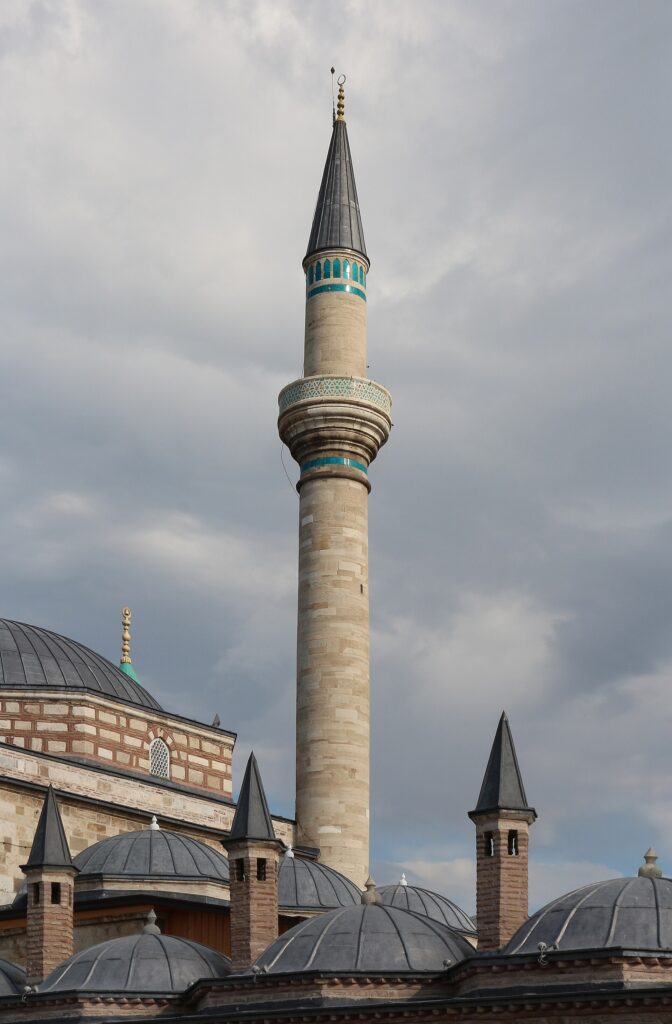
Persian Sufi
The culture
Sufi Islamic mystical tradition: centered on Jalal ad-Din Muhammad Rumi (1207–1273), who lived and taught in Konya (in present-day Turkey), wrote in Persian, and whose followers founded the Mevlevi Order (the "whirling dervishes").
Where
Middle East: Persian/Iranian cultural world, Anatolia (Konya)
Time depth
The Masnavi was composed in the 13th century, drawing on centuries of earlier Sufi tradition and the broader heritage of Persian poetry and Islamic mysticism. Rumi remains one of the most widely read poets on Earth today.
Living tradition
Yes: Sufism is a living branch of Islam, the Mevlevi Order continues, the Sema (whirling ceremony) is performed and recognized by UNESCO, and Rumi's poetry is read and beloved worldwide.
Language
Persian (Farsi). The Masnavi is a vast poem in rhyming couplets (masnavi form), some 25,000 verses, interweaving stories, parables, Qur'anic reference, and mystical teaching. Recited, chanted, and sung, especially in the context of the Sema.
The world of its stories
Cosmological Structure
A cosmos of divine unity (tawhid): all existence flows from and returns to the one God. The material world is a veil and a mirror; behind every form is the divine reality. The human soul is a spark separated from its divine source, yearning to return. The Sufi path (tariqa) is the journey of return, the ascent of the soul back toward union with the Beloved.
Creation
All things emanate from the divine and carry the ache of separation from their source. Rumi's famous image: the reed, cut from the reed bed, cries in longing for the bed it was torn from, and its music IS that cry of separation. Creation is a going-forth from unity; the spiritual life is the return.
Time
Spiral ascent: the seeker returns again and again to the same longing, the same turning toward God, each return at a higher station (maqam) of the soul. The whirling of the Sema embodies this: turning and turning, always around the same center, ascending. Time in the mystical sense is the soul's spiraling journey home.
The Sacred
Divine love (ishq): the engine of the whole cosmos and the whole path. The Beloved (God). The reed flute (ney), whose voice is the soul's lament. The Sema, the whirling ceremony. The murshid (spiritual guide) and the bond between master and disciple (Rumi and Shams of Tabriz being the supreme example). The heart (qalb) as the organ of divine perception.
Death / Afterlife
Death is reunion: Rumi called the day of his death his "wedding night" (Şeb-i Arus), the soul's final return to the Beloved. Physical death completes the return that the whole spiritual life rehearses. The Sufi longs for the union death brings.
Why Spiral Architecture
The Sufi path is a spiral of return: the soul, separated from its divine source, turns again and again toward the Beloved, each turning ascending to a higher station. The Sema whirls around a fixed center, rising. Rumi's narrative method spirals: return to the same image (the reed, the lover, the moth and flame), deepening the meaning on each pass. The story circles inward and upward toward union, the same longing returning at deeper levels until separation dissolves into reunion.
Structural Logic
Return and ascent. The soul begins in separation and longing; each movement of the story is a turning toward the Beloved that deepens the longing and raises the station. Resolution is the lover's union with the Beloved, the drop returning to the ocean.
Structural Movement
The reed's lament (the cry of separation, the ache that begins everything) → the separation (the soul's awareness of its distance from the source) → the yearning (longing intensifies, love takes hold) → the turning (the seeker turns toward the Beloved, the spiral begins to ascend) → the approach (the stations of the soul, drawing nearer, the ego dissolving) → the union (the drop returns to the ocean, separation overcome, the reed rejoined to the reed bed).
Key figures
Supreme Being / Creator
Allah: the one God of Islam, but experienced in the Sufi register above all as the Beloved, the object of the soul's passionate love and the source and destination of all being.
Major Figures
- Jalal ad-Din Rumi (Mevlana): the poet-saint, author of the Masnavi and the Divan-e Shams.
- Shams of Tabriz: the wandering mystic whose meeting with Rumi transformed him from a scholar into a lover of God; their bond and Shams's disappearance are the biographical heart of Rumi's poetry, the human love that opened onto the divine.
- The prophets and Qur'anic figures (Moses, Jesus, Joseph, Muhammad) who appear throughout the Masnavi as exemplars of the path.
Trickster / Culture Figure
The Masnavi is full of fools, drunkards, and unlikely teachers whose apparent foolishness carries hidden wisdom: the tradition delights in the wisdom that comes disguised, in the beggar who is secretly a king, in the reversal of appearances.
Ancestor Figures
The chain (silsila) of Sufi masters stretching back through the generations to the Prophet: the lineage of spiritual transmission. The great earlier Sufis (al-Ghazali, Attar, Sana'i) whose work Rumi inherited.
Who’s Who
Sacred elements
Sacred Objects
The ney (reed flute): the central symbol, the cut reed whose music is longing. The Sufi cloak (khirqa). The tomb of Rumi at Konya, a place of pilgrimage. The Masnavi itself, called by some "the Qur'an in Persian."
Sacred Places
Konya, Rumi's city and the seat of the Mevlevi Order. The tekke (Sufi lodge) where the Sema is performed. The tomb-shrines of the saints.
Sacred Practices
The Sema: the whirling ceremony, in which the dervish turns with one hand raised to heaven and one lowered to earth, spinning around the heart's center in an embodied prayer of ascent and union. Dhikr (the remembrance of God, the repetition of the divine names). The recitation and study of the Masnavi. The bond of discipleship under a murshid.
Sacred Prohibitions
Do not mistake the form for the reality: the whole tradition warns against attachment to appearances, ritual without heart, knowledge without love. Do not claim stations of the soul one has not reached. The path requires a guide; do not walk it in arrogant isolation.
How their stories are told
How Stories Are Told
As parable within poem: the Masnavi weaves hundreds of stories, fables, and anecdotes into its verse, each opening onto mystical meaning. A story begins simply and spirals inward, Rumi interrupting to draw out layer after layer of significance, so that the same tale reveals deeper truth on each turn. The narrative method itself is spiral: return to the image, deepen the meaning.
Who Tells Them
The Sufi master and poet; the reciters of the Masnavi; the dervishes in the context of teaching and ceremony.
When They Are Told
In teaching, in the Sufi lodge, in the context of the path: the stories are instruments of spiritual instruction. Also read privately and recited devotionally.
The Purpose of Story
To draw the soul toward divine love and union: to awaken longing, to dissolve the ego, to guide the seeker along the spiral of return. The story is never merely a story; it is a mirror in which the seeker sees their own separation and their own path home. Meaning deepens with each return, as the soul is meant to.
Signature Story Types
Mystical parables and fables (the Masnavi's hundreds of tales), love poetry (the Divan-e Shams), teaching anecdotes, prophet-stories reinterpreted mystically, the reed's lament and other emblematic images.
How their stories are built, step by step
English names following the spiral of the soul's return, drawn from Rumi's imagery.
The Reed's Lament (The Cry of Separation)
Cultural meaning
The Masnavi opens with the ney, the reed flute: "Listen to the reed, how it tells a tale, complaining of separations." The reed, cut from the reed bed, cries in longing, and that cry is its music. Every story in this tradition begins with the ache of separation from the source. Establish the longing that will drive the entire spiral of return.
Wisdom quote
"Listen to the reed, how it tells a tale, complaining of separations, saying, 'Ever since I was parted from the reed bed, my lament has caused man and woman to moan.'": Rumi, Masnavi, opening lines
Cultural teaching
In spiral architecture of the Sufi kind, the story begins with a longing, the ache of separation from something the soul was made for and torn from. Begin with the reed's cry: what is your protagonist separated from, and how is their very voice, their whole story, shaped by that longing to return?
The Separation (The Distance Recognized)
Cultural meaning
The soul becomes aware of its distance from the source, the veil between itself and the Beloved. It is the same separation the reed already sang, recognised more deeply. The seeker sees clearly, perhaps for the first time, how far they are from home, and the seeing sharpens the longing.
In the Masnavi
The heart is a mirror that has to be polished before it can show the Beloved.
Cultural teaching
The second turn of the spiral deepens the awareness of separation. Your protagonist comes to see the veil between themselves and what they long for: the ego, the world, the illusion that keeps them apart. This recognition is painful but necessary; it is the soul waking to its own condition. Let the distance become conscious and unbearable.
The Yearning (Love Takes Hold)
Cultural meaning
Longing intensifies into love (ishq), the burning force at the centre of the Sufi path. The seeker is seized by love for the Beloved, and this love becomes the engine of the ascent. In Rumi's life, this was his meeting with Shams: a human love that tore open onto the divine. The yearning has become a consuming fire.
Wisdom quote
"The lover's cause is separate from all other causes; love is the astrolabe of God's mysteries.": Rumi, Masnavi, Book I
Cultural teaching
The spiral ascends through love, not effort. Here the protagonist's longing catches fire: becomes a consuming love that transforms them and drives the return. In this tradition, love is the force that dissolves the ego and carries the soul upward. Let your protagonist be seized by a love (for a person, a truth, the divine, the source) so total it reorders everything.
The Turning (The Spiral Ascends)
Cultural meaning
The seeker turns toward the Beloved, the Sema begins, the whirling around the center. This is the active movement of the path: the dervish spins, one hand to heaven, one to earth, revolving around the heart. The turning is the spiral made visible. Each revolution is the same turning-toward, but rising. The protagonist commits to the path of return.
In brief
In the turning, the dervish becomes an empty reed through which the divine breath may sound.
Cultural teaching
This is the spiral's defining movement, the turning that repeats and rises. Your protagonist commits to the path of return and begins to move, and the movement is circular: returning again and again to the same center, the same devotion, but ascending with each turn. Let their journey be a turning rather than a straight march: the same act of devotion, deepened and raised each time.
The Approach (The Stations of the Soul)
Cultural meaning
The seeker draws nearer, passing through the stations (maqamat) of the soul, patience, gratitude, trust, love, annihilation of the ego. Each station is a rung of the spiral's ascent. As the ego dissolves (fana), the veil thins, and the Beloved draws near. The approach is the hardest passage: the death of the self that separated the soul from its source.
Wisdom quote
"Die before you die.": a saying the Sufis attribute to the Prophet, central to Rumi. The lover must die to self before reaching the Beloved.
Cultural teaching
The approach is dissolution. As your protagonist nears the source, the ego, the very self that stood in the way, must dissolve. This is the spiral's most demanding turn: the "death before death," the annihilation of the separate self so that union becomes possible. Let your protagonist's approach require the giving-up of the self, not the assertion of it.
The Union (The Drop Returns to the Ocean)
Cultural meaning
Separation is overcome, the lover reaches the Beloved, the drop returns to the ocean, the reed is rejoined to the reed bed. The seeker dissolves into the source: fana (annihilation) completed in baqa (subsistence in God). Rumi called death the "wedding night": union is the fulfillment the whole spiral was ascending toward. The longing that began with the reed's cry is answered by reunion.
Wisdom quote
"I died as a mineral and became a plant, I died as plant and rose to animal, I died as animal and I was man... When was I less by dying?": Rumi, on the soul's ascent through union
Cultural teaching
The Sufi spiral ends in union, the separate self dissolving into the source it longed for. This is not the ego getting what it wanted; it is the ego's overcoming, the lover and Beloved becoming one. Let your story close on reunion: the reed's lament answered at last, the separation that began everything overcome.
What makes this tradition distinct
What makes this tradition distinct from all others
The Sufi path makes longing itself the structure. The ache of separation drives the story, and it resolves when the self is overcome in union. Love (ishq) is the cosmic and narrative force, not conflict. The Sema makes the spiral literally visible: the turning body ascending around the heart. And Rumi's own narrative method spirals, returning to the same images and deepening them, so the form and the content are one. No other tradition so completely builds its architecture from yearning and return.
Cultural warnings — what NOT to do
- Do not reduce Sufism to vague "spirituality" divorced from Islam: it is a mystical tradition within Islam, and Rumi was a devout Muslim scholar.
- Do not sever Rumi's love poetry from its divine object: the Beloved is God; the human love (Shams) opens onto the divine, it does not replace it.
- Do not treat the ego's dissolution (fana) as mere self-improvement: it is a radical annihilation of the separate self, the tradition's most demanding teaching.
- Do not mistake the whirling for performance: the Sema is prayer, not spectacle.
The stories
Each story with its source, where to read it and why it fits.
The StoryWorld in Full
StoryWorld · Middle East — Persian/Iranian cultural world, Anatolia (Konya)
SUFI / RUMI — Masnavi
Sufi Islamic mystical tradition — centered on Jalal ad-Din Muhammad Rumi (1207–1273), who lived and taught in Konya (in present-day Turkey), wrote in Persian, and whose followers founded the Mevlevi Order (the "whirling dervishes").
Spiral architecture
The world as they see it
Cosmological Structure. A cosmos of divine unity (tawhid) — all existence flows from and returns to the one God. The material world is a veil and a mirror; behind every form is the divine reality. The human soul is a spark separated from its divine source, yearning to return. The Sufi path (tariqa) is the journey of return, the ascent of the soul back toward union with the Beloved.
Creation. All things emanate from the divine and carry the ache of separation from their source. Rumi's famous image: the reed, cut from the reed bed, cries in longing for the bed it was torn from — and its music IS that cry of separation. Creation is a going-forth from unity; the spiritual life is the return.
Time. Not linear progress but spiral ascent — the seeker returns again and again to the same longing, the same turning toward God, each return at a higher station (maqam) of the soul. The whirling of the Sema embodies this: turning and turning, always around the same center, ascending. Time in the mystical sense is the soul's spiraling journey home.
The Sacred. Divine love (ishq) — the engine of the whole cosmos and the whole path. The Beloved (God). The reed flute (ney), whose voice is the soul's lament. The Sema, the whirling ceremony. The murshid (spiritual guide) and the bond between master and disciple (Rumi and Shams of Tabriz being the supreme example). The heart (qalb) as the organ of divine perception.
Death / Afterlife. Death is reunion — Rumi called the day of his death his "wedding night" (Şeb-i Arus), the soul's final return to the Beloved. Physical death is not an ending but the completion of the return the whole spiritual life rehearses. The Sufi does not fear death but longs for the union it brings.
The powers and figures
Supreme Being / Creator
Allah — the one God of Islam, but experienced in the Sufi register above all as the Beloved, the object of the soul's passionate love and the source and destination of all being.
Major Figures
Jalal ad-Din Rumi (Mevlana) — the poet-saint, author of the Masnavi and the Divan-e Shams.
Shams of Tabriz — the wandering mystic whose meeting with Rumi transformed him from a scholar into a lover of God; their bond and Shams's disappearance are the biographical heart of Rumi's poetry, the human love that opened onto the divine.
The prophets and Qur'anic figures — Moses, Jesus, Joseph, Muhammad — who appear throughout the Masnavi as exemplars of the path.
Trickster / Culture Figure
Ancestor Figures
Sacred things and places
Sacred Objects. The ney (reed flute) — the central symbol, the cut reed whose music is longing. The Sufi cloak (khirqa). The tomb of Rumi at Konya, a place of pilgrimage. The Masnavi itself, called by some "the Qur'an in Persian."
Sacred Places. Konya, Rumi's city and the seat of the Mevlevi Order. The tekke (Sufi lodge) where the Sema is performed. The tomb-shrines of the saints.
Sacred Practices. The Sema — the whirling ceremony, in which the dervish turns with one hand raised to heaven and one lowered to earth, spinning around the heart's center in an embodied prayer of ascent and union. Dhikr (the remembrance of God, the repetition of the divine names). The recitation and study of the Masnavi. The bond of discipleship under a murshid.
Sacred Prohibitions. Do not mistake the form for the reality — the whole tradition warns against attachment to appearances, ritual without heart, knowledge without love. Do not claim stations of the soul one has not reached. The path requires a guide; do not walk it in arrogant isolation.
How the stories are told
How Stories Are Told. As parable within poem — the Masnavi weaves hundreds of stories, fables, and anecdotes into its verse, each opening onto mystical meaning. A story begins simply and spirals inward, Rumi interrupting to draw out layer after layer of significance, so that the same tale reveals deeper truth on each turn. The narrative method itself is spiral: return to the image, deepen the meaning.
Who Tells Them. The Sufi master and poet; the reciters of the Masnavi; the dervishes in the context of teaching and ceremony.
When They Are Told. In teaching, in the Sufi lodge, in the context of the path — the stories are instruments of spiritual instruction. Also read privately and recited devotionally.
The Purpose of Story. To draw the soul toward divine love and union — to awaken longing, to dissolve the ego, to guide the seeker along the spiral of return. The story is never merely a story; it is a mirror in which the seeker sees their own separation and their own path home. Meaning deepens with each return, as the soul is meant to.
Signature Story Types. Mystical parables and fables (the Masnavi's hundreds of tales), love poetry (the Divan-e Shams), teaching anecdotes, prophet-stories reinterpreted mystically, the reed's lament and other emblematic images.
The stories
The Song of the Reed
Source Rumi's Masnavi, the opening eighteen couplets — the ney's lament of separation
Why it fits The foundational image of the entire spiral — separation, longing, and the return the whole tradition ascends toward
The Man Who Was Tattooed with a Lion
Source Rumi's Masnavi — the parable of the man who wanted a lion tattoo but could not bear the pain of the needle, teaching that the path requires enduring the pain of transformation
Why it fits The spiral's demand that the self endure dissolution — the pain of the approach, the death-before-death, told as parable
Moses and the Shepherd
Source Rumi's Masnavi — the shepherd whose simple, "improper" love of God is defended by God against Moses's correction, teaching that love matters more than form
Why it fits The tradition's core — that love (ishq), not correct form, is the engine of the return; the spiral ascends through the heart, not the rule
How their stories move
The Sufi path is a spiral of return — the soul, separated from its divine source, turns again and again toward the Beloved, each turning ascending to a higher station. The Sema whirls around a fixed center, rising. Rumi's narrative method spirals: return to the same image (the reed, the lover, the moth and flame), deepening the meaning on each pass. The story does not travel in a line toward a goal but circles inward and upward toward union — the same longing, the same turning, at ever-deeper levels, until separation dissolves into reunion.
Return and ascent. The soul begins in separation and longing; each movement of the story is a turning toward the Beloved that deepens the longing and raises the station. Resolution is not achievement but dissolution — the lover's union with the Beloved, the drop returning to the ocean, the separation overcome.
This culture
People · Sufi Islamic mystical tradition — centered on Jalal ad-Din Muhammad Rumi (1207–1273), who lived and taught in Konya (in present-day Turkey), wrote in Persian, and whose followers founded the Mevlevi Order (the "whirling dervishes").
Place · Middle East — Persian/Iranian cultural world, Anatolia (Konya)
Depth · The Masnavi was composed in the 13th century, drawing on centuries of earlier Sufi tradition and the broader heritage of Persian poetry and Islamic mysticism. Rumi remains one of the most widely read poets on Earth today.
Living · Yes — Sufism is a living branch of Islam, the Mevlevi Order continues, the Sema (whirling ceremony) is performed and recognized by UNESCO, and Rumi's poetry is read and beloved worldwide.
Spiral worlds
AMAZONIAN — Shamanic Vision Journey
CELTIC — The Spiral
FOREST PEOPLES — Mbuti / Baka
KOREAN PANSORI — Joseon Performance
MANDÉ / GRIOT — Performance Pattern
NILOTIC — Dinka / Nuer / Maasai
SAN / KHOISAN — Bushmen Click Stories
Mythology Catalog
- Why it fits: The foundational image of the entire spiral — separation, longing, and the return the whole tradition ascends toward
Story 2: The Man Who Was Tattooed with a Lion
- Why it fits: The tradition's core — that love (ishq), not correct form, is the engine of the return; the spiral ascends through the heart, not the rule
GriotsWell · Simplified Lore Library · Sufi/Rumi · July 2026
The Guide
GriotsWell StoryWorlds · Guide
Sufi mystical narrative — the Masnavi of Jalal ad-Din Rumi and the Mevlevi tradition
Spiral architecture · 6 steps
How it moves
- The Reed's Lament — The Cry of Separation
- The Separation — The Distance Recognized
- The Yearning — Love Takes Hold
- The Turning — The Spiral Ascends
- The Approach — The Stations of the Soul
- The Union — The Drop Returns to the Ocean
The reed's lament (the cry of separation, the ache that begins everything) → the separation (the soul's awareness of its distance from the source) → the yearning (longing intensifies, love takes hold) → the turning (the seeker turns toward the Beloved, the spiral begins to ascend) → the approach (the stations of the soul, drawing nearer, the ego dissolving) → the union (the drop returns to the ocean, separation overcome, the reed rejoined to the reed bed). ---
Why it is told this way
Return and ascent. The soul begins in separation and longing; each movement of the story is a turning toward the Beloved that deepens the longing and raises the station. Resolution is not achievement but dissolution — the lover's union with the Beloved, the drop returning to the ocean, the separation overcome.
To draw the soul toward divine love and union — to awaken longing, to dissolve the ego, to guide the seeker along the spiral of return. The story is never merely a story; it is a mirror in which the seeker sees their own separation and their own path home. Meaning deepens with each return, as the soul is meant to.
What this StoryWorld asks
- Is the engine of your story a longing to return rather than a problem to solve?
- Does the protagonist ascend through love and dissolution rather than effort and conquest?
- Is the movement a turning — returning to the same center, but rising — rather than a straight line?
- Does the story end in union and the overcoming of the self, rather than the self's triumph?
At a glance
People Sufi Islamic mystical tradition — centered on Jalal ad-Din Muhammad Rumi (1207–1273), who lived and taught in Konya (in present-day Turkey), wrote in Persian, and whose followers founded the Mevlevi Order (the "whirling dervishes").
Region Middle East — Persian/Iranian cultural world, Anatolia (Konya)
Time depth The Masnavi was composed in the 13th century, drawing on centuries of earlier Sufi tradition and the broader heritage of Persian poetry and Islamic mysticism. Rumi remains one of the most widely read poets on Earth today.
Living tradition Yes — Sufism is a living branch of Islam, the Mevlevi Order continues, the Sema (whirling ceremony) is performed and recognized by UNESCO, and Rumi's poetry is read and beloved worldwide.
How it is carried Persian (Farsi). The Masnavi is a vast poem in rhyming couplets (masnavi form), some 25,000 verses, interweaving stories, parables, Qur'anic reference, and mystical teaching.
“Listen to the reed, how it tells a tale, complaining of separations — saying, 'Ever since I was parted from the reed bed, my lament has caused man and woman to moan.'”— Rumi, Masnavi, opening lines
Keep faith with it
- Do not reduce Sufism to vague "spirituality" divorced from Islam — it is a mystical tradition within Islam, and Rumi was a devout Muslim scholar. - Do not sever Rumi's love poetry from its divine object — the Beloved is God; the human love (Shams) opens onto the divine, it does not replace it.