Persian & Arabic — Thousand and One Nights
The Thousand and One Nights (Alf Layla wa-Layla): the tradition of nested, frame-based storytelling
The Arabic and Persian storytellers of Baghdad, Cairo and the Persian lands, drawing on older Indian story-frames, whose tales flowed together into the great compilation of the Thousand and One Nights, a cross-cultural masterwork of nested storytelling.
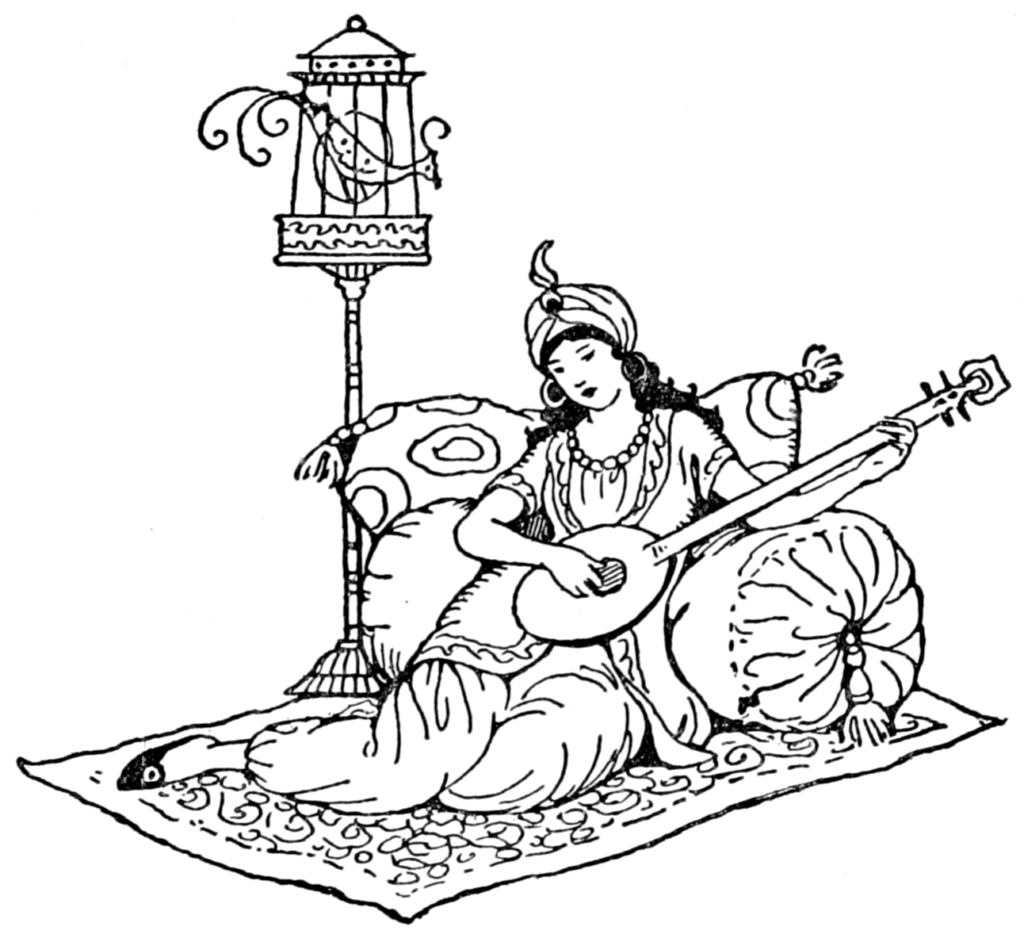
Persian & Arabic
The culture
The Arabic and Persian storytellers of Baghdad, Cairo and the Persian lands, drawing on older Indian story-frames, whose tales flowed together into the great compilation of the Thousand and One Nights, a cross-cultural masterwork of nested storytelling.
Where
Middle East: Baghdad, Cairo and Persia (with Indian roots)
Time depth
The Nights grew over centuries, drawing on Persian, Arabic, Indian, and other sources, compiled and elaborated across the medieval Islamic world into the great collection known today.
Living tradition
Yes: the Thousand and One Nights is a beloved and living classic of world literature, endlessly retold, adapted, and reimagined across the world.
Language
Arabic (with Persian and other roots). Oral and literary tradition, tales told and nested within tales, carried by the storyteller's art and preserved in the great written compilations.
The world of its stories
Structural / Narrative Vision
A world in which a life is bought one night at a time. Shahrazad marries a king who kills each bride at dawn, and every night she tells him a tale and stops before the end, so that he spares her to hear the rest. Inside her tales, characters bargain the same way: a merchant's life is ransomed with three stories told to a jinni, a fisherman talks his way out of a jar. The tales nest inside one another, and each one is a payment.
Time / Structure
Nested and exchanged: a frame holding tales and tales holding tales, each story a payment that buys one more night. The structure branches and nests, story within story.
The Valued
The tale as currency. The frame that sets the terms (Shahrazad's life against the king's curiosity). The ending withheld, so the next night has to be granted. Characters inside the tales who buy time, mercy or freedom with a story. The art of the teller, who keeps the exchange going.
Why Negotiation Architecture
The Thousand and One Nights is built on exchange. Shahrazad never defeats the king. Each night she offers a tale and keeps back its ending, and he grants her another day to hear it. The tales inside do the same: a merchant's life is bought from a jinni with three stories. Over a thousand nights the terms change, and the king who meant to kill her keeps her.
Structural Movement (matching the StoryWorld's cultural steps)
Frame Narrative (the first bargain: a tale a night for a life) → Story Triggers (what each inner tale is told to buy) → Nested Architecture (bargains inside bargains) → Character Web (the figures who carry debts and promises across tales) → Thematic Resonance (what the bargains turn on: fate, justice, wit, mercy) → Resolution Cascade (the bargains settled innermost first, up to new terms at the frame).
Key figures
The Frame Storyteller
Shahrazad (Scheherazade): the storyteller of the frame, who tells tale after nested tale to save her life and, in the telling, transforms the king. Her sister Dunyazad, who prompts the tales.
The Nested Figures
The countless characters of the nested tales: merchants, kings, jinn, sailors (Sindbad), fishermen and porters. Many of them tell tales of their own to buy something: a life, a pardon, a night's lodging.
Cultural Roots
The Persian, Arabic, Indian and wider traditions gathered into the Nights.
Who’s Who
Sacred elements
Valued Structural Elements
The frame (Shahrazad's night-by-night telling). The nested tales. The story-triggers (a life to ransom, a wonder to explain, a question to answer). The recurring figures who carry a debt or a promise from tale to tale. The themes the bargains turn on: fate, justice, wit, mercy.
The Storyteller's Art
The ending held back each dawn, so the king has to grant another night. The nesting of tale within tale, each told for a price. The judgment of how much to give and how much to keep for tomorrow.
How their stories are told
How Stories Are Told
Through a frame and nested tales, each told in exchange for something. Shahrazad's frame sets the first bargain: a tale a night for a life. Inside it, characters tell tales to ransom a life or win a pardon, and those tales hold further tales. The bargains are settled one by one, innermost first, until the frame's own terms change and Shahrazad is spared.
The Purpose of Story
To show a story doing work: buying time, mercy and change in the one who listens. The delight is in the telling and in watching what each tale earns.
Signature Story Types
The frame tale; the ransom tale (a story told to save a life); the nested story-within-a-story told to settle a debt.
How their stories are built, step by step
English with Arabic terms, following the six cultural steps of the Nights, read as exchange (the StoryWorld's opening "Nesting Complexity Level" is framing).
Frame Narrative (الإطار الرئيسي / The Main Frame)
Cultural meaning
The frame narrative sets the first bargain. Shahrazad marries a king who has a bride killed every dawn, and offers him a tale each night with its end held back. Her life is the stake, the king's curiosity is her lever, and each dawn the terms are renewed for one more day.
In brief
A tale each night, its end held back, buys one more day.
Cultural teaching
Establish who is bargaining with whom in your frame, what each holds, and what the first tale is offered for.
Story Triggers (محفزات الحكايات / Tale-Triggers)
Cultural meaning
The story triggers are the reasons an inner tale is told. In the Nights a character tells a story to ransom a life, to explain a wonder, to answer a question or to win a pardon, and a new tale begins. Each trigger is an offer: this story, for that.
In brief
Every inner tale is told to get something.
Cultural teaching
Give every inner tale a price and a buyer. A tale told for nothing falls out of the pattern.
Nested Architecture (Stories Within Stories)
Cultural meaning
The nested architecture is bargains inside bargains. A tale holds a character who tells a tale to save himself, and inside that tale someone else does the same, sometimes several layers deep. Each layer has its own parties and its own stake.
In brief
Each layer down is another deal with its own stake.
Cultural teaching
Build the layers so each has parties and a stake of its own, and keep track of which debts are still open.
Character Web (شبكة الشخصيات / The Web of Characters)
Cultural meaning
The character web is the figures who carry a debt, a promise or a grudge from one tale into another. In the Nights a merchant, a barber or a caliph turns up again, and what was owed in one tale is paid or called in another.
In brief
Recurring figures carry the debts between the tales.
Cultural teaching
Let at least one figure cross between tales carrying something owed.
Thematic Resonance (التوافق الموضوعي / Thematic Harmony)
Cultural meaning
The thematic resonance is what the bargains turn on. Again and again the tales weigh fate against wit, justice against mercy, and each settlement leans one way or the other. Over the nights the listener in the frame is changed by what he keeps hearing.
In brief
The same questions are settled differently in each tale, and the listener changes.
Cultural teaching
Choose the one or two questions your bargains keep turning on, and let each settlement answer them a little differently.
Resolution Cascade (تسلسل الحلول / The Cascade of Resolutions)
Cultural meaning
The resolution cascade settles the bargains from the inside out. The innermost tale ends, its debt is paid, and the tale that held it can end too, up to the frame. In the Nights the frame's own terms finally change: after a thousand and one nights the king spares Shahrazad, and the exchange becomes a marriage.
In brief
The debts are settled innermost first, and the frame's terms change.
Cultural teaching
Close the inner bargains in order, and let the last settlement change the terms of the frame itself.
What makes this tradition distinct
What makes this tradition distinct from all others
The Nights are a negotiation that lasts a thousand and one nights. A frame sets the first bargain, a life against a tale, and the tales inside it bargain again: lives ransomed, pardons won, debts carried from tale to tale and settled from the inside out. Its distinctive features are the withheld ending that buys each new day and the depth of the nesting. Its roots are Persian, Arabic and Indian.
Cultural warnings — what NOT to do
- Keep the nesting: tales within tales, each told for a price, are the architecture.
- Do not lose the frame: Shahrazad's bargain with the king holds and drives the whole.
- Honour the cross-cultural roots (Persian, Arabic, Indian) of the Nights rather than treating it as one national tradition.
- Do not reduce the tales to exotic cliché.
The stories
Each story with its source, where to read it and why it fits.
The StoryWorld in Full
StoryWorld · Middle East / North Africa (with Persian and Indian roots)
MIDDLE EASTERN — The Thousand and One Nights (Nested Storytelling)
The Arabic, Persian, Indian, and wider Middle Eastern and South Asian traditions that flowed together into the great compilation of the Thousand and One Nights — a cross-cultural masterwork of nested storytelling.
Web architecture
The world as they see it
Structural / Narrative Vision. A world of stories within stories — a web of nested tales held within a frame, in which one story triggers another, characters appear across tales, and themes resonate through the whole interconnected structure. The famous frame is Shahrazad (Scheherazade), who, to save her life, tells the king a tale each night, ending on a suspenseful thread so that he spares her to hear the rest — and within her tales, characters tell further tales, nesting stories within stories. The vision is of narrative as an interconnected web: the frame, the nested tales, the triggers that spawn new stories, the characters woven across them, the resonances that bind the whole.
Time / Structure. Web-like and nested — not a single linear line but an interconnected structure of frame and nested tales, stories triggering stories, the whole bound by recurring characters and resonant themes. The structure branches and nests rather than proceeding in one line.
The Valued. The frame that holds the web. The nesting of stories within stories. The triggers that spawn new tales. The web of characters woven across the tales. The thematic resonance binding the whole. The art of the storyteller (embodied in Shahrazad).
The powers and figures
The Frame Storyteller
Shahrazad (Scheherazade) — the storyteller of the frame, who tells tale after nested tale to save her life and, in the telling, transforms the king. Her sister Dunyazad, who prompts the tales.
The Nested Figures
The countless characters of the nested tales — merchants, kings, genies (jinn), sailors (Sindbad), and many more — some of whom tell further tales, nesting the web deeper.
Cultural Roots
The Persian, Arabic, Indian, and wider traditions woven into the Nights.
Sacred things and places
Valued Structural Elements. The frame (Shahrazad's night-by-night telling). The nested tales. The story-triggers (the devices by which one tale spawns another). The web of recurring and connected characters. The resonant themes (fate, justice, wit, wonder, mercy) that bind the tales.
The Storyteller's Art. The suspenseful thread (the "cliffhanger" that saves Shahrazad each night). The nesting of tale within tale. The weaving of the web so that the whole is bound together.
How the stories are told
How Stories Are Told. Through nesting and framing — a frame narrative holds a web of nested tales, one story triggering another, characters woven across the tales, themes resonating through the whole. Shahrazad's frame holds tales within which characters tell further tales, nesting stories within stories; the web branches and deepens, bound together by recurring figures and resonant themes, and resolved as the nested threads cascade to their close. This is web architecture: the interconnected structure of frame, nested tales, triggers, character-web, resonance, and resolution.
The Purpose of Story. To weave an interconnected web of tales — to hold, through a frame, a branching structure of nested stories bound by recurring characters and resonant themes, delighting through the endless spawning of tale from tale and the web that binds them. Story here is the art of nesting and connection, the web of tales held together and resolved.
Signature Story Types. The frame tale; the nested story-within-a-story; the web of interconnected tales bound by recurring characters and resonant themes.
The stories
The Frame of Shahrazad
Source The Thousand and One Nights — the frame narrative of Shahrazad telling tales to save her life
Public domain access Public-domain translations (e.g., the classic 19th-century English translations) via Internet Archive and Project Gutenberg
Why it fits The frame that holds the web — the outer story containing and motivating all the nested tales
The Nested Tales (e.g., the Sindbad Cycle)
Source The Thousand and One Nights — the deeply nested tales, such as the voyages of Sindbad told within the frame
Public domain access Public-domain translations via Internet Archive and Project Gutenberg
Why it fits The nesting of stories within stories — the vertical depth of the web, tales layered within tales
The Interconnected Web of Tales
Source The Thousand and One Nights — the web of recurring characters and resonant themes binding the tales
Public domain access Public-domain translations via Internet Archive and Project Gutenberg
Why it fits The character-web and thematic resonance — the horizontal and deep binding of the interconnected whole
How their stories move
The Thousand and One Nights is structured as exchange. Scheherazade does not defeat the king — she creates an endless chain of transaction, each story a gift that buys one more night. Every frame is an offer and a deferral: the tale is given, the ending withheld, the next night purchased. The nesting is the mechanism; the negotiation is the architecture.
Frame Narrative (the frame that holds the web) → Story Triggers (the devices by which tales spawn tales) → Nested Architecture (the nesting of stories within stories) → Character Web (the characters woven across the tales) → Thematic Resonance (the themes binding the whole) → Resolution Cascade (the nested threads resolving together).
This culture
People · The Arabic, Persian, Indian, and wider Middle Eastern and South Asian traditions that flowed together into the great compilation of the Thousand and One Nights — a cross-cultural masterwork of nested storytelling.
Place · Middle East / North Africa (with Persian and Indian roots)
Depth · The Nights grew over centuries, drawing on Persian, Arabic, Indian, and other sources, compiled and elaborated across the medieval Islamic world into the great collection known today.
Living · Yes — the Thousand and One Nights is a beloved and living classic of world literature, endlessly retold, adapted, and reimagined across the world.
Web worlds
AKAN / ANANSI — Web Pattern
HAUDENOSAUNEE — Sky Woman / Great Law
ANDEAN / INCA — Quipu (Khipu) Knotted-Cord Narrative
MĀORI — Whakapapa
MELANESIA — Ancestor Presence
UBUNTU / BANTU — Story Circle
YORUBA / IFÁ — Orisha Realms
What makes this tradition distinct
The Thousand and One Nights is the paradigmatic web architecture — an interconnected structure of frame and nested tales, in which triggers spawn stories, characters are woven across the tales, and themes resonate through the whole, resolving in a cascade back up through the nested layers. Its distinctive features are the frame (Shahrazad's life-saving telling), the deep nesting of stories within stories, and the binding of the whole into an interconnected web. It is a cross-cultural masterwork of world literature.
Cultural warnings — what NOT to do
- Do not reduce the tales to exotic cliché — engage the sophisticated nested structure and its resonant themes with respect.
Mythology Catalog
- Why it fits: The frame that holds the web — the outer story containing and motivating all the nested tales
Story 2: The Nested Tales (e.g., the Sindbad Cycle)
- Why it fits: The character-web and thematic resonance — the horizontal and deep binding of the interconnected whole
GriotsWell · Simplified Lore Library · The Thousand and One Nights (Nested Web) · July 2026
The Guide
GriotsWell StoryWorlds · Guide
The Thousand and One Nights (Alf Layla wa-Layla) — the tradition of nested, frame-based storytelling
Web architecture · 6 steps
How it moves
- Frame Narrative (الإطار الرئيسي)
- Story Triggers (محفزات الحكايات)
- Nested Story Architecture
- Character Web (شبكة الشخصيات)
- Thematic Resonance (التوافق الموضوعي)
- Resolution Cascade (تسلسل الحلول)
Frame Narrative (the frame that holds the web) → Story Triggers (the devices by which tales spawn tales) → Nested Architecture (the nesting of stories within stories) → Character Web (the characters woven across the tales) → Thematic Resonance (the themes binding the whole) → Resolution Cascade (the nested threads resolving together). ---
Why it is told this way
The Thousand and One Nights is structured as exchange. Scheherazade does not defeat the king — she creates an endless chain of transaction, each story a gift that buys one more night. Every frame is an offer and a deferral: the tale is given, the ending withheld, the next night purchased.
To weave an interconnected web of tales — to hold, through a frame, a branching structure of nested stories bound by recurring characters and resonant themes, delighting through the endless spawning of tale from tale and the web that binds them. Story here is the art of nesting and connection, the web of tales held together and resolved.
What this StoryWorld asks
- Is the structure a web of nested tales held within a frame, rather than a single linear line?
- Do triggers spawn tales, nesting stories within stories?
- Are characters woven across the tales, connecting the branches of the web?
- Do the nested threads resolve in a cascade back up through the layers to the frame?
At a glance
People The Arabic, Persian, Indian, and wider Middle Eastern and South Asian traditions that flowed together into the great compilation of the Thousand and One Nights — a cross-cultural masterwork of nested storytelling.
Region Middle East / North Africa (with Persian and Indian roots)
Time depth The Nights grew over centuries, drawing on Persian, Arabic, Indian, and other sources, compiled and elaborated across the medieval Islamic world into the great collection known today.
Living tradition Yes — the Thousand and One Nights is a beloved and living classic of world literature, endlessly retold, adapted, and reimagined across the world.
How it is carried Arabic (with Persian and other roots). Oral and literary tradition — tales told and nested within tales, carried by the storyteller's art and preserved in the great written compilations. ---
“Shahrazad told the king a tale each night, ending on a thread of suspense, so that he spared her to hear the rest — and so the frame held a thousand tales.”— after the Thousand and One Nights
Keep faith with it
- Do not flatten the nested web into a single linear tale — the nesting and interconnection are the architecture. - Do not lose the frame — the frame (Shahrazad's telling) holds and motivates the whole web. - Do honor the cross-cultural roots (Persian, Arabic, Indian) of the Nights rather than treating it as a single national tradition.