Sumerian — Gilgamesh / Inanna
Sumerian narrative tradition: the Epic of Gilgamesh and the Descent of Inanna
Sumerian civilization (the city-states of Uruk, Ur, Lagash, Nippur, Eridu) of southern Mesopotamia (modern southern Iraq), roughly 3000–1750 BCE, and the Akkadian and Babylonian cultures who inherited and transmitted their literature.
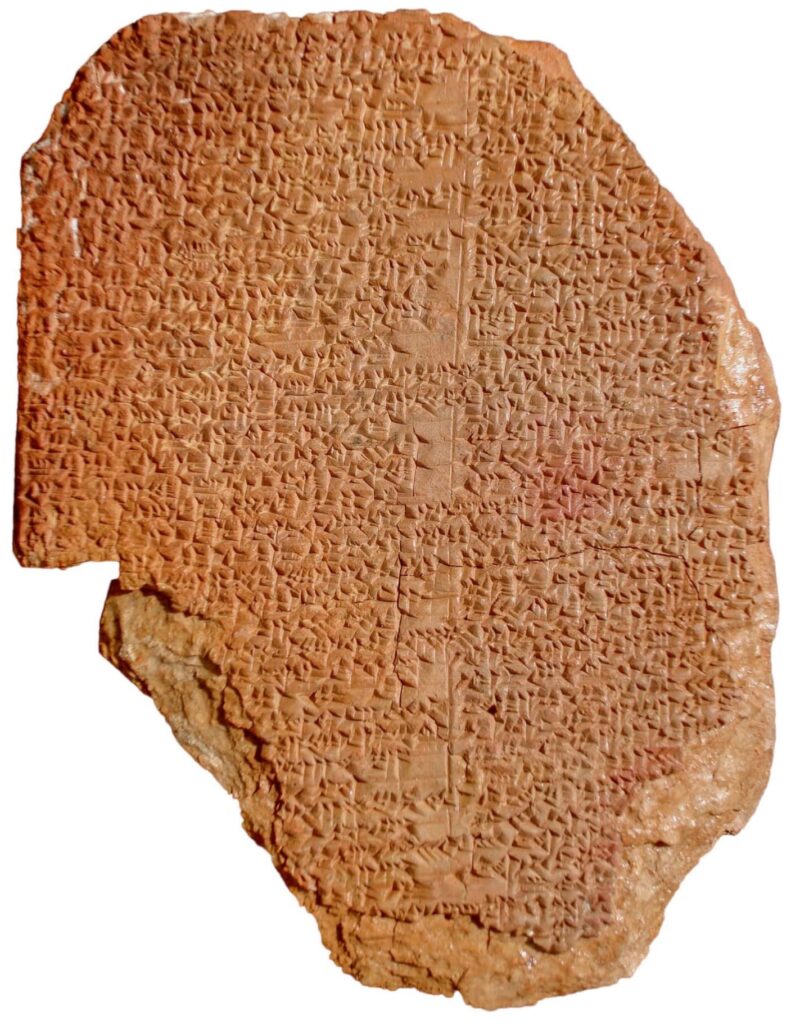
Sumerian
The culture
Sumerian civilization (the city-states of Uruk, Ur, Lagash, Nippur, Eridu) of southern Mesopotamia (modern southern Iraq), roughly 3000–1750 BCE, and the Akkadian and Babylonian cultures who inherited and transmitted their literature.
Where
Middle East: Mesopotamia, the land between the Tigris and Euphrates
Time depth
The oldest written narrative literature on Earth. The Sumerian Gilgamesh poems date to the early second millennium BCE; the Standard Babylonian Epic was compiled later. Inanna's Descent is among the earliest recorded myths. These are the foundation of written storytelling.
Living tradition
No. The Sumerian religion is no longer practised; the literature has been recovered and translated and is widely read. It is a foundational human inheritance rather than a closed tradition.
Language
Sumerian and later Akkadian, written in cuneiform on clay tablets: the world's first writing system. The epics were both recited and inscribed; they were school texts copied by generations of scribes.
The world of its stories
Cosmological Structure
A three-tiered cosmos: the heavens (An), the earth and its cities, and the underworld (Kur / Irkalla), the "land of no return." The great gods, An (sky), Enlil (air, king of the gods), Enki/Ea (wisdom, fresh water), Inanna/Ishtar (love and war), govern the cosmos and the fates of cities and kings. Humanity was made to serve the gods; the boundary between mortal and divine is the tradition's central preoccupation.
Creation
Humans were fashioned from clay (and, in some accounts, the blood of a slain god) to bear the labor of the gods. The gods established the "me": the divine decrees and offices that order civilization. Kingship "descended from heaven." Order is imposed on primordial chaos; the world of cities, laws, and canals is a divine gift and burden.
Time
Not cyclical in the seasonal sense so much as marked by the rise and fall of cities and kings, and by the absolute boundary of death. The great question is what endures: and the answer the tradition reaches, hard-won, is that walls, works, and stories endure while the individual does not. Time is the setting against which mortality is measured.
The Sacred
The gods and their temples (the ziggurats). The "me": the sacred ordering-principles of civilization. Kingship. The boundary between the living and the dead. Sacred trees (the Cedar Forest, guarded by Humbaba) and the plant of life. The city itself, especially Uruk of the great walls.
Death / Afterlife
The underworld is bleak: a house of dust where the dead eat clay, ruled by Ereshkigal. There is no glorious afterlife; this is the tradition's great sorrow and the engine of Gilgamesh's quest. Even the descent of Inanna, who alone returns from the dead, requires a substitute to take her place: the dead do not simply come back. Mortality is real and final for humankind, and the tradition confronts this without consolation.
Why Multi-Trial Architecture
The Epic of Gilgamesh is built as a sequence of distinct trials (the wrestling with Enkidu, the journey to the Cedar Forest and the slaying of Humbaba, the Bull of Heaven, the crossing of the waters of death, the trial of sleeplessness, the retrieval of the plant of life) each a discrete test, each transforming the hero, accumulating toward a hard-won and unexpected wisdom. The hero does not achieve his original goal (immortality); rather, the accumulated trials reveal the truth he actually needed. Each test shows Gilgamesh something about himself and about being mortal.
Structural Logic
A sequence of discrete trials, each testing and changing the hero, adds up to a wisdom the hero never set out to find. The prize sought (immortality) is lost; the prize gained (acceptance of mortality, the value of works and human bond) is what the trials were teaching all along.
Structural Movement
The king and his double (Gilgamesh and Enkidu) → the wild companion tamed and bonded → the great quest (the Cedar Forest, the first triumph) → the crossing (loss, the death of Enkidu, the turn from glory to grief) → the descent (the journey through darkness to the ends of the earth) → the loss (the plant of immortality gained and lost) → the return without the prize (home to Uruk, wiser, mortal, and reconciled).
Key figures
Supreme Being / Creator
No single supreme being: a council of great gods. An (sky-father, remote), Enlil (king of the gods, lord of the storm and of destinies), Enki/Ea (god of wisdom and fresh water, humanity's clever advocate).
Major Deities
- Inanna / Ishtar: goddess of love, war, and sovereignty; the great female power, whose Descent to the underworld is a foundational myth of death and return.
- Enki / Ea: the wise god, friend to humanity, who warns Utnapishtim of the flood and devises clever solutions.
- Ereshkigal: queen of the underworld, Inanna's sister, ruler of the land of no return.
- Utu / Shamash: the sun god, god of justice, who aids Gilgamesh.
Trickster / Culture Hero
Gilgamesh: two-thirds god, one-third man, king of Uruk, the hero who goes through trial after trial in pursuit of glory and then of immortality. Enki plays a clever, quasi-trickster role among the gods.
Ancestor Figures
Utnapishtim: the flood survivor granted immortality, who dwells at the ends of the earth and holds the wisdom Gilgamesh seeks. The dead kings and the shades of the underworld.
Who’s Who
Sacred elements
Sacred Objects
The plant of immortality ("Old Man Grows Young"), which Gilgamesh retrieves and loses. The "me": the divine decrees Inanna acquires. Cuneiform tablets themselves. The great walls of Uruk. Cedar from the sacred forest.
Sacred Places
Uruk of the ramparts: the great city. The Cedar Forest, guarded by Humbaba. The underworld, Kur/Irkalla. The waters of death and the garden of the gods at the world's edge. The temples and ziggurats of the city-gods.
Sacred Practices
Temple offering and the service of the gods. The lament and the mourning rites (Gilgamesh's mourning for Enkidu is a central passage). The recording and copying of the epics by scribes. Kingship rituals.
Sacred Prohibitions
Do not overstep the boundary between mortal and divine: the hubris of seeking immortality is gently, sorrowfully rebuked. Do not scorn the gods (Gilgamesh's rejection of Ishtar brings catastrophe). Respect the fixed decree of death for humankind.
How their stories are told
How Stories Are Told
As epic: long narrative poems structured around a sequence of episodes and trials, recited and inscribed. The Gilgamesh epic proceeds through discrete adventures (the taming of Enkidu, the Cedar Forest, the Bull of Heaven, the journey to Utnapishtim) that accumulate into a single arc of transformation. Repetition, formula, and the piling of trial upon trial are characteristic.
Who Tells Them
First court reciters and temple singers; then the scribes who copied the epics as school texts and kept them for a thousand years in several languages.
When They Are Told
Recited at court and temple; copied in scribal schools. The epics functioned as entertainment, moral instruction, and cultural memory.
The Purpose of Story
To confront the great questions: the boundary of mortality, the meaning of glory, what a human life amounts to against the certainty of death. The Gilgamesh epic is the first sustained meditation on these questions in written literature. Story here is philosophy in narrative form: the hero's trials test the limits of being human.
Signature Story Types
The epic of heroic trials (Gilgamesh), the descent myth (Inanna), the flood narrative (Utnapishtim/Atrahasis), god-and-city myths, laments.
How their stories are built, step by step
English descriptive names following the Gilgamesh epic's arc of trials.
The King and His Double (The Incomplete Self)
Cultural meaning
Gilgamesh, two-thirds god and king of Uruk, is mighty but incomplete, restless, oppressive, unmatched and therefore alone. The gods create Enkidu, his wild double and equal, to complete and challenge him. The story begins with a hero who has everything except an equal.
Wisdom quote
"Let them contend together, that Uruk may have peace.": the gods on creating Enkidu, Epic of Gilgamesh
Cultural teaching
The multi-trial hero often begins powerful and incomplete, missing something only the coming trials and a bonded companion can supply. Begin with a strong protagonist who lacks wholeness. What they possess in power, they lack in relationship, humility, or self-knowledge: the very thing the trials will forge.
The Wild Man Tamed (The Bond Forged)
Cultural meaning
Enkidu, wild and of the animals, is drawn into humanity and civilization, then meets Gilgamesh as an equal. They wrestle, and in the wrestling become inseparable friends. The bond between them is the emotional heart of the epic: and its forging is the first transformation, the making of the pair who will face the trials together.
Wisdom quote
"They kissed each other and formed a friendship.": Gilgamesh and Enkidu after their contest
Cultural teaching
Before the great trials, forge the bond that gives them meaning. In this tradition the companion is a second self, and the depth of the friendship is what makes the later loss devastating. Establish the relationship whose testing and loss will drive the hero's real quest.
The Great Quest (The First Triumph)
Cultural meaning
Gilgamesh and Enkidu journey to the Cedar Forest and slay its guardian Humbaba, then Gilgamesh spurns the goddess Ishtar and they kill the Bull of Heaven she sends. These are the triumphs of glory-seeking: the hero at his most heroic, winning fame through daring deeds. But these very triumphs, especially the offenses to the gods, set the tragedy in motion.
Wisdom quote
"Who, my friend, can scale heaven? Only the gods live forever. As for us, our days are numbered, but let us make a name!": Gilgamesh before the Cedar Forest
Cultural teaching
The multi-trial hero's early triumphs should be genuine and glorious, and should carry the seed of the coming reversal. Gilgamesh wins fame but offends the gods, and the victory becomes the cause of loss. Let your hero's first great success be real, but let it plant the consequence that turns the story from triumph toward grief.
The Crossing (The Turn from Glory to Grief)
Cultural meaning
The gods decree Enkidu's death as punishment. Enkidu sickens and dies, and Gilgamesh is shattered. His grief is total: he refuses to accept the death, mourns for days, and for the first time confronts his own mortality. This is the epic's great pivot: the hero turns from seeking glory to fleeing death, from triumph to terror. The whole meaning of the story changes here.
Wisdom quote
"How can I rest, how can I be at peace? Despair is in my heart. What my brother is now, that shall I be when I am dead.": Gilgamesh mourning Enkidu
Cultural teaching
This is the multi-trial structure's great turn, the loss that transforms the quest itself. What the hero was seeking (glory) is abandoned for a new and desperate goal (escape from death), driven by grief. Let a devastating loss at your story's centre change what the hero is questing for. The trials before were for fame; the trials after are for something deeper and more human.
The Descent (The Journey Through Darkness)
Cultural meaning
Driven by terror of death, Gilgamesh journeys to find Utnapishtim, the one man granted immortality. He passes through the mountain tunnel of the sun in total darkness, crosses the waters of death, and reaches the ends of the earth. This is the descent: the passage through darkness and impossibility toward the wisdom or prize the hero now craves. It is the longest, loneliest trial.
In the epic
Siduri tells Gilgamesh that no one has ever crossed the sea, and that the waters of death lie across it.
Cultural teaching
The multi-trial descent is the passage through the greatest darkness toward the thing the hero now desperately seeks. It should be long and lonely: the hero stripped down, tested to exhaustion, crossing where no one crosses, like Gilgamesh in the tunnel of the sun. Let your hero pass through their darkest passage in pursuit of the answer their grief demands.
The Loss (The Prize Gained and Slipped Away)
Cultural meaning
Utnapishtim tells Gilgamesh the truth: immortality is not for humankind. He fails the test of staying awake, but is given the plant of life, "Old Man Grows Young", as a consolation. On the journey home, a serpent steals the plant while Gilgamesh bathes. The prize is gained and lost. The hero learns that what he sought cannot be kept: mortality is the human condition.
Wisdom quote
"The life you seek you will never find. When the gods created man, they allotted to him death, but life they retained in their own keeping.": Siduri the ale-wife to Gilgamesh (Old Babylonian version)
Cultural teaching
In the deepest multi-trial stories, the prize the hero sought is not achieved, or is achieved and lost. The trials were never really for that prize. Let your hero gain and then lose what they thought they wanted, and let that loss carry the story's true wisdom. What they cannot keep teaches them what actually matters.
The Return Without the Prize (The Hard-Won Wisdom)
Cultural meaning
Gilgamesh returns to Uruk empty-handed of immortality, but changed. He looks at the great walls of his city, the work of human hands, and finds his peace there, in what people build and leave behind and in the friend he lost. The trials brought him the wisdom he needed instead of the prize he sought.
Wisdom quote
"Go up, Gilgamesh, upon the wall of Uruk, walk there and see the solid brick, is it not the work of the seven sages?": the close of the epic
Cultural teaching
End your multi-trial story with the hero returned, without the prize they sought, but bearing the wisdom the whole sequence of trials was really for. The accumulation was never about the immortality, the treasure, the goal: it was about who the hero became and what they finally understood. Close on the hard-won acceptance, the enduring work, the wisdom that the lost prize made possible.
What makes this tradition distinct
What makes this tradition distinct from all others
It is among the oldest written narrative literature on Earth, and it already asks why we die. The Epic of Gilgamesh confronts mortality with a clear-eyed lack of consolation found in few later traditions: there is no glorious afterlife, immortality is explicitly denied to humankind, and the hero's wisdom is precisely his acceptance of death and his turn toward what humans build and love. Its multi-trial structure ends with the hero letting the goal go. The bond between Gilgamesh and Enkidu is one of literature's first and greatest friendships.
Cultural warnings — what NOT to do
- Do not impose a triumphant "hero gets the prize" ending: the epic's genius and its truth is that Gilgamesh does NOT achieve immortality, and that this is the point.
- Do not add a consoling afterlife: the Sumerian underworld is bleak, and the tradition's honesty about death is its power.
- Do not treat this as a dead "myth": it is the recovered foundation of world literature, to be handled with the gravity due the oldest human story.
- Respect the distinct strands: Gilgamesh, Inanna's Descent, and the Flood are related but distinct works.
The stories
Each story with its source, where to read it and why it fits.
The StoryWorld in Full
StoryWorld · Middle East — Mesopotamia, the land between the Tigris and Euphrates
SUMERIAN — Gilgamesh / Inanna
Sumerian civilization — the city-states of Uruk, Ur, Lagash, Nippur, Eridu — of southern Mesopotamia (modern southern Iraq), roughly 3000–1750 BCE, and the Akkadian and Babylonian cultures who inherited and transmitted their literature.
Multi Trial architecture
The world as they see it
Cosmological Structure. A three-tiered cosmos: the heavens (An), the earth and its cities, and the underworld (Kur / Irkalla), the "land of no return." The great gods — An (sky), Enlil (air, king of the gods), Enki/Ea (wisdom, fresh water), Inanna/Ishtar (love and war) — govern the cosmos and the fates of cities and kings. Humanity was made to serve the gods; the boundary between mortal and divine is the tradition's central preoccupation.
Creation. Humans were fashioned from clay (and, in some accounts, the blood of a slain god) to bear the labor of the gods. The gods established the "me" — the divine decrees and offices that order civilization. Kingship "descended from heaven." Order is imposed on primordial chaos; the world of cities, laws, and canals is a divine gift and burden.
Time. Not cyclical in the seasonal sense so much as marked by the rise and fall of cities and kings, and by the absolute boundary of death. The great question is what endures — and the answer the tradition reaches, hard-won, is that walls, works, and stories endure while the individual does not. Time is the setting against which mortality is measured.
The Sacred. The gods and their temples (the ziggurats). The "me" — the sacred ordering-principles of civilization. Kingship. The boundary between the living and the dead. Sacred trees (the Cedar Forest, guarded by Humbaba) and the plant of life. The city itself, especially Uruk of the great walls.
Death / Afterlife. The underworld is bleak — a house of dust where the dead eat clay, ruled by Ereshkigal. There is no glorious afterlife; this is the tradition's great sorrow and the engine of Gilgamesh's quest. Even the descent of Inanna, who alone returns from the dead, requires a substitute to take her place — the dead do not simply come back. Mortality is real and final for humankind, and the tradition confronts this without consolation.
The powers and figures
Supreme Being / Creator
No single supreme being — a council of great gods. An (sky-father, remote), Enlil (king of the gods, lord of the storm and of destinies), Enki/Ea (god of wisdom and fresh water, humanity's clever advocate).
Major Deities
Inanna / Ishtar — goddess of love, war, and sovereignty; the great female power, whose Descent to the underworld is a foundational myth of death and return.
Enki / Ea — the wise god, friend to humanity, who warns Utnapishtim of the flood and devises clever solutions.
Ereshkigal — queen of the underworld, Inanna's sister, ruler of the land of no return.
Utu / Shamash — the sun god, god of justice, who aids Gilgamesh.
Trickster / Culture Hero
Gilgamesh — two-thirds god, one-third man, king of Uruk; not a trickster but the archetypal hero who undergoes a sequence of trials in pursuit of glory and then of immortality. Enki plays a clever, quasi-trickster role among the gods.
Ancestor Figures
Utnapishtim — the flood survivor granted immortality, who dwells at the ends of the earth and holds the wisdom Gilgamesh seeks. The dead kings and the shades of the underworld.
Sacred things and places
Sacred Objects. The plant of immortality ("Old Man Grows Young"), which Gilgamesh retrieves and loses. The "me" — the divine decrees Inanna acquires. Cuneiform tablets themselves. The great walls of Uruk. Cedar from the sacred forest.
Sacred Places. Uruk of the ramparts — the great city. The Cedar Forest, guarded by Humbaba. The underworld, Kur/Irkalla. The waters of death and the garden of the gods at the world's edge. The temples and ziggurats of the city-gods.
Sacred Practices. Temple offering and the service of the gods. The lament and the mourning rites (Gilgamesh's mourning for Enkidu is a central passage). The recording and copying of the epics by scribes. Kingship rituals.
Sacred Prohibitions. Do not overstep the boundary between mortal and divine — the hubris of seeking immortality is gently, sorrowfully rebuked. Do not scorn the gods (Gilgamesh's rejection of Ishtar brings catastrophe). Respect the fixed decree of death for humankind.
How the stories are told
How Stories Are Told. As epic — long narrative poems structured around a sequence of episodes and trials, recited and inscribed. The Gilgamesh epic proceeds through discrete adventures (the taming of Enkidu, the Cedar Forest, the Bull of Heaven, the journey to Utnapishtim) that accumulate into a single arc of transformation. Repetition, formula, and the piling of trial upon trial are characteristic.
Who Tells Them. Originally, court reciters and temple singers; then, crucially, the scribes who copied the epics as school texts, preserving them across a thousand years and multiple languages.
When They Are Told. Recited at court and temple; copied in scribal schools. The epics functioned as entertainment, moral instruction, and cultural memory.
The Purpose of Story. To confront the great questions — the boundary of mortality, the meaning of glory, what a human life amounts to against the certainty of death. The Gilgamesh epic is the first sustained meditation on these questions in written literature. Story here is philosophy in narrative form: the hero's trials test not just his strength but the human condition itself.
Signature Story Types. The epic of heroic trials (Gilgamesh), the descent myth (Inanna), the flood narrative (Utnapishtim/Atrahasis), god-and-city myths, laments.
The stories
The Epic of Gilgamesh
Source Sumerian and Standard Babylonian epic — the eleven (or twelve) tablets, especially Tablet XI (the Flood) and the journey to Utnapishtim
Why it fits The definitive multi-trial epic — a sequence of discrete trials accumulating toward a wisdom that transcends the original goal
The Descent of Inanna to the Underworld
Source Sumerian myth — Inanna's journey through the seven gates to the realm of Ereshkigal and her return requiring a substitute
Why it fits The trial-by-trial descent (the seven gates, each stripping away a power) — multi-trial architecture in the descent-and-return register
The Flood (Utnapishtim / Atrahasis)
Source Mesopotamian flood narrative, preserved within Gilgamesh Tablet XI and the Atrahasis epic
Why it fits The trial of survival and the granting of immortality to one man — the prize Gilgamesh seeks and cannot have, the hinge of the epic's wisdom
How their stories move
The Epic of Gilgamesh is built as a sequence of distinct trials — the wrestling with Enkidu, the journey to the Cedar Forest and the slaying of Humbaba, the Bull of Heaven, the crossing of the waters of death, the trial of sleeplessness, the retrieval of the plant of life — each a discrete test, each transforming the hero, accumulating toward a hard-won and unexpected wisdom. The hero does not achieve his original goal (immortality); rather, the accumulated trials reveal the truth he actually needed. This is multi-trial architecture at its most philosophically profound: the tests reveal the self and the human condition.
A sequence of discrete trials, each testing and transforming the hero, accumulating not toward the goal the hero sought but toward the wisdom the trials were really for. The prize sought (immortality) is lost; the prize gained (acceptance of mortality, the value of works and human bond) is what the trials were teaching all along.
This culture
People · Sumerian civilization — the city-states of Uruk, Ur, Lagash, Nippur, Eridu — of southern Mesopotamia (modern southern Iraq), roughly 3000–1750 BCE, and the Akkadian and Babylonian cultures who inherited and transmitted their literature.
Place · Middle East — Mesopotamia, the land between the Tigris and Euphrates
Depth · The oldest written narrative literature on Earth. The Sumerian Gilgamesh poems date to the early second millennium BCE; the Standard Babylonian Epic was compiled later. Inanna's Descent is among the earliest recorded myths. These are the foundation of written storytelling.
Living · No — the Sumerian religion is not continuously practiced, but the literature is fully recovered, translated, and profoundly alive in world culture. It is a foundational human inheritance rather than a closed tradition.
Multi Trial worlds
HINDU EPIC — Mahabharata
FINNISH KALEVALA — Väinämöinen
NGUNI — Zulu / Xhosa
MAYA — Popol Vuh
MANDÉ / SUNDIATA — Epic Cycle
CHINESE — Wuxia (武俠) / The Martial World
What makes this tradition distinct
This is the oldest written narrative literature on Earth — the very foundation of storytelling, and remarkably, it is already philosophically profound. The Epic of Gilgamesh confronts mortality with a clear-eyed lack of consolation found in few later traditions: there is no glorious afterlife, immortality is explicitly denied to humankind, and the hero's wisdom is precisely his acceptance of death and his turn toward what humans build and love. Its multi-trial structure culminates not in achieving the goal but in transcending it. The bond between Gilgamesh and Enkidu is one of literature's first and greatest friendships.
Mythology Catalog
- Why it fits: The definitive multi-trial epic — a sequence of discrete trials accumulating toward a wisdom that transcends the original goal
Story 2: The Descent of Inanna to the Underworld
- Why it fits: The trial of survival and the granting of immortality to one man — the prize Gilgamesh seeks and cannot have, the hinge of the epic's wisdom
GriotsWell · Simplified Lore Library · Sumerian (Gilgamesh/Inanna) · July 2026
The Guide
GriotsWell StoryWorlds · Guide
Sumerian narrative tradition — the Epic of Gilgamesh and the Descent of Inanna
Multi Trial architecture · 7 steps
How it moves
- The King and His Double — The Incomplete Self
- The Wild Man Tamed — The Bond Forged
- The Great Quest — The First Triumph
- The Crossing — The Turn from Glory to Grief
- The Descent — The Journey Through Darkness
- The Loss — The Prize Gained and Slipped Away
- The Return Without the Prize — The Hard-Won Wisdom
The king and his double (Gilgamesh and Enkidu) → the wild companion tamed and bonded → the great quest (the Cedar Forest, the first triumph) → the crossing (loss, the death of Enkidu, the turn from glory to grief) → the descent (the journey through darkness to the ends of the earth) → the loss (the plant of immortality gained and lost) → the return without the prize (home to Uruk, wiser, mortal, and reconciled). ---
Why it is told this way
A sequence of discrete trials, each testing and transforming the hero, accumulating not toward the goal the hero sought but toward the wisdom the trials were really for. The prize sought (immortality) is lost; the prize gained (acceptance of mortality, the value of works and human bond) is what the trials were teaching all along.
To confront the great questions — the boundary of mortality, the meaning of glory, what a human life amounts to against the certainty of death. The Gilgamesh epic is the first sustained meditation on these questions in written literature. Story here is philosophy in narrative form: the hero's trials test not just his strength but the human condition itself.
What this StoryWorld asks
- Does your hero begin incomplete rather than merely powerless — missing wholeness, not strength?
- Is there a central bond whose loss transforms the very goal of the quest?
- Does the hero's early triumph plant the seed of the coming grief?
- Does the hero return WITHOUT the prize they sought, having gained the wisdom the trials were truly for?
At a glance
People Sumerian civilization — the city-states of Uruk, Ur, Lagash, Nippur, Eridu — of southern Mesopotamia (modern southern Iraq), roughly 3000–1750 BCE, and the Akkadian and Babylonian cultures who inherited and transmitted their literature.
Region Middle East — Mesopotamia, the land between the Tigris and Euphrates
Time depth The oldest written narrative literature on Earth. The Sumerian Gilgamesh poems date to the early second millennium BCE; the Standard Babylonian Epic was compiled later.
Living tradition No — the Sumerian religion is not continuously practiced, but the literature is fully recovered, translated, and profoundly alive in world culture. It is a foundational human inheritance rather than a closed tradition.
How it is carried Sumerian and later Akkadian, written in cuneiform on clay tablets — the world's first writing system. The epics were both recited and inscribed; they were school texts copied by generations of scribes. ---
“Let them contend together, that Uruk may have peace.”— the gods on creating Enkidu, Epic of Gilgamesh
Keep faith with it
- Do not impose a triumphant "hero gets the prize" ending — the epic's genius and its truth is that Gilgamesh does NOT achieve immortality, and that this is the point. - Do not add a consoling afterlife — the Sumerian underworld is bleak, and the tradition's honesty about death is its power.