Tamil — Sangam Akam / Puram
Tamil Sangam poetry: the akam/puram tradition and the five tinai
Tamil: Tamilakam (the ancient Tamil country of southern India and Sri Lanka), during the Sangam age (roughly 300 BCE–300 CE), under the Chera, Chola, and Pandya dynasties.
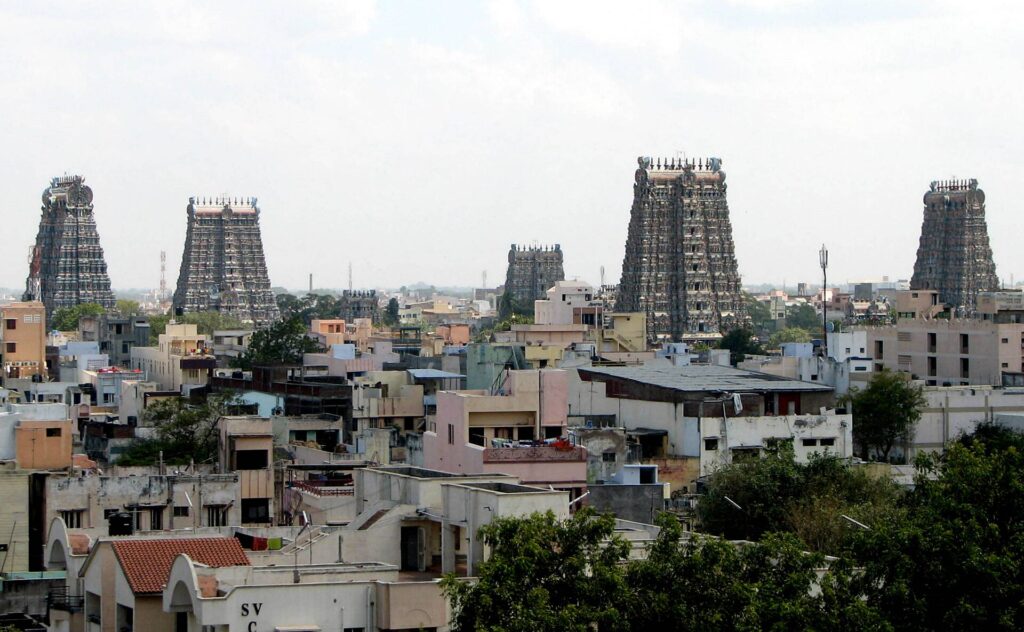
Tamil
The culture
Tamil: Tamilakam (the ancient Tamil country of southern India and Sri Lanka), during the Sangam age (roughly 300 BCE–300 CE), under the Chera, Chola, and Pandya dynasties.
Where
South Asia: Dravidian / South India (Tamilakam)
Time depth
The Sangam corpus dates to roughly 300 BCE–300 CE, making it among the oldest bodies of secular literature in India and one of the great classical literatures of the world. It is far older than most Sanskrit epic in written form, and entirely distinct: a Dravidian, not Indo-Aryan, tradition.
Living tradition
Yes: Tamil is a living classical language with an unbroken literary tradition of over two millennia, and the Sangam poems remain deeply revered and studied in Tamil culture, foundational to Tamil identity.
Language
Classical Tamil. The Sangam corpus comprises some 2,381 poems by hundreds of poets, gathered in anthologies (the Ettuthokai and Pattuppattu). Composed as sophisticated literary poetry with a highly developed poetics, codified in the Tolkappiyam, the oldest Tamil grammar.
The world of its stories
Cosmological Structure
A world balanced between two domains: akam (the interior: love, the private, feeling) and puram (the exterior: war, the public, the heroic and political). All of human experience is held between these two poles. The akam poems map the interior world onto five landscapes (tinai), each with its mood, season, flora, and phase of love. The cosmos of Sangam poetry is a balanced map of human emotional and social life, set in five landscapes.
Creation
Sangam poetry is largely secular and this-worldly; it is not a creation-myth tradition. Its "cosmology" is its poetics: the balanced system of akam and puram, and the five landscapes, through which all of life is understood and expressed. The world is given; the poetry maps its emotional and social order.
Time
Cyclical through the seasons and the phases of love and life, and balanced between the interior and exterior. Each tinai landscape carries its season and time of day. Time in Sangam poetry is the rhythm of love's phases (union, waiting, quarrel, longing, separation) and of the public world's seasons of war and peace, honor and loss.
The Sacred
The balance itself: akam and puram, interior and exterior, held in complementary tension. The five landscapes and their moods. Love (in all its phases) and heroism (honor, generosity, valor). The poet's craft. The land itself (mountain, forest, farmland, seashore, wasteland) each sacred to its mood and meaning.
Death / Afterlife
Sangam poetry engages death primarily in the puram (heroic) mode: the warrior's death, the memory of the fallen, the hero-stones raised to the dead, the poet's praise that grants a kind of immortality through memory. The emphasis is on honor, memory, and the community's grief and celebration rather than on a cosmology of afterlife.
Balance-Seeking Architecture
An Architecture of Story
The Balance-Seeking Architecture GuideWhy Balance Architecture
Sangam poetry is built on balance: the fundamental complementarity of akam (interior/love) and puram (exterior/war), and within the akam mode, the balanced system of the five tinai landscapes, each holding its own mood in equilibrium with the others. Meaning comes from the tension and interplay of complementary domains. A story in this architecture does not drive toward victory; it moves through balanced phases, each a landscape with its own emotional truth, the whole cohering as an equilibrium of feeling and world. The five tinai offer a perfect five-movement balance: union, waiting, discord, longing, and separation, each landscape a mood held in relation to the others.
Structural Logic
Movement through complementary, balanced phases rather than escalating conflict. Each phase (landscape) holds its own mood and truth in equilibrium with the others; the meaning is the balanced whole, the interplay of interior and exterior, feeling and world. Resolution completes the balanced pattern.
Structural Movement
Kurinji (the mountain: union, the meeting of lovers, the height) → Mullai (the forest: waiting, patient hope, the pastoral) → Marutam (the farmland: the agricultural turn, discord and reconciliation, the riverine) → Neytal (the seashore: longing, the ache of anticipated separation, the coastal) → Palai (the wasteland, separation and return, the hardest landscape, the desert crossing), the five landscapes together holding the whole balanced arc of love and life.
Key figures
Supreme Being / Creator
No central deity in the poetry itself, which is largely secular. Later devotional Tamil tradition (bhakti) centers on Shiva and Vishnu/Murugan, but Sangam poetry's focus is human (lovers, warriors, kings, poets) not divine.
Major Figures (types rather than named gods)
- The lovers: the hero (talaivan) and heroine (talaivi) of the akam poems, whose love moves through the phases mapped by the five landscapes, often speaking through the heroine's confidante (tozhi).
- The kings and warriors: the Chera, Chola, and Pandya rulers and their heroes, praised in the puram poems for valor and generosity.
- The poets: hundreds of named Sangam poets, women and men (Avvaiyar the most celebrated woman poet), whose voices are the tradition itself.
Trickster / Culture Figure
Not a trickster tradition; its cultural heroes are the ideal lover, the generous king, the valiant warrior, and above all the wise poet. Avvaiyar, the woman sage-poet, is a beloved figure of wisdom.
Ancestor Figures
The Sangam poets themselves, revered as the founders of Tamil literature. The heroes memorialized in hero-stones. The idealized kings whose generosity and valor set the cultural standard.
Who’s Who
Sacred elements
Sacred Objects
The hero-stones (nadukal) raised to fallen warriors. The garland and the specific flowers of each landscape (kurinji flower, mullai jasmine, etc.) that name and signify the five tinai. The poet's word itself.
Sacred Places
The five landscapes, each sacred to its mood: kurinji (mountains), mullai (forest/pastoral), marutam (farmland/riverine), neytal (seashore), palai (wasteland/desert). The courts of the three crowned kings (Chera, Chola, Pandya). The legendary Sangam academies of Madurai.
Sacred Practices
The composition and performance of poetry according to the exquisite conventions of akam and puram. The praise of kings and heroes. The mapping of emotion onto landscape. The gathering of the Sangam (the poetic academy). The raising of hero-stones and the memory of the fallen.
Sacred Prohibitions
The poetics themselves are a kind of sacred order: the conventions of which landscape suits which phase of love, which mood belongs to which season, are not to be violated carelessly. Akam (interior/love) and puram (exterior/war) have their proper domains and voices; to confuse them is to break the balance the tradition holds sacred.
How their stories are told
How Stories Are Told
Through highly compressed, allusive lyric poetry rather than long narrative. A Sangam poem is a moment (a single situation, mood, or turn of feeling) set within a landscape whose every detail (flower, bird, season, time of day) carries coded emotional meaning. The "story" is implied, glimpsed through the charged moment. Meaning is created by the balance and interplay of interior feeling (akam) and exterior world (puram), and by the resonance between emotion and landscape.
Who Tells Them
The Sangam poets: hundreds of them, women and men, from many walks of life. The akam poems are voiced by the lovers and their confidantes; the puram poems by poets praising or mourning kings and heroes.
When They Are Told
In the courts, at gatherings, in the performance and preservation of the poetic tradition. The poems were anthologized and transmitted as the foundation of Tamil literary culture.
The Purpose of Story
To hold love and war, the private heart and the public world, in balance, and to show the order of feeling by matching each emotion to its landscape. Sangam poetry does not resolve a conflict; it balances complementary domains, and its meaning arises from their held tension and interplay.
Signature Story Types
Akam poems (interior/love, in the five landscapes), puram poems (exterior/war, praise, and elegy), the compressed lyric moment, the landscape-coded emotional tableau.
How their stories are built, step by step
The five tinai (landscapes) of Sangam akam poetry, in Tamil, each with its mood and meaning.
Kurinji (The Mountain Meeting / Union)
Cultural meaning
Kurinji, the mountain landscape (named for the kurinji flower that blooms once in twelve years), is the tinai of union, the first meeting and secret love of the lovers, set among the hills at night. It is the mood of union, discovery, the thrilling first joining. In balance architecture, this is one pole of the emotional whole: the height of union, held in relation to all the phases to come.
Wisdom quote
"What could my mother be to yours? What kin is my father to yours anyway? And how did you and I ever meet? But in love our hearts have mingled like red earth and pouring rain.": Cempulappeyanirar, Kuruntokai 40 (Ramanujan translation basis, classical Tamil)
Cultural teaching
In balance architecture, begin with one pole of a balanced emotional whole, here the mood of union and meeting. Establish this phase fully as its own landscape with its own truth, knowing it is one of several complementary moods that together will form the balanced pattern. Let the union be complete in itself, a landscape entered fully.
Mullai (The Forest Waiting / Patient Hope)
Cultural meaning
Mullai, the forest and pastoral landscape (named for the mullai jasmine), is the tinai of waiting, the patient hope of the one who waits, especially the wife awaiting the return of the beloved, set in the forest during the rainy season. Its mood is patience, faithful expectation, the sustaining of love across absence. It balances the union of kurinji with the endurance of hope.
In brief
The season of return he promised has come; the jasmine blooms, the forest is fragrant, surely now he comes.
Cultural teaching
Move to a complementary phase that balances the first, here, waiting balances union, patience balances joining. In balance architecture each phase answers the others: where kurinji was meeting, mullai is the sustaining of connection across absence. Let this phase hold its own mood (patient hope, faithful waiting) fully, as a landscape that complements and balances what came before.
Marutam (The Agricultural Turn / Discord and Reconciliation)
Cultural meaning
Marutam, the farmland and riverine landscape (named for the marutam tree), is the tinai of the lovers' discord, the quarrels, sulking, and reconciliation of settled love, often the wife's response to the husband's infidelity, set in the fertile agricultural land. Its mood is the friction and repair of established, domestic love. It balances the idealized union and waiting with the real discord of lived relationship.
In brief
You come from her street with garlands still on you; do not touch me, go back where the fault is sweeter.
Cultural teaching
Include a phase of discord and reconciliation that balances the harmony of the earlier phases, the friction, quarrel, and repair of real, lived connection. Balance architecture does not exclude conflict; it holds it as one mood among the balanced whole, neither avoided nor made the whole story. Let this landscape hold the truth of discord and reconciliation, balancing the earlier harmony with lived friction.
Neytal (The Coastal Longing / The Ache of Separation)
Cultural meaning
Neytal, the seashore landscape (named for the neytal water-lily), is the tinai of longing, the ache of anticipated or present separation, the sorrow of the one who waits by the sea, watching for the beloved's return across the water. Its mood is pining, anxious longing, the sorrow of distance. It balances the phases of presence with the deep mood of yearning across separation.
In brief
The white crane cries on the salt marsh where the waves come in; and my heart, like the shore, is beaten by the tide of longing for him.
Cultural teaching
Move to the phase of longing and separation's ache, the mood of yearning that balances the phases of presence and union. In balance architecture, longing is a mood held in equilibrium with joining and waiting. Let this landscape hold the full truth of yearning across distance, balancing the story's moods of presence with the deep ache of separation.
Palai (The Wasteland Separation and Return / The Hardest Crossing)
Cultural meaning
Palai, the wasteland (any land parched by drought), is the tinai of separation: the hardest phase, the parting itself, the dangerous crossing and the hope of return. Its mood is hardship, separation, and the fortitude to endure and cross. It completes the balanced pattern, the hardest landscape balancing the sweetest.
In brief
He has gone through the wasteland where the hot wind blows, where even the birds do not fly; but the strong heart crosses, and the crossing is for her.
Cultural teaching
Complete the balanced pattern with the hardest phase, separation, the perilous crossing, the endurance that balances the sweetness of union. In balance architecture the ending completes the whole: the last mood that, held with the others, makes the pattern complete. Let this final landscape hold the truth of separation and hard endurance, completing the equilibrium of your story's emotional world.
What makes this tradition distinct
What makes this tradition distinct from all others
Sangam poetry builds its architecture from balance rather than conflict: the complementarity of akam (interior/love) and puram (exterior/war), and the exquisite five-landscape (tinai) system in which every flower, season, and time of day carries coded emotional meaning. It is among the oldest secular literatures in the world, entirely distinct from Sanskrit tradition (Dravidian, not Indo-Aryan), and its poetics map the whole of human feeling onto land with a precision found nowhere else. Meaning arises from the held equilibrium of complementary moods, not from a conflict resolved.
Cultural warnings — what NOT to do
- Do not impose a conflict-resolution arc: Sangam architecture is balance, the held interplay of complementary moods, not a build to victory.
- Do not confuse the tinai: each landscape has its specific mood and meaning; the mountain is union, the wasteland is separation, and so on.
- Do not conflate Tamil Sangam with Sanskrit tradition: it is Dravidian, distinct, and older in written form than most Sanskrit epic; honor its independence.
- Do not treat the coded landscape as mere scenery: in Sangam poetics, the flower, bird, and season ARE the emotional meaning.
The stories
Each story with its source, where to read it and why it fits.
The StoryWorld in Full
StoryWorld · South Asia — Dravidian / South India (Tamilakam)
TAMIL SANGAM — Akam / Puram
Tamil — Tamilakam (the ancient Tamil country of southern India and Sri Lanka), during the Sangam age (roughly 300 BCE–300 CE), under the Chera, Chola, and Pandya dynasties.
Balance architecture
The world as they see it
Cosmological Structure. A world organized by the profound balance of two complementary domains: akam (the interior — love, the private, the emotional world) and puram (the exterior — war, the public, the heroic and political world). All of human experience is held between these two poles. The akam poems map the interior world onto five landscapes (tinai), each with its mood, season, flora, and phase of love. The cosmos of Sangam poetry is not a mythology of gods but an exquisitely balanced map of human emotional and social life.
Creation. Sangam poetry is largely secular and this-worldly; it is not a creation-myth tradition. Its "cosmology" is its poetics — the balanced system of akam and puram, and the five landscapes, through which all of life is understood and expressed. The world is given; the poetry maps its emotional and social order.
Time. Cyclical through the seasons and the phases of love and life, and balanced between the interior and exterior. Each tinai landscape carries its season and time of day. Time in Sangam poetry is the rhythm of love's phases (union, waiting, quarrel, longing, separation) and of the public world's seasons of war and peace, honor and loss.
The Sacred. The balance itself — akam and puram, interior and exterior, held in complementary tension. The five landscapes and their moods. Love (in all its phases) and heroism (honor, generosity, valor). The poet's craft. The land itself — mountain, forest, farmland, seashore, wasteland — each sacred to its mood and meaning.
Death / Afterlife. Sangam poetry engages death primarily in the puram (heroic) mode — the warrior's death, the memory of the fallen, the hero-stones raised to the dead, the poet's praise that grants a kind of immortality through memory. The emphasis is on honor, memory, and the community's grief and celebration rather than on a cosmology of afterlife.
The powers and figures
Supreme Being / Creator
The lovers — the hero (talaivan) and heroine (talaivi) of the akam poems, whose love moves through the phases mapped by the five landscapes, often speaking through the heroine's confidante (tozhi).
The kings and warriors — the Chera, Chola, and Pandya rulers and their heroes, praised in the puram poems for valor and generosity.
The poets — hundreds of named Sangam poets, women and men (Avvaiyar the most celebrated woman poet), whose voices are the tradition itself.
Trickster / Culture Figure
Ancestor Figures
Sacred things and places
Sacred Objects. The hero-stones (nadukal) raised to fallen warriors. The garland and the specific flowers of each landscape (kurinji flower, mullai jasmine, etc.) that name and signify the five tinai. The poet's word itself.
Sacred Places. The five landscapes, each sacred to its mood: kurinji (mountains), mullai (forest/pastoral), marutam (farmland/riverine), neytal (seashore), palai (wasteland/desert). The courts of the three crowned kings (Chera, Chola, Pandya). The legendary Sangam academies of Madurai.
Sacred Practices. The composition and performance of poetry according to the exquisite conventions of akam and puram. The praise of kings and heroes. The mapping of emotion onto landscape. The gathering of the Sangam (the poetic academy). The raising of hero-stones and the memory of the fallen.
Sacred Prohibitions. The poetics themselves are a kind of sacred order — the conventions of which landscape suits which phase of love, which mood belongs to which season, are not to be violated carelessly. Akam (interior/love) and puram (exterior/war) have their proper domains and voices; to confuse them is to break the balance the tradition holds sacred.
How the stories are told
How Stories Are Told. Through highly compressed, allusive lyric poetry rather than long narrative. A Sangam poem is a moment — a single situation, mood, or turn of feeling — set within a landscape whose every detail (flower, bird, season, time of day) carries coded emotional meaning. The "story" is implied, glimpsed through the charged moment. Meaning is created by the balance and interplay of interior feeling (akam) and exterior world (puram), and by the resonance between emotion and landscape.
Who Tells Them. The Sangam poets — hundreds of them, women and men, from many walks of life. The akam poems are voiced by the lovers and their confidantes; the puram poems by poets praising or mourning kings and heroes.
When They Are Told. In the courts, at gatherings, in the performance and preservation of the poetic tradition. The poems were anthologized and transmitted as the foundation of Tamil literary culture.
The Purpose of Story. To hold the whole of human experience in exquisite balance — the interior and the exterior, love and war, the private heart and the public world — and to reveal, through the resonance of emotion and landscape, the deep order of feeling and life. Sangam poetry does not resolve a conflict; it balances complementary domains, and its meaning arises from their held tension and interplay.
Signature Story Types. Akam poems (interior/love, in the five landscapes), puram poems (exterior/war, praise, and elegy), the compressed lyric moment, the landscape-coded emotional tableau.
The stories
The Kuruntokai (Anthology of Short Poems)
Source Sangam akam poetry — the anthology of 401 short love poems mapping the five landscapes
Why it fits The purest expression of balance architecture — the five tinai landscapes, each a complementary mood held in equilibrium, the whole of love mapped as a balanced pattern
The Purananuru (Four Hundred Poems of the Exterior)
Source Sangam puram poetry — the great anthology of heroic, political, and elegiac poems praising and mourning kings and warriors
Public domain access Project Madurai; public-domain Tamil texts and older translations; Internet Archive
Why it fits The puram pole that balances the akam interior — the exterior world of honor, war, and memory held in complementary tension with the interior world of love
The Tolkappiyam (The Ancient Poetics)
Source The oldest Tamil grammar and poetics, codifying the akam/puram system and the five tinai
Public domain access Project Madurai; public-domain editions of the Tolkappiyam; academic archives
Why it fits The foundational text that defines the balance architecture itself — the theory of complementary domains and balanced landscapes that structures the whole tradition
How their stories move
Sangam poetry is built on balance — the fundamental complementarity of akam (interior/love) and puram (exterior/war), and within the akam mode, the balanced system of the five tinai landscapes, each holding its own mood in equilibrium with the others. Meaning arises not from conflict and resolution but from the held tension and interplay of complementary domains. A story in this architecture does not drive toward victory; it moves through balanced phases, each a landscape with its own emotional truth, the whole cohering as an equilibrium of feeling and world. The five tinai offer a perfect five-movement balance: union, waiting, discord, longing, and separation — each landscape a mood held in relation to the others.
Movement through complementary, balanced phases rather than escalating conflict. Each phase (landscape) holds its own mood and truth in equilibrium with the others; the meaning is the balanced whole, the interplay of interior and exterior, feeling and world. Resolution is not triumph but the completion of the balanced pattern.
Kurinji (the mountain — union, the meeting of lovers, the height) → Mullai (the forest — waiting, patient hope, the pastoral) → Marutam (the farmland — the agricultural turn, discord and reconciliation, the riverine) → Neytal (the seashore — longing, the ache of anticipated separation, the coastal) → Palai (the wasteland — separation and return, the hardest landscape, the desert crossing) — the five landscapes together holding the whole balanced arc of love and life.
This culture
People · Tamil — Tamilakam (the ancient Tamil country of southern India and Sri Lanka), during the Sangam age (roughly 300 BCE–300 CE), under the Chera, Chola, and Pandya dynasties.
Place · South Asia — Dravidian / South India (Tamilakam)
Depth · The Sangam corpus dates to roughly 300 BCE–300 CE, making it among the oldest bodies of secular literature in India and one of the great classical literatures of the world. It is far older than most Sanskrit epic in written form, and entirely distinct — a Dravidian, not Indo-Aryan, tradition.
Living · Yes — Tamil is a living classical language with an unbroken literary tradition of over two millennia, and the Sangam poems remain deeply revered and studied in Tamil culture, foundational to Tamil identity.
Balance worlds
DINÉ — Hózhó / Blessingway
ANCIENT EGYPTIAN — Ma'at Balance
JAVANESE — Wayang Kulit
INDIAN — Rasa (रस) / The Emotional Architecture of the Natyashastra
Mythology Catalog
- Why it fits: The purest expression of balance architecture — the five tinai landscapes, each a complementary mood held in equilibrium, the whole of love mapped as a balanced pattern
Story 2: The Purananuru (Four Hundred Poems of the Exterior)
- Why it fits: The foundational text that defines the balance architecture itself — the theory of complementary domains and balanced landscapes that structures the whole tradition
GriotsWell · Simplified Lore Library · Tamil Sangam · July 2026
The Guide
GriotsWell StoryWorlds · Guide
Tamil Sangam poetry — the akam/puram tradition and the five tinai
Balance architecture · 5 steps
How it moves
- Kurinji — The Mountain Meeting / Union
- Mullai — The Forest Waiting / Patient Hope
- Marutam — The Agricultural Turn / Discord and Reconciliation
- Neytal — The Coastal Longing / The Ache of Separation
- Palai — The Wasteland Separation and Return / The Hardest Crossing
Kurinji (the mountain — union, the meeting of lovers, the height) → Mullai (the forest — waiting, patient hope, the pastoral) → Marutam (the farmland — the agricultural turn, discord and reconciliation, the riverine) → Neytal (the seashore — longing, the ache of anticipated separation, the coastal) → Palai (the wasteland — separation and return, the hardest landscape, the desert crossing) — the five landscapes together holding the whole balanced arc of love and life. ---
Why it is told this way
Movement through complementary, balanced phases rather than escalating conflict. Each phase (landscape) holds its own mood and truth in equilibrium with the others; the meaning is the balanced whole, the interplay of interior and exterior, feeling and world. Resolution is not triumph but the completion of the balanced pattern.
To hold the whole of human experience in exquisite balance — the interior and the exterior, love and war, the private heart and the public world — and to reveal, through the resonance of emotion and landscape, the deep order of feeling and life. Sangam poetry does not resolve a conflict; it balances complementary domains, and its meaning arises from their held tension and interplay.
What this StoryWorld asks
- Can your story move through balanced, complementary moods (landscapes) rather than escalating conflict?
- Does each phase carry its own emotional truth, held in equilibrium with the others?
- Is emotion mapped onto landscape, so that setting carries coded feeling?
- Does your story end in the completion of a balanced pattern rather than a triumph?
At a glance
People Tamil — Tamilakam (the ancient Tamil country of southern India and Sri Lanka), during the Sangam age (roughly 300 BCE–300 CE), under the Chera, Chola, and Pandya dynasties.
Region South Asia — Dravidian / South India (Tamilakam)
Time depth The Sangam corpus dates to roughly 300 BCE–300 CE, making it among the oldest bodies of secular literature in India and one of the great classical literatures of the world.
Living tradition Yes — Tamil is a living classical language with an unbroken literary tradition of over two millennia, and the Sangam poems remain deeply revered and studied in Tamil culture, foundational to Tamil identity.
How it is carried Classical Tamil. The Sangam corpus comprises some 2,381 poems by hundreds of poets, gathered in anthologies (the Ettuthokai and Pattuppattu).
“What could my mother be to yours? What kin is my father to yours anyway? And how did you and I ever meet? But in love our hearts have mingled like red earth and pouring rain.”— Cempulappeyanirar, Kuruntokai 40 (Ramanujan translation basis, classical Tamil)
Keep faith with it
- Do not impose a conflict-resolution arc — Sangam architecture is balance, the held interplay of complementary moods, not a build to victory. - Do not confuse the tinai — each landscape has its specific mood and meaning; the mountain is union, the wasteland is separation, and so on.