Sanskrit Theatre — Rasa (Nāṭyaśāstra)
Rasa (रस): the Indian aesthetic theory of emotional flavor and its balanced composition
The Indian (Sanskrit) dramatic and aesthetic tradition: the theory of rasa articulated in the Natyashastra (the ancient Sanskrit treatise on dramaturgy attributed to Bharata Muni) and developed across Indian poetics, drama, dance, and music.
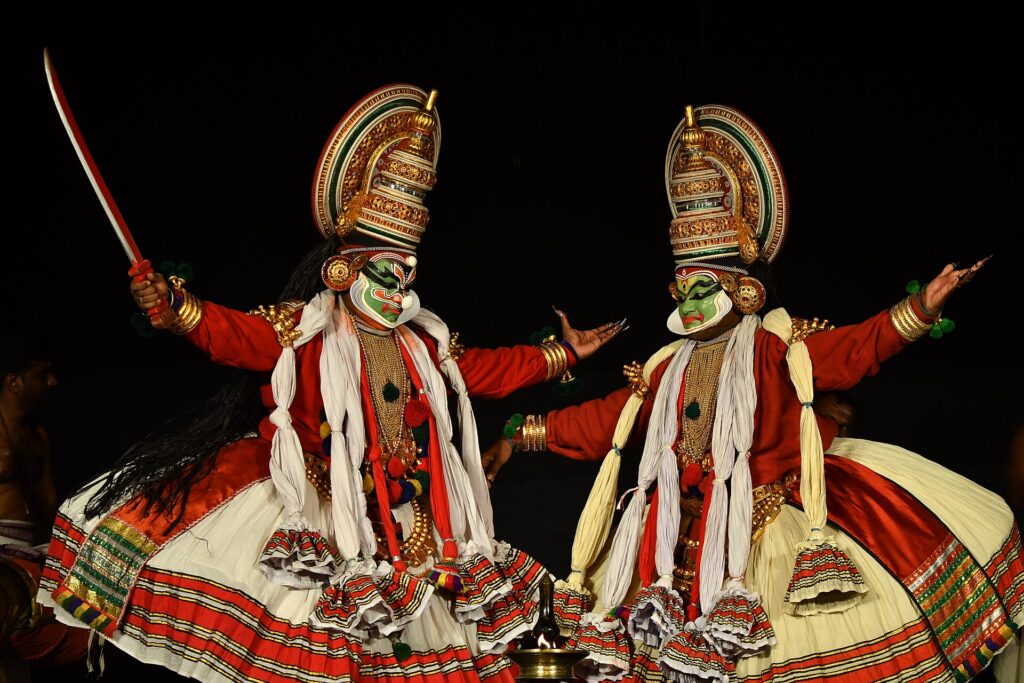
Sanskrit Theatre
The culture
The Indian (Sanskrit) dramatic and aesthetic tradition: the theory of rasa articulated in the Natyashastra (the ancient Sanskrit treatise on dramaturgy attributed to Bharata Muni) and developed across Indian poetics, drama, dance, and music.
Where
South Asia: India
Time depth
The Natyashastra, the foundational text of rasa theory, is ancient (composed in the early centuries of the common era or earlier); rasa has shaped Indian aesthetics for two millennia and remains central to Indian arts.
Living tradition
Yes. Rasa is a living principle of Indian classical dance, drama, music, poetry and film.
Language
Sanskrit (the theory) and the many Indian languages and art forms in which rasa lives: classical dance (Bharatanatyam, Kathakali, and others), drama, music, poetry, and film.
The world of its stories
Aesthetic Structure
A view in which the aim of art is rasa: the emotional "flavor" or aesthetic sentiment savored by the audience, arising from the artful composition and balance of emotional states. The Natyashastra names the primary rasas (the navarasa: shringara/love, hasya/comic, karuna/compassion, raudra/fury, vira/heroic, bhayanaka/terror, bibhatsa/disgust, adbhuta/wonder, and shanta/peace), each arising from an underlying durable emotion (sthayi bhava) through its causes (vibhava), manifestations (anubhava), and the play of transitory emotions (vyabhichari bhava). The art is one of balance and composition: the emotional flavors evoked and brought to their savouring (rasa nishpatti), often resolving toward shanta (peace).
Structure
The composition and balance of emotional flavors: a primary rasa established, its emotional foundation set, the causes and manifestations evoked, the transitory emotions played, and the rasa realized and savored, balanced and often resolving toward peace. The structure is one of emotional balance and composition.
The Valued
Rasa (the savored emotional flavor). The bhavas (the emotional states). The balance and composition of the emotional flavors. Vibhava (the causes of emotion), anubhava (its manifestations), vyabhichari bhava (the transitory emotions). Rasa nishpatti (the realization/savoring of rasa). Shanta (peace) as the resolving flavor.
Balance-Seeking Architecture
An Architecture of Story
The Balance-Seeking Architecture GuideWhy Balance Architecture
Rasa is an architecture of balance: the artful composition and balancing of emotional flavors (rasas) and states (bhavas) into an aesthetic whole to be savored. It is composed as a balance of emotional flavours: a primary rasa established and set against others, its causes and signs evoked, the passing emotions played, and the whole brought to savouring, often resolving toward shanta (peace). The structure is the balanced composition of emotional flavor: balance architecture in its emotional-aesthetic Indian form.
Structural Movement (matching the StoryWorld's cultural steps)
Primary Rasa (the central emotional flavor) → Bhava Foundation (the emotional setting) → Character Rasa Profiles (the emotional flavors of the characters) → Rasa Sandhi (the transitions/junctures among the flavors) → Vibhava (the causes of emotion) → Anubhava (the manifestations of emotion) → Vyabhichari Bhavas (the transitory emotions) → Rasa Nishpatti (the realization/savoring of rasa) → Shanta Samapti (the peaceful resolution).
Key figures
Articulators of the Tradition
Bharata Muni (to whom the Natyashastra is attributed) and the great commentators and theorists of rasa (such as Abhinavagupta) who developed the theory across Indian poetics. The tradition is aesthetic and theoretical rather than mythological.
Who’s Who
Sacred elements
Valued Aesthetic Elements
The rasas (the emotional flavors). The sthayi bhavas (the durable underlying emotions). Vibhava (causes/determinants), anubhava (manifestations/consequents), and vyabhichari bhava (transitory emotions). Rasa nishpatti (the production/savoring of rasa). The balance and composition of the emotional flavors. Shanta (peace).
Aesthetic Discipline
Compose and balance the emotional flavors; evoke the rasa through its causes and manifestations; play the transitory emotions to enrich it; bring the rasa to its savoring; and, in the fullest vision, resolve toward shanta (peace). The art is one of emotional balance and composition.
How their stories are told
How Stories Are Told
As the artful composition and balance of emotional flavors (rasa): a primary rasa chosen and established, its emotional foundation (bhava) set, the characters' emotional profiles drawn, the transitions (rasa sandhi) among the flavors composed, the causes (vibhava) and manifestations (anubhava) of emotion evoked, the transitory emotions (vyabhichari bhava) played, the rasa brought to its realization and savoring (rasa nishpatti), and the whole often resolving toward shanta (peace). The story is structured as an emotional composition (the rasas evoked and savoured) rather than as a conflict-driven plot.
The Purpose of Story
To evoke and let the audience savor rasa, the emotional flavor arising from the artful composition and balance of the emotional states, bringing the audience to the aesthetic experience of the emotional flavors, and, in the fullest vision, to the peace (shanta) that balances and resolves them. Story is the composition of emotional flavor for savoring.
Signature Story Types
The rasa-centered drama, dance, or poem; the story composed as an emotional flavor to be savored; the balanced composition of emotional states resolving toward peace.
How their stories are built, step by step
Sanskrit rasa-theory terms following the composition of emotional flavor (matching the StoryWorld's nine cultural steps).
Primary Rasa (Primary Emotion/Flavor)
Cultural meaning
The primary rasa, the central emotional flavor the composition will evoke and savor. In rasa theory, a work is centered on a dominant rasa (one of the navarasa: love, compassion, wonder, the heroic, and so on) that gives it its emotional character. This step establishes the primary rasa: the central emotional flavor around which the whole balanced composition will be built and savored.
In the Natyashastra's terms
A work is built around one dominant rasa, the flavour the audience will savour.
Cultural teaching
In balance architecture of this emotional kind, begin by establishing the primary rasa, the central emotional flavor around which the whole composition will be balanced and savored. In rasa theory, a work is centered on its dominant rasa. Establish your story's primary rasa here: the central emotional flavor (love, compassion, wonder, the heroic, and so on) that will give the composition its character and that the audience will savor.
Bhava Foundation (Emotional Setting)
Cultural meaning
The bhava foundation, the underlying durable emotion (sthayi bhava) that grounds the primary rasa. In rasa theory, each rasa arises from an underlying durable emotional state (bhava): love (shringara) from delight (rati), compassion (karuna) from sorrow (shoka), and so on. This step establishes the emotional foundation: the durable underlying emotion that grounds the primary rasa, the bhava from which the flavor will arise.
In the Natyashastra's terms
Each rasa grows from a lasting emotion, its sthayi bhava.
Cultural teaching
Establish the bhava foundation, the durable underlying emotion (sthayi bhava) that grounds the primary rasa and from which the flavor arises. In rasa theory, each rasa arises from its underlying bhava. Let your story establish the emotional foundation here: the durable underlying emotion (delight, sorrow, wonder, and so on) that grounds the primary rasa and from which the savored flavor will arise.
Character Rasa Profiles
Cultural meaning
The character rasa profiles, the emotional flavors and states of the characters. In the composition, each character carries their own emotional flavors and states, contributing to the balanced whole. This step establishes the characters' emotional profiles: the flavors and states each character embodies and evokes, the emotional colors they bring to the balanced composition of rasa.
In the Natyashastra's terms
Each character carries their own states of feeling into the whole.
Cultural teaching
Establish the character rasa profiles, the emotional flavors and states each character embodies and evokes, contributing their color to the balanced composition. In rasa theory, the characters bring their emotional flavors to the whole. Let your story establish its characters' emotional profiles here: the flavors and states each brings, the emotional colors that will be balanced into the composition of rasa.
Rasa Sandhi (Emotional Transitions/Junctures)
Cultural meaning
Rasa sandhi, the transitions and junctures among the emotional flavors. In the composition, the rasas transition and join: the work moves among emotional flavors, and the artful junctures (sandhi) between them compose the emotional flow. This step establishes the emotional transitions: how the composition moves and joins among the rasas, the artful junctures that compose the balanced flow of emotional flavor.
In the Natyashastra's terms
The joints of the play, its sandhi, carry the feeling from one movement to the next.
Cultural teaching
Compose the rasa sandhi, the transitions and junctures among the emotional flavors, the artful movement and joining of the rasas that compose the emotional flow. In rasa theory, the sandhi compose the balanced flow. Let your story compose its emotional transitions here: how it moves and joins among the emotional flavors, the artful junctures that balance and compose the flow of rasa.
Vibhava (Emotional Causes/Determinants)
Cultural meaning
Vibhava, the causes and determinants that evoke the emotion. In rasa theory, the vibhava are the causes of emotion: the situations, characters, and circumstances (the determinants) that give rise to the emotional flavor in the work. This step establishes the causes of emotion: the vibhava, the situations and circumstances that evoke the rasa, the determinants that call forth the emotional flavor to be savored.
In the Natyashastra's terms
Vibhava are the causes of emotion, the people and circumstances that call it up.
Cultural teaching
Establish the vibhava, the causes and determinants (the situations, characters, and circumstances) that evoke the emotional flavor. In rasa theory, the vibhava give rise to the rasa. Let your story establish its causes of emotion here: the situations and circumstances (the determinants) that call forth the emotional flavor, the vibhava that evoke the rasa to be savored.
Anubhava (Emotional Manifestations/Consequents)
Cultural meaning
Anubhava, the manifestations and consequents that express the emotion. In rasa theory, the anubhava are the outward expressions of emotion: the gestures, expressions, words, and actions through which the emotional state is manifested and made perceptible. This step establishes the manifestations of emotion: the anubhava, the outward expressions through which the emotional flavor is shown and made perceptible to the audience.
In the Natyashastra's terms
Anubhava are its outward signs, the gestures and expressions that show it.
Cultural teaching
Establish the anubhava, the manifestations and consequents (the gestures, expressions, words, and actions) through which the emotion is expressed and made perceptible. In rasa theory, the anubhava show the emotion. Let your story establish its manifestations of emotion here: the outward expressions through which the emotional flavor is shown, the anubhava that make the rasa perceptible to the audience.
Vyabhichari Bhavas (Transitory Emotions)
Cultural meaning
Vyabhichari bhavas, the transitory, fleeting emotions that pass through and enrich the composition. In rasa theory, the vyabhichari bhavas are the transient emotional states (such as anxiety, joy, longing, doubt) that come and go, colouring the dominant rasa without displacing it. This step establishes the transitory emotions: the fleeting emotional states that pass through the composition, colouring the primary rasa, adding depth.
In the Natyashastra's terms
The passing emotions, vyabhichari bhava, come and go around the dominant one without replacing it.
Cultural teaching
Play the vyabhichari bhavas, the transitory, fleeting emotions that pass through the composition, colouring the primary rasa without displacing it. In rasa theory, these passing states give depth and nuance. Let your story play its transitory emotions here: the fleeting states (anxiety, joy, longing, doubt) that pass through, colouring the dominant rasa.
Rasa Nishpatti (Emotional Realization/Savoring)
Cultural meaning
Rasa nishpatti, the realization and savoring of the rasa, the culmination of the composition. In rasa theory, rasa nishpatti is the production and savoring of the rasa: the point at which the composed emotional flavor is fully realized and savored by the audience, the aesthetic experience of the rasa achieved. This step establishes the realization of rasa: the culmination at which the balanced composition brings the emotional flavor to its full savoring, the aesthetic experience achieved.
In the Natyashastra's terms
Rasa nishpatti is the moment the audience fully tastes the rasa.
Cultural teaching
Bring the composition to rasa nishpatti, the realization and savoring of the rasa, the culmination at which the balanced emotional flavor is fully experienced by the audience. In rasa theory, this is the aesthetic experience achieved. Let your story bring its rasa to realization here: the culmination at which the whole balanced composition brings the emotional flavor to its full savoring, the aesthetic experience of the rasa achieved.
Shanta Samapti (Peaceful Resolution)
Cultural meaning
Shanta samapti, the resolution toward shanta (peace), the balancing conclusion. In the fullest vision of rasa theory, shanta (peace) is the rasa that balances and resolves the others: the tranquil flavor toward which the composition may resolve, bringing the emotional flavors into a final balance and peace. This step establishes the peaceful resolution: the balancing conclusion in which the composition resolves toward shanta, the emotional flavors brought into their final balance and peace.
In the later rasa tradition
Shanta, peace, is the rasa in which the others come to rest.
Cultural teaching
Resolve toward shanta samapti, the peaceful conclusion in which the composition comes to rest, the emotional flavors brought into their final balance and peace. In the fullest vision of rasa theory, shanta (peace) balances and resolves the rasas. Let your story resolve toward peace here: the balancing conclusion in which the emotional flavors are brought into their final balance, the composition coming to rest in shanta.
What makes this tradition distinct
What makes this tradition distinct from all others
Rasa is an architecture of emotional balance: the artful composition and balancing of emotional flavors (rasas) and states (bhavas) into an aesthetic whole to be savored, drawn from the ancient Natyashastra. It structures a work by evoking, balancing and savouring emotional flavour. A primary rasa is grounded in its bhava, evoked through vibhava and anubhava and enriched by passing emotions until it is savoured (rasa nishpatti), often resolving toward peace (shanta). It is one of the world's most developed theories of the emotional composition of art.
Cultural warnings — what NOT to do
- Do not structure by conflict-driven plot: rasa is an architecture of emotional balance and savoring.
- Do not confuse the rasa (the savored flavor) with the bhava (the underlying emotion): the theory distinguishes them precisely.
- Do honor the precision and sophistication of the Natyashastra's terminology; use it accurately.
- Do honor the living, central place of rasa in Indian arts; do not reduce it to a vague "emotion" framework.
The stories
Each story with its source, where to read it and why it fits.
The StoryWorld in Full
StoryWorld · South Asia — India
INDIAN — Rasa (रस) / The Emotional Architecture of the Natyashastra
The Indian (Sanskrit) dramatic and aesthetic tradition — the theory of rasa articulated in the Natyashastra (the ancient Sanskrit treatise on dramaturgy attributed to Bharata Muni) and developed across Indian poetics, drama, dance, and music.
Balance architecture
The world as they see it
Aesthetic Structure. A view in which the aim of art is rasa — the emotional "flavor" or aesthetic sentiment savored by the audience, arising from the artful composition and balance of emotional states. The Natyashastra names the primary rasas (the navarasa: shringara/love, hasya/comic, karuna/compassion, raudra/fury, vira/heroic, bhayanaka/terror, bibhatsa/disgust, adbhuta/wonder, and shanta/peace), each arising from an underlying durable emotion (sthayi bhava) through its causes (vibhava), manifestations (anubhava), and the play of transitory emotions (vyabhichari bhava). The art is one of balance and composition: the emotional flavors evoked, balanced, and brought to their savoring (rasa nishpatti), often resolving toward shanta (peace).
Structure. The composition and balance of emotional flavors — a primary rasa established, its emotional foundation set, the causes and manifestations evoked, the transitory emotions played, and the rasa realized and savored, balanced and often resolving toward peace. The structure is one of emotional balance and composition rather than conflict-driven plot.
The Valued. Rasa (the savored emotional flavor). The bhavas (the emotional states). The balance and composition of the emotional flavors. Vibhava (the causes of emotion), anubhava (its manifestations), vyabhichari bhava (the transitory emotions). Rasa nishpatti (the realization/savoring of rasa). Shanta (peace) as the resolving flavor.
The powers and figures
Articulators of the Tradition
Sacred things and places
Valued Aesthetic Elements. The rasas (the emotional flavors). The sthayi bhavas (the durable underlying emotions). Vibhava (causes/determinants), anubhava (manifestations/consequents), and vyabhichari bhava (transitory emotions). Rasa nishpatti (the production/savoring of rasa). The balance and composition of the emotional flavors. Shanta (peace).
Aesthetic Discipline. Compose and balance the emotional flavors; evoke the rasa through its causes and manifestations; play the transitory emotions to enrich it; bring the rasa to its savoring; and, in the fullest vision, resolve toward shanta (peace). The art is one of emotional balance and composition.
How the stories are told
How Stories Are Told. As the artful composition and balance of emotional flavors (rasa) — a primary rasa chosen and established, its emotional foundation (bhava) set, the characters' emotional profiles drawn, the transitions (rasa sandhi) among the flavors composed, the causes (vibhava) and manifestations (anubhava) of emotion evoked, the transitory emotions (vyabhichari bhava) played, the rasa brought to its realization and savoring (rasa nishpatti), and the whole often resolving toward shanta (peace). The story is structured as an emotional composition — the evoking, balancing, and savoring of the rasas — rather than as a conflict-driven plot.
The Purpose of Story. To evoke and let the audience savor rasa — the emotional flavor arising from the artful composition and balance of the emotional states — bringing the audience to the aesthetic experience of the emotional flavors, and, in the fullest vision, to the peace (shanta) that balances and resolves them. Story is the composition of emotional flavor for savoring.
Signature Story Types. The rasa-centered drama, dance, or poem; the story composed as an emotional flavor to be savored; the balanced composition of emotional states resolving toward peace.
The stories
The Natyashastra
Source The ancient Sanskrit treatise on dramaturgy attributed to Bharata Muni — the foundational text of rasa theory
Public domain access Public-domain translations and editions of the Natyashastra are available via Internet Archive; the text and its theory are extensively documented
Why it fits The foundational articulation of rasa — the primary rasas, the bhavas, and the composition of emotional flavor at the heart of the architecture
The Navarasa (The Nine Rasas)
Source The Indian aesthetic tradition — the nine primary rasas (love, comic, compassion, fury, heroic, terror, disgust, wonder, and peace)
Why it fits The palette of emotional flavors that the balanced composition evokes and savors — the flavors balanced in the architecture
Rasa in Indian Classical Arts
Source The living tradition of rasa in Indian classical dance, drama, music, and poetry
Public domain access The role of rasa in the classical arts is extensively documented in the public and scholarly record
Why it fits Rasa realized in the arts — the composition and savoring of emotional flavor, the balance architecture in living practice
How their stories move
Rasa is an architecture of balance — the artful composition and balancing of emotional flavors (rasas) and states (bhavas) into an aesthetic whole to be savored. It is not driven by conflict toward a climax but composed as a balance of emotional flavors: a primary rasa established and balanced with others, the causes and manifestations evoked, the transitory emotions played, the whole brought into balance and savoring, often resolving toward shanta (peace). The structure is the balanced composition of emotional flavor — balance architecture in its emotional-aesthetic Indian form.
This culture
People · The Indian (Sanskrit) dramatic and aesthetic tradition — the theory of rasa articulated in the Natyashastra (the ancient Sanskrit treatise on dramaturgy attributed to Bharata Muni) and developed across Indian poetics, drama, dance, and music.
Place · South Asia — India
Depth · The Natyashastra, the foundational text of rasa theory, is ancient (composed in the early centuries of the common era or earlier); rasa has shaped Indian aesthetics for two millennia and remains central to Indian arts.
Living · Yes — rasa is a living, central principle of Indian classical dance, drama, music, poetry, and film, deeply woven into Indian aesthetic sensibility.
Balance worlds
DINÉ — Hózhó / Blessingway
ANCIENT EGYPTIAN — Ma'at Balance
JAVANESE — Wayang Kulit
TAMIL SANGAM — Akam / Puram
What makes this tradition distinct
Rasa is an architecture of emotional balance — the artful composition and balancing of emotional flavors (rasas) and states (bhavas) into an aesthetic whole to be savored, drawn from the ancient Natyashastra. It structures a work not by conflict-driven plot but by the evoking, balancing, and savoring of emotional flavor: a primary rasa grounded in its bhava, evoked through vibhava and anubhava, enriched by transitory emotions, brought to its savoring (rasa nishpatti), and often resolving toward peace (shanta). It is one of the world's most developed theories of the emotional composition of art.
Mythology Catalog
- Why it fits: Rasa realized in the arts — the composition and savoring of emotional flavor, the balance architecture in living practice
GriotsWell · Simplified Lore Library · Indian Rasa (Natyashastra) · July 2026
The Guide
GriotsWell StoryWorlds · Guide
Rasa (रस) — the Indian aesthetic theory of emotional flavor and its balanced composition
Balance architecture · 9 steps
How it moves
- Primary Rasa (Primary Emotion)
- Bhava Foundation (Emotional Setting)
- Character Rasa Profiles
- Rasa Sandhi (Emotional Transitions)
- Vibhava (Emotional Causes)
- Anubhava (Emotional Manifestations)
- Vyabhichari Bhavas (Fleeting Emotions)
- Rasa Nishpatti (Emotional Realization)
- Shanta Samapti (Peaceful Resolution)
Primary Rasa (the central emotional flavor) → Bhava Foundation (the emotional setting) → Character Rasa Profiles (the emotional flavors of the characters) → Rasa Sandhi (the transitions/junctures among the flavors) → Vibhava (the causes of emotion) → Anubhava (the manifestations of emotion) → Vyabhichari Bhavas (the transitory emotions) → Rasa Nishpatti (the realization/savoring of rasa) → Shanta Samapti (the peaceful resolution). ---
Why it is told this way
Rasa is an architecture of balance — the artful composition and balancing of emotional flavors (rasas) and states (bhavas) into an aesthetic whole to be savored. It is not driven by conflict toward a climax but composed as a balance of emotional flavors: a primary rasa established and balanced with others, the causes and manifestations evoked, the transitory emotions played, the whole brought into balance and savoring, often resolving toward shanta (peace). The structure is the balanced composition of emotional flavor — balance architecture in its emotional-aesthetic Indian form.
To evoke and let the audience savor rasa — the emotional flavor arising from the artful composition and balance of the emotional states — bringing the audience to the aesthetic experience of the emotional flavors, and, in the fullest vision, to the peace (shanta) that balances and resolves them. Story is the composition of emotional flavor for savoring.
What this StoryWorld asks
- Is the work centered on a primary emotional flavor (rasa) to be savored, rather than a conflict-driven plot?
- Is the rasa grounded in an underlying durable emotion (bhava)?
- Are the causes (vibhava), manifestations (anubhava), and transitory emotions (vyabhichari) composed to evoke it?
- Does the composition balance the flavors, bring the rasa to its savoring, and resolve toward peace (shanta)?
At a glance
People The Indian (Sanskrit) dramatic and aesthetic tradition — the theory of rasa articulated in the Natyashastra (the ancient Sanskrit treatise on dramaturgy attributed to Bharata Muni) and developed across Indian poetics, drama, dance, and music.
Region South Asia — India
Time depth The Natyashastra, the foundational text of rasa theory, is ancient (composed in the early centuries of the common era or earlier); rasa has shaped Indian aesthetics for two millennia and remains central to Indian arts.
Living tradition Yes — rasa is a living, central principle of Indian classical dance, drama, music, poetry, and film, deeply woven into Indian aesthetic sensibility.
How it is carried Sanskrit (the theory) and the many Indian languages and art forms in which rasa lives — classical dance (Bharatanatyam, Kathakali, and others), drama, music, poetry, and film. ---
“Every composition is centered on its dominant rasa — the emotional flavor that gives it its character and that the audience will savor.”— after the rasa theory of the Natyashastra
Keep faith with it
- Do not structure by conflict-driven plot — rasa is an architecture of emotional balance and savoring. - Do not confuse the rasa (the savored flavor) with the bhava (the underlying emotion) — the theory distinguishes them precisely. - Do honor the precision and sophistication of the Natyashastra's terminology; use it accurately.