Irish & Welsh — The Celtic Spiral
Celtic narrative tradition: the spiral, and the cyclical-return storytelling of the Irish and Welsh
Celtic: the Irish (Gaelic) and Welsh (Brythonic) traditions above all, heirs to a rich mythological and storytelling heritage preserved in the medieval manuscripts.
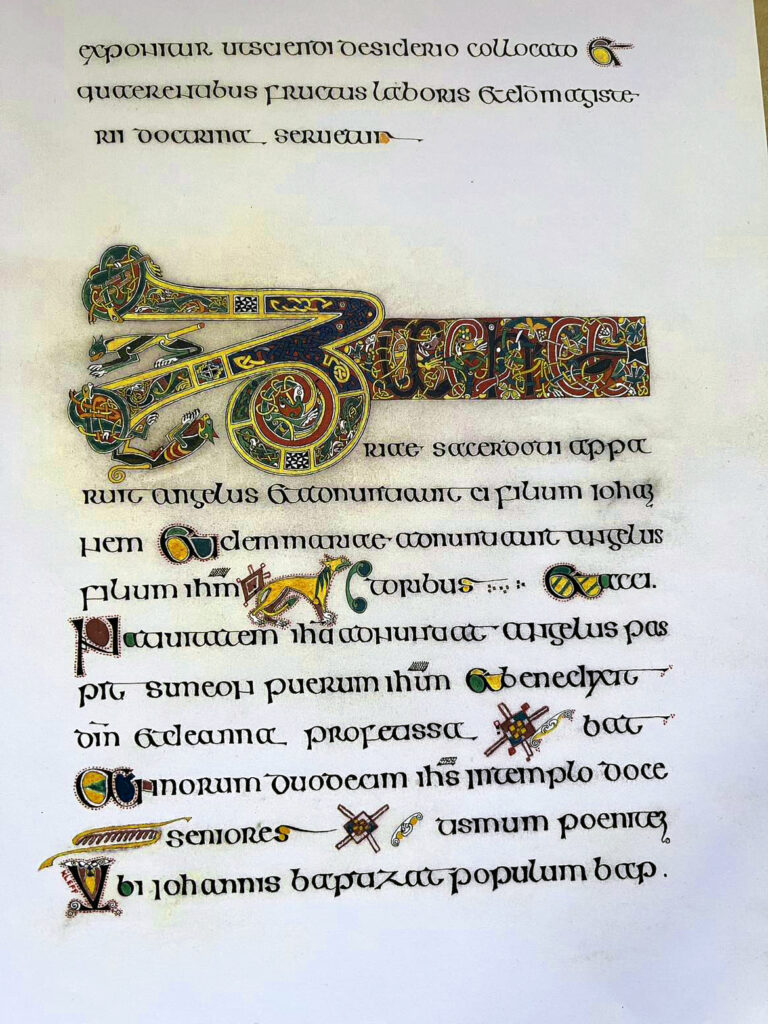
Irish & Welsh
The culture
Celtic: the Irish (Gaelic) and Welsh (Brythonic) traditions above all, heirs to a rich mythological and storytelling heritage preserved in the medieval manuscripts.
Where
Europe: the Celtic lands (Ireland, Wales, and the wider Celtic world)
Time depth
The tradition is ancient, its myths reaching back into pre-Christian Celtic antiquity and preserved in the medieval Irish and Welsh manuscripts (the Mythological, Ulster, and Fenian Cycles; the Mabinogion).
Living tradition
Yes: Celtic languages, storytelling, music, and tradition are living and resurgent, and the myths remain a vital cultural inheritance in Ireland, Wales and the other Celtic lands.
Language
Irish (Gaelic) and Welsh, among other Celtic languages. Oral tradition preserved and elaborated in the medieval manuscripts (the great cycles of Irish myth and the Welsh Mabinogion) and carried in living storytelling, music, and lore.
The world of its stories
Cosmological Structure
A world the Otherworld runs through: the country of the sí (the fairy folk, the Tuatha Dé Danann), reached through mounds, mists and wells and at the turning of the seasons, and never far from the human world. The Celtic sense of time and story is spiral: motifs and voyages come back at deeper levels, and the Otherworld and the human world circle each other. The spiral (a pervasive Celtic art motif) expresses this deepening return.
Time
Spiral: the seasons turn through their festivals (Samhain, Imbolc, Beltane, Lughnasadh), and each return comes round changed. Time spirals: the story returns to its motifs and places, each time deeper, the pattern recognized anew.
The Sacred
The Otherworld and the sí. The spiral itself, the deepening return. The sacred landscape (mounds, wells, hills, groves). The seasonal festivals. The recurring motifs and recognitions of the tradition. Transformation (a pervasive Celtic theme: shape-shifting, rebirth, the crossing between worlds).
Death / Afterlife
Death is a crossing to the Otherworld, which lies close beside this one. The dead and the sí are near, and the boundary is thin, thinnest at Samhain. The Otherworld is a place of youth, feasting, and timelessness. The Celtic sense is of continuity and return across the boundary rather than final severance, the spiral crossing between worlds.
Why Spiral Architecture
Celtic narrative is spiral. Motifs, voyages and recognitions return at deeper levels, and the Otherworld and the human world circle each other until the pattern comes round changed. A story in this architecture turns and returns: a seed motif established, the spiral turning through recurrences that deepen it, moments of recognition where the pattern is seen anew, and a new beginning that is the spiral come round to a deeper level. The spiral (the pervasive Celtic motif) is the very shape of the storytelling: return that deepens, not repetition.
Structural Movement (matching the StoryWorld's cultural steps)
An Scéal Síl (the seed story, the originating motif) → Casadh na Timthriall (the spiral turns, recurrences that deepen) → Eilimintí Ceilteacha (Celtic elements: the Otherworld, transformation, the sacred landscape) → Nóiméid Aitheantais (recognition moments. The pattern seen anew) → Briseadh nó Comhlíonadh (breaking or fulfilling. The geis broken or the pattern fulfilled) → Tús Nua (new beginning. The spiral come round to a deeper level).
Key figures
The Otherworldly Powers
The Tuatha Dé Danann (the people of the goddess Danu): the divine/fairy folk of Irish myth, dwelling in the Otherworld and the mounds. The Welsh equivalents in the Mabinogion (Rhiannon, Pwyll, Arawn of Annwn, and others).
Major Figures
- The heroes of the cycles: Cú Chulainn (Ulster Cycle), Fionn mac Cumhaill and the Fianna (Fenian Cycle), and the figures of the Welsh Mabinogion (Pwyll, Rhiannon, Branwen, Manawydan, and others).
- The Otherworldly beings: the sí, who draw heroes into the Otherworld and back, the spiral crossing central to so many tales.
Trickster / Shape-shifter Figures
Transformation and shape-shifting pervade the tradition (Gwion Bach / Taliesin's transformations; the many shape-shiftings of the myths), and Otherworldly tricksters and enchanters abound.
Ancestor Figures
The Tuatha Dé Danann as the mythic predecessors. The heroes of the cycles as ancestral exemplars. The lineages of the Mabinogion.
Who’s Who
Sacred elements
Sacred Objects
The spiral motif (in Celtic art, at Newgrange and beyond). The cauldron (of rebirth, of plenty). The sacred well and its waters. The tokens and treasures of the Otherworld.
Sacred Places
The mounds (sí), entrances to the Otherworld. Wells, hills, groves, and the thin places where the worlds meet. Newgrange and the ancient monuments. The sacred landscape running through the tales.
Sacred Practices
The telling of the cycles and the Mabinogion. The seasonal festivals (Samhain, Imbolc, Beltane, Lughnasadh). The honoring of the Otherworld and its thin places. The recognition of the recurring motifs and the spiral of return.
Sacred Prohibitions
The geis (taboo): the sacred prohibition binding heroes, whose breaking brings doom (Cú Chulainn's geasa are central to his fate). The Otherworld and its beings must be approached with care; its gifts and dangers are real. The thin places and sacred landscape must be respected.
How their stories are told
How Stories Are Told
Through the great cycles and the Mabinogion: tales rich in the interpenetration of the Otherworld, in transformation and shape-shifting, in the recurrence of motifs and the spiral of return. Celtic narrative spirals: voyages into the Otherworld and back, images returning at deeper levels, recognitions that come round late. The story is a spiral, deepening as it returns to its motifs, places, and patterns.
The Purpose of Story
To go into the Otherworld and come back changed, and to meet the old motifs again further down, until the pattern is recognised. Celtic story deepens through return; its meaning accumulates in the spiral, the crossing between worlds, the recognition of the recurring pattern.
Signature Story Types
The Otherworld voyage (immram, echtra); the shape-shifting tale; the great heroic cycles; the linked tales of the Mabinogion.
How their stories are built, step by step
Irish (Gaelic) terms following the spiral of return (matching the StoryWorld's six cultural steps; the StoryWorld's opening "Type of Spiral" is framing).
An Scéal Síl (The Seed Story)
Cultural meaning
The seed story. The originating motif, image, or situation from which the spiral will grow. In spiral architecture, everything begins with a seed that will recur and deepen: a motif, a wound, a question, a pattern planted at the start, to which the story will return again and again at deeper levels. The seed contains, in small, the whole spiral to come.
In brief
From a single seed the whole spiral grows; the motif planted at the start returns again and again, each time deeper.
Cultural teaching
In spiral architecture, begin by planting the seed. The originating motif, image, or pattern that will recur and deepen through the whole spiral. The seed contains the story in small. Establish your story's seed motif clearly, knowing the spiral will return to it at ever-deeper levels, so that its recurrences carry the deepening meaning.
Casadh na Timthriall (The Spiral Turns)
Cultural meaning
The spiral turns. The seed motif recurs, and each recurrence deepens it. The story returns to its motif, image, or pattern, but never as mere repetition: each turn of the spiral brings the pattern round at a deeper level, revealing more, deepening the meaning. This is the spiral movement itself: the turning that returns and deepens.
In brief
The spiral turns and the pattern returns, each time further down.
Cultural teaching
Turn the spiral, let the seed motif recur, each recurrence deepening it rather than merely repeating. In Celtic spiral architecture, the return is never mere repetition; each turn brings the pattern round deeper. Let your story turn and return to its motif, each turning revealing more, deepening the meaning as the spiral winds inward.
Eilimintí Ceilteacha (Celtic Elements, The Otherworld Woven Through)
Cultural meaning
The Celtic elements run through every turn of the spiral. The Otherworld and its sí, transformation and shape-shifting, the sacred landscape of mounds and wells and thin places, the geis (sacred taboo). These elements interpenetrate the human story, the Otherworld spiralling into and out of the human world, transformation recurring. This step brings in the Celtic textures: the worlds lying close against each other, the shape-changes, the charged places.
In brief
The Otherworld is never far. It comes into the human world through mound and mist and well, and the tale moves between the two.
Cultural teaching
Bring these elements into every turn of the spiral. The interpenetration of an "otherworld," transformation, and the sacred landscape that give your story its texture and magic. In Celtic tradition the Otherworld spirals into the human world, and transformation recurs. Let your story's spiral be interwoven with these deepening elements: the crossing between worlds, the recurring transformation, the charged landscape.
Nóiméid Aitheantais (Recognition Moments)
Cultural meaning
Recognition moments, the points in the spiral where the pattern is suddenly seen anew, where the recurring motif is recognized at a deeper level. As the spiral turns, there come moments of recognition: the character (and reader) suddenly see the pattern, understand the recurrence, grasp what the deepening spiral has been revealing. These recognitions are the spiral's gifts of insight, the pattern seen whole from a deeper turn.
In brief
At the turning of the spiral comes the moment of recognition, when the pattern is suddenly seen, and what recurred is understood at last.
Cultural teaching
Include recognition moments. The points where the deepening spiral yields sudden insight, where the recurring pattern is recognized anew. In spiral architecture, the turns produce recognitions: the pattern suddenly seen from a deeper level. Let your story include these moments of recognition, where the recurrence is understood, the pattern grasped, the spiral's deepening yielding insight.
Briseadh nó Comhlíonadh (Breaking or Fulfilling)
Cultural meaning
The breaking or fulfilling. The spiral reaches the point where the recurring pattern is either broken or fulfilled. In Celtic tradition, the geis (sacred taboo) broken brings doom, while the pattern fulfilled brings completion; the deepening spiral comes to the moment where its recurring pattern culminates: either the fated breaking (the geis violated, the doom loosed) or the fulfillment (the pattern completed, the quest achieved). This is the spiral's culmination, the recurring pattern brought to its crisis.
In brief
The spiral comes to its crisis: the geis is broken and doom is loosed, or the pattern is fulfilled and made whole.
Cultural teaching
Bring the spiral to its crisis. The point where the recurring pattern is either broken (with consequence) or fulfilled (with completion). In Celtic tradition, the broken geis brings doom, the fulfilled pattern brings wholeness. Let your story's deepening spiral culminate in this crisis: the recurring pattern brought to the moment where it breaks or is fulfilled, with the weight the whole spiral has given it.
Tús Nua (New Beginning)
Cultural meaning
The new beginning. The spiral come round to a deeper level, opening a new turn. In Celtic spiral architecture the ending opens a new turn: the pattern, broken or fulfilled, starts again one level down, carrying everything learned. The spiral does not close; it comes round to begin again, deeper. Transformation and return continue.
In brief
The spiral does not end; it comes round to a new beginning, deeper than before, and the turning continues.
Cultural teaching
End with a new beginning. The spiral come round to a deeper level, opening a fresh turn rather than closing. In Celtic spiral architecture, the ending opens onto a new beginning informed by all the deepening before. Let your story close on a new beginning one level down: the pattern, broken or fulfilled, starting its next turn.
What makes this tradition distinct
What makes this tradition distinct from all others
Celtic narrative spirals: motifs and voyages come back at deeper levels, and the Otherworld and the human world circle each other. It is full of the Otherworld (the sí, the thin places), of shape-shifting, and of the geis (sacred taboo) whose breaking brings doom. The spiral (the pervasive Celtic art motif) is the very shape of the storytelling: return that deepens.
Cultural warnings — what NOT to do
- Do not make the recurrence mere repetition: the spiral deepens; each return is deeper, not the same.
- Do not treat the Otherworld as far away. In Celtic tradition it lies close against the human world.
- Do not conflate the distinct Irish and Welsh (and wider Celtic) traditions into one generic "Celtic" mush, honor their specificity.
- Do not force a straight-line, conflict-resolution arc, the value is the spiral of deepening return.
The stories
Each story with its source, where to read it and why it fits.
The StoryWorld in Full
StoryWorld · Europe — the Celtic lands (Ireland, Wales, and the wider Celtic world)
CELTIC — The Spiral
Celtic — the Irish (Gaelic) and Welsh (Brythonic) traditions above all, heirs to a rich mythological and storytelling heritage preserved in the medieval manuscripts.
Spiral architecture
The world as they see it
Cosmological Structure. A world interpenetrated by the Otherworld — the realm of the sí (the fairy folk / Tuatha Dé Danann), reachable through mounds, mists, wells, and the turning of the seasons, always close and always spiralling into the human world. The Celtic sense of time and story is spiral rather than strictly linear: themes, motifs, and journeys return at deeper levels, the same patterns recurring transformed, the Otherworld and the human world spiralling around each other. The spiral (a pervasive Celtic art motif) expresses this deepening return.
Time. Spiral and cyclical — the turning of the seasons and their festivals (Samhain, Imbolc, Beltane, Lughnasadh), the recurrence of themes at deeper levels, the return that is never mere repetition but a coming-round transformed. Time spirals: the story returns to its motifs and places, each time deeper, the pattern recognized anew.
The Sacred. The Otherworld and the sí. The spiral itself — the deepening return. The sacred landscape (mounds, wells, hills, groves). The seasonal festivals. The recurring motifs and recognitions of the tradition. Transformation (a pervasive Celtic theme — shape-shifting, rebirth, the crossing between worlds).
Death / Afterlife. Death is a crossing to the Otherworld, which is not distant but interpenetrating; the dead and the sí are close, and the boundary is thin (especially at Samhain). The Otherworld is a place of youth, feasting, and timelessness. The Celtic sense is of continuity and return across the boundary rather than final severance — the spiral crossing between worlds.
The powers and figures
The Otherworldly Powers
The Tuatha Dé Danann (the people of the goddess Danu) — the divine/fairy folk of Irish myth, dwelling in the Otherworld and the mounds. The Welsh equivalents in the Mabinogion (Rhiannon, Pwyll, Arawn of Annwn, and others).
Major Figures
The heroes of the cycles — Cú Chulainn (Ulster Cycle), Fionn mac Cumhaill and the Fianna (Fenian Cycle), and the figures of the Welsh Mabinogion (Pwyll, Rhiannon, Branwen, Manawydan, and others).
The Otherworldly beings — the sí, who draw heroes into the Otherworld and back, the spiral crossing central to so many tales.
Trickster / Shape-shifter Figures
Ancestor Figures
Sacred things and places
Sacred Objects. The spiral motif (in Celtic art, at Newgrange and beyond). The cauldron (of rebirth, of plenty). The sacred well and its waters. The tokens and treasures of the Otherworld.
Sacred Places. The mounds (sí) — entrances to the Otherworld. Wells, hills, groves, and the thin places where the worlds meet. Newgrange and the ancient monuments. The sacred landscape woven through the tales.
Sacred Practices. The telling of the cycles and the Mabinogion. The seasonal festivals (Samhain, Imbolc, Beltane, Lughnasadh). The honoring of the Otherworld and its thin places. The recognition of the recurring motifs and the spiral of return.
Sacred Prohibitions. The geis (taboo) — the sacred prohibition binding heroes, whose breaking brings doom (Cú Chulainn's geasa are central to his fate). The Otherworld and its beings must be approached with care; its gifts and dangers are real. The thin places and sacred landscape must be respected.
How the stories are told
How Stories Are Told. Through the great cycles and the Mabinogion — tales rich in the interpenetration of the Otherworld, in transformation and shape-shifting, in the recurrence of motifs and the spiral of return. Celtic narrative characteristically spirals: journeys into the Otherworld and back, themes and images returning at deeper levels, recognitions that come round transformed. The story is not a straight line but a spiral, deepening as it returns to its motifs, places, and patterns.
The Purpose of Story. To enact the spiral of return and transformation — to journey into the Otherworld and back changed, to return to the recurring motifs at deeper levels, to recognize the pattern coming round transformed. Celtic story deepens through return; its meaning accumulates in the spiral, the crossing between worlds, the recognition of the recurring pattern.
Signature Story Types. The Otherworld journey (immram / echtra); the transformation and shape-shifting tale; the great heroic cycles; the Mabinogion's spiralling, interwoven tales.
The stories
The Mabinogion
Source Welsh tradition — the four branches of the Mabinogi and related tales, rich in the Otherworld, transformation, and spiralling, interwoven narrative
Public domain access Lady Charlotte Guest's translation of the Mabinogion is public domain, widely available via Internet Archive and Project Gutenberg
Why it fits The spiralling, interwoven Welsh tales — the Otherworld interpenetrating, transformation recurring, motifs returning at deeper levels
The Voyage / Otherworld Journey (Immram / Echtra)
Source Irish tradition — the tales of voyages and journeys into the Otherworld and back
Public domain access Public-domain collections of Irish myth and the immrama (e.g., the Voyage of Bran) via Internet Archive and Project Gutenberg
Why it fits The spiral crossing between worlds — the journey into the Otherworld and the transformed return, the deepening spiral of the tradition
The Transformation of Taliesin (Gwion Bach)
Source Welsh tradition — the shape-shifting transformations of Gwion Bach into Taliesin
Public domain access Documented in public-domain collections of Welsh myth (including within the Guest tradition and related sources)
Why it fits The pervasive Celtic transformation — the spiral of shape-shifting and rebirth, the pattern of transformation recurring and deepening
How their stories move
Celtic narrative is characteristically spiral — themes, motifs, journeys, and recognitions return at deeper levels, the Otherworld and human world spiralling around each other, the pattern coming round transformed rather than merely repeated. A story in this architecture turns and returns: a seed motif established, the spiral turning through recurrences that deepen it, moments of recognition where the pattern is seen anew, and a new beginning that is the spiral come round to a deeper level. The spiral (the pervasive Celtic motif) is the very shape of the storytelling: return that deepens, not repetition.
An Scéal Síl (the seed story — the originating motif) → Casadh na Timthriall (the spiral turns — recurrences that deepen) → Eilimintí Ceilteacha (Celtic elements — the Otherworld, transformation, the sacred landscape woven through) → Nóiméid Aitheantais (recognition moments — the pattern seen anew) → Briseadh nó Comhlíonadh (breaking or fulfilling — the geis broken or the pattern fulfilled) → Tús Nua (new beginning — the spiral come round to a deeper level).
This culture
People · Celtic — the Irish (Gaelic) and Welsh (Brythonic) traditions above all, heirs to a rich mythological and storytelling heritage preserved in the medieval manuscripts.
Place · Europe — the Celtic lands (Ireland, Wales, and the wider Celtic world)
Depth · The tradition is ancient, its myths reaching back into pre-Christian Celtic antiquity and preserved in the medieval Irish and Welsh manuscripts (the Mythological, Ulster, and Fenian Cycles; the Mabinogion).
Living · Yes — Celtic languages, storytelling, music, and tradition are living and resurgent, and the myths remain a vital cultural inheritance in Ireland, Wales, and the Celtic diaspora.
Spiral worlds
AMAZONIAN — Shamanic Vision Journey
FOREST PEOPLES — Mbuti / Baka
KOREAN PANSORI — Joseon Performance
MANDÉ / GRIOT — Performance Pattern
NILOTIC — Dinka / Nuer / Maasai
SAN / KHOISAN — Bushmen Click Stories
SUFI / RUMI — Masnavi
What makes this tradition distinct
Celtic narrative spirals — themes, motifs, and journeys returning at ever-deeper levels, the Otherworld and human world spiralling around each other, the pattern coming round transformed rather than merely repeated. It is woven with the interpenetration of the Otherworld (the sí, the thin places), with pervasive transformation and shape-shifting, and with the geis (sacred taboo) whose breaking brings doom. The spiral — the pervasive Celtic art motif — is the very shape of the storytelling: return that deepens.
Mythology Catalog
- Why it fits: The spiralling, interwoven Welsh tales — the Otherworld interpenetrating, transformation recurring, motifs returning at deeper levels
Story 2: The Voyage / Otherworld Journey (Immram / Echtra)
- Why it fits: The pervasive Celtic transformation — the spiral of shape-shifting and rebirth, the pattern of transformation recurring and deepening
GriotsWell · Simplified Lore Library · Celtic (The Spiral) · July 2026
The Guide
GriotsWell StoryWorlds · Guide
Celtic narrative tradition — the spiral, and the cyclical-return storytelling of the Irish and Welsh
Spiral architecture · 7 steps
How it moves
- Type of Spiral (Cineál Timthriall)
- An Scéal Síl (The Seed Story)
- Casadh na Timthriall (Spiral Turns)
- Eilimintí Ceilteacha (Celtic Elements)
- Nóiméid Aitheantais (Recognition Moments)
- Briseadh nó Comhlíonadh (Breaking or Fulfilling)
- Tús Nua (New Beginning)
An Scéal Síl (the seed story — the originating motif) → Casadh na Timthriall (the spiral turns — recurrences that deepen) → Eilimintí Ceilteacha (Celtic elements — the Otherworld, transformation, the sacred landscape woven through) → Nóiméid Aitheantais (recognition moments — the pattern seen anew) → Briseadh nó Comhlíonadh (breaking or fulfilling — the geis broken or the pattern fulfilled) → Tús Nua (new beginning — the spiral come round to a deeper level). ---
Why it is told this way
Celtic narrative is characteristically spiral — themes, motifs, journeys, and recognitions return at deeper levels, the Otherworld and human world spiralling around each other, the pattern coming round transformed rather than merely repeated. A story in this architecture turns and returns: a seed motif established, the spiral turning through recurrences that deepen it, moments of recognition where the pattern is seen anew, and a new beginning that is the spiral come round to a deeper level. The spiral (the pervasive Celtic motif) is the very shape of the storytelling: return that deepens, not repetition.
To enact the spiral of return and transformation — to journey into the Otherworld and back changed, to return to the recurring motifs at deeper levels, to recognize the pattern coming round transformed. Celtic story deepens through return; its meaning accumulates in the spiral, the crossing between worlds, the recognition of the recurring pattern.
What this StoryWorld asks
- Is your story built on a recurring motif that deepens with each return (a spiral, not a line)?
- Does an "otherworld" interpenetrate the ordinary, spiralling in and out?
- Are there recognition moments where the pattern is suddenly seen from a deeper turn?
- Does the ending open a new beginning at a deeper level rather than closing?
At a glance
People Celtic — the Irish (Gaelic) and Welsh (Brythonic) traditions above all, heirs to a rich mythological and storytelling heritage preserved in the medieval manuscripts.
Region Europe — the Celtic lands (Ireland, Wales, and the wider Celtic world)
Time depth The tradition is ancient, its myths reaching back into pre-Christian Celtic antiquity and preserved in the medieval Irish and Welsh manuscripts (the Mythological, Ulster, and Fenian Cycles; the Mabinogion).
Living tradition Yes — Celtic languages, storytelling, music, and tradition are living and resurgent, and the myths remain a vital cultural inheritance in Ireland, Wales, and the Celtic diaspora.
How it is carried Irish (Gaelic) and Welsh, among other Celtic languages. Oral tradition preserved and elaborated in the medieval manuscripts — the great cycles of Irish myth and the Welsh Mabinogion — and carried in living storytelling, music, and lore. ---
“From a single seed the whole spiral grows; the motif planted at the start returns again and again, each time deeper.”— Celtic spiral tradition
Keep faith with it
- Do not make the recurrence mere repetition — the spiral deepens; each return is deeper, not the same. - Do not treat the Otherworld as a distant realm — in Celtic tradition it interpenetrates, spiralling into the human world. - Do not conflate the distinct Irish and Welsh (and wider Celtic) traditions into one generic "Celtic" mush — honor their specificity.