Hawaiian, Tahitian & Māori — Wayfinding
Polynesian wayfinding: the voyaging tradition of navigating the great ocean by the stars, sea, and sky
The voyaging cultures of the Pacific: Hawaiian (Kānaka Maoli), Tahitian (Mā'ohi), Māori, Samoan, Tongan, Marquesan and others, each with its own language and tellings. They were master voyagers who settled the Pacific across immense distances by non-instrument navigation.
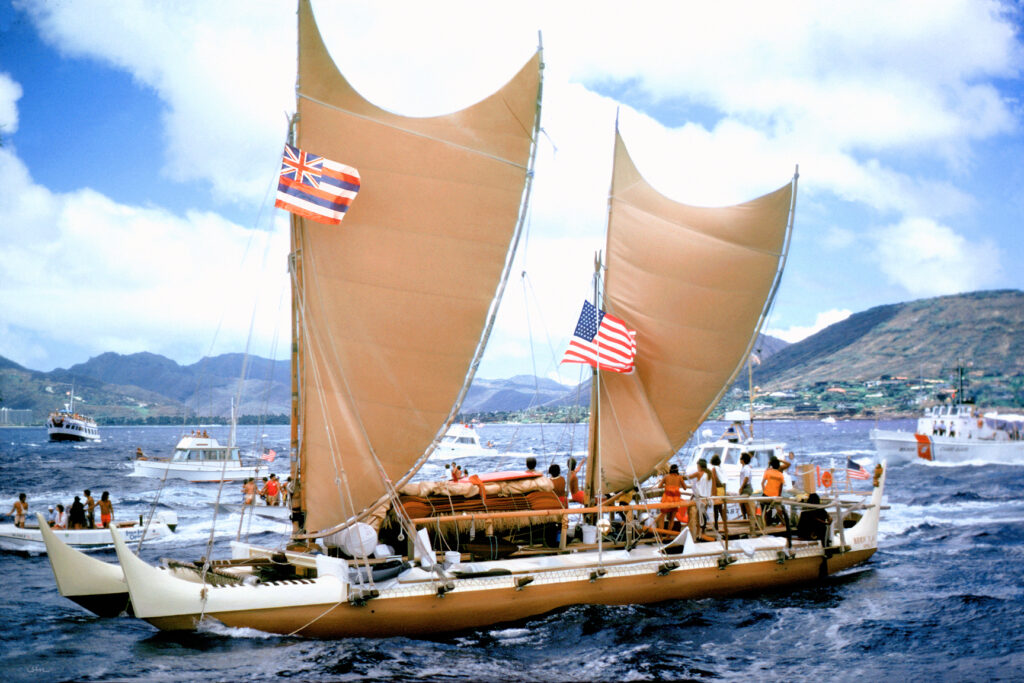
Hawaiian, Tahitian & Māori
The culture
The voyaging cultures of the Pacific: Hawaiian (Kānaka Maoli), Tahitian (Mā'ohi), Māori, Samoan, Tongan, Marquesan and others, each with its own language and tellings. They were master voyagers who settled the Pacific across immense distances by non-instrument navigation.
Where
Oceania — Hawaiʻi, Tahiti, Aotearoa, Sāmoa, Tonga and the islands between
Time depth
Ancient, Polynesian voyagers navigated and settled the Pacific over many centuries by wayfinding, one of humanity's great feats of navigation and exploration; the tradition is deep-rooted and, after a period of loss, has been powerfully revived.
Living tradition
Yes. Polynesian wayfinding is a living, revived tradition, carried by master navigators and voyaging societies, and a source of deep pride.
Language
The Polynesian languages. Oral tradition: the knowledge of wayfinding (stars, swells, birds, currents) carried in memory and chant, and the epics of voyaging and discovery.
The world of its stories
Cosmological / Spatial Structure
A world of the great ocean and its islands, a vast, navigable space crossed by voyaging, read through the stars (the star compass), the swells, the winds, the birds, and the signs of the sea and sky. The Polynesian world is spatial and oceanic: the crossing from island to island, the reading of the sea and sky to find the way, the discovery and settlement of new lands. The story is geographic, the voyage mapped across the ocean, the movement through the ocean from calling to landfall to legacy.
Time
The time of the voyage, the crossing, from the calling to set out, through the building and the crossing, to the discovery and settlement. Time is mapped onto the voyage: the stages of the crossing.
The Sacred
The great ocean and the voyage across it. The stars (the star compass) and the signs of sea and sky. The canoe (the sacred voyaging vessel). Wayfinding knowledge (the sacred, hard-won art of navigation). The ancestors who voyaged and discovered. The new land found and settled.
Death / Afterlife
The Polynesian traditions have rich understandings of the ancestral and spiritual world; relevant to the voyaging tradition is the deep honoring of the ancestral voyagers and the continuity of the wayfinding knowledge and legacy across generations.
Why Geographic Architecture
The Polynesian voyaging epic is geographic, the story is mapped across the ocean, the movement of the voyage through its stages from the home island to the new land. The narrative structure is the voyage: the calling, the building, the setting of the compass, the crossing, the discovery, the settlement, the legacy. Each a stage of the voyage mapped across the ocean. The story's shape is the voyage itself, the wayfinding across the ocean from departure to landfall to legacy.
Structural Movement (matching the StoryWorld's cultural steps)
Te Vahi Kahe (the island calling) → Te Vaka Hanga (the sacred canoe building) → Te Koka Fetu'u (the star compass setting) → Te Moana Nui (the great ocean trial) → Te Fenua Fou (new land discovery) → Te Whakanoho (the settlement choice) → Te Taonga Whakatere (the navigation legacy).
*(Note: step names use Polynesian-language terms as in the StoryWorld, drawing on the shared Polynesian voyaging vocabulary; specific forms vary across the distinct Polynesian languages.)*
Key figures
The Navigator (Wayfinder)
The master navigator: keeper of the wayfinding knowledge, who reads the stars, swells, and signs to guide the canoe across the ocean. A revered figure of immense skill and knowledge.
Major Figures
- The voyagers, the crew and people who make the voyage and settle the new land.
- The ancestral voyagers, the forebears who navigated and discovered, whose feats and knowledge are honored and carried on.
Cultural Roots
The Polynesian voyaging tradition, shared across the cultures of the Polynesian triangle.
Who’s Who
Sacred elements
Sacred Objects
The voyaging canoe (the vaka/waka/wa'a), the sacred vessel of the voyage. The star compass (the mental map of the rising and setting stars). The signs of sea and sky read by the navigator.
Sacred Places
The great ocean. The home island (the point of departure). The new land discovered. The stars and the sky as the navigator's guide.
Sacred Practices
Wayfinding: the art of navigating by stars, swells, winds, birds, and signs, carried in memory. The building of the voyaging canoe. The chanting and remembering of the voyaging knowledge and epics.
Sacred Prohibitions/Truths
The wayfinding knowledge is sacred and hard-won, carried with discipline and responsibility. The ocean must be respected; the voyage demands skill, courage, and right relationship with the sea and sky.
How their stories are told
How Stories Are Told
As the voyaging epic, told stage by stage: the call to sail, the building of the sacred canoe, the setting of the star compass, the ocean crossing and its trials, the sighting of new land, the choice to settle, and what the voyage leaves to those who follow. The story is geographic, the voyage mapped across the ocean space, the movement from the home island through the crossing to landfall and legacy. The narrative follows the voyage, the wayfinding across the great ocean.
The Purpose of Story
To tell the voyage from the call to landfall, and to honour the wayfinders who found and settled new land. Story preserves the voyaging tradition and the epics of navigation, carrying the knowledge and the legacy across generations.
Signature Story Types
The voyaging epic; the wayfinding crossing; the discovery and settlement of new land; the legacy of navigation.
How their stories are built, step by step
Polynesian-language terms following the crossing (matching the StoryWorld's seven cultural steps).
Te Vahi Kahe (The Island Calling)
Cultural meaning
The island calling: the call to sail. The voyage begins with a calling: the need or desire to set out across the ocean, for new land, for resources, for exploration, for destiny. This calling is the reason the canoe sets out at all.
In brief
The calling comes to set out across the great ocean (for new land, for destiny) and the voyage begins.
Cultural teaching
In Geographic, begin with the calling to voyage, the need or desire that puts the canoe on the water. In the Polynesian tradition, the island calling begins the voyage. Establish your story's calling here: the reason the crossing is undertaken, the origin of the geographic movement from departure toward landfall.
Te Vaka Hanga (Sacred Canoe Building)
Cultural meaning
The sacred canoe building, the making of the voyaging vessel that will carry the voyage. Before the voyage, the sacred canoe (the vaka/waka/wa'a) is built: the vessel that will cross the ocean, made with skill and care as a sacred undertaking. The building readies the canoe that will carry the crew across the ocean.
In brief
The voyaging canoe is built with skill and care, the sacred vessel that will carry the people across the great ocean.
Cultural teaching
Prepare the means of the voyage, the building of the vessel (like the sacred voyaging canoe) that will carry the crossing across the space. In the Polynesian tradition, the sacred canoe is built for the voyage. Let your story include the making-ready here: the vessel or means built with care to carry the crossing, the preparation for the crossing.
Te Koka Fetu'u (Star Compass Setting)
Cultural meaning
The star compass setting, the establishing of the navigation by which the way will be found. The navigator sets the star compass: the mental map of the rising and setting stars, the swells, and the signs by which the voyage will be guided across the trackless ocean. This setting of the way-finding is the establishing of the voyage's navigation: how the way across the ocean will be read and found, the wayfinding knowledge that will guide the crossing.
In brief
The navigator sets the star compass, the map of the stars and swells by which the way across the trackless ocean will be found.
Cultural teaching
Establish the navigation, the way-finding (like the star compass) by which the voyage across the space will be guided. In the Polynesian tradition, the navigator sets the star compass to find the way across the ocean. Let your story establish its navigation here: how the way across the ocean will be read and found, the knowledge or means that will guide the geographic crossing.
Te Moana Nui (The Great Ocean Trial)
Cultural meaning
The great ocean trial, the crossing of the vast ocean, with its dangers and trials. The center of the voyage: the crossing of the great ocean (Te Moana Nui), the long and dangerous crossing of open water, with its storms, dangers, doubts, and the sustained demand of wayfinding. This is the central movement of the voyage: the crossing itself, the traversal of the ocean with all its trials, guided by the navigation set.
In brief
Across the great ocean the voyage goes, through storm and doubt and the long trackless days, the navigator holding the way.
Cultural teaching
Bring the voyage through the great crossing, the traversal of the vast space (like the great ocean) with its dangers and sustained demands. In the Polynesian tradition, the crossing of Te Moana Nui is the center of the voyage. Let your story's central movement be the crossing here: the long, demanding traversal of the ocean, its trials met and the way held, the center of the voyage.
Te Fenua Fou (New Land Discovery)
Cultural meaning
The new land discovery, the sighting and reaching of the new land at the crossing's end. After the great crossing, the new land is discovered: the signs of land (birds, clouds, drifting vegetation) read, and the new land sighted and reached. This is landfall: the new land reached after the crossing. The crossing yields the discovery.
In brief
The signs of land appear (birds, clouds, the scent of green) and the new land is sighted at last across the ocean.
Cultural teaching
Bring the voyage to its discovery, the reaching of the new place (like the new land sighted) at the crossing's end. In the Polynesian tradition, the signs of land are read and the new land discovered. Let your story reach its discovery here: the landfall, the arrival at the new place across the ocean, the goal of the voyage attained after the crossing.
Te Whakanoho (The Settlement Choice)
Cultural meaning
The settlement choice, the decision to settle and make the new land home. Having discovered the new land, the voyagers choose to settle: to make the new place home, to establish themselves in the discovered land. The choice ends the voyage: the new land becomes home.
In brief
The voyagers choose to settle the new land, to make the discovered place their home, and to establish themselves there.
Cultural teaching
Bring the voyage to the settlement choice, the decision to make the new land home. In the Polynesian tradition, the voyagers choose to settle the new land. Let your story include the settlement here: the choice to make the discovered place home, the discovery turned into settlement, the voyage completing in the founding of a home in the reached land.
Te Taonga Whakatere (Navigation Legacy)
Cultural meaning
The navigation legacy, the legacy of the voyage and the wayfinding knowledge, carried on. With the land settled, the wayfinding knowledge, the story of the voyage and the settlers' lineage pass to the next generations. The voyage is remembered, the sailing directions are taught, and the settlement becomes part of the people's history. The voyage's legacy lives on.
In brief
The sailing directions and the story of the voyage go to the generations that follow.
Cultural teaching
End with the navigation legacy: the voyage and its knowledge handed to future generations. In the Polynesian tradition, the wayfinding knowledge and the epic endure as legacy. Let your story close on the legacy here: the voyage remembered, its knowledge transmitted, the discovery and settlement becoming part of the people's enduring heritage.
What makes this tradition distinct
What makes this tradition distinct from all others
The Polynesian voyaging epic is geographic architecture, the story mapped across the ocean, the voyage moving through its stages from the island calling to the navigation legacy. Its distinctive elements are the sacred voyaging canoe, the star compass and wayfinding knowledge, the great ocean crossing, and the discovery and settlement of new land: one of humanity's great feats of navigation, and a living, revived tradition and a source of deep pride.
Cultural warnings — what NOT to do
- Do honor the sophistication of Polynesian wayfinding. It is a precise, hard-won science of navigation, not mere luck or drifting.
- Do honor the distinct Polynesian cultures and languages rather than treating "Polynesian" as one undifferentiated culture.
- Do honor the living, revived tradition and its cultural pride; do not present it as lost or primitive.
- Do treat the wayfinding knowledge with respect as a sacred, disciplined art.
The stories
Each story with its source, where to read it and why it fits.
The StoryWorld in Full
StoryWorld · Oceania — the Polynesian Pacific
POLYNESIAN — Navigation / Wayfinding Epic
The Polynesian cultures — Hawaiian, Māori, Tahitian, Samoan, Tongan, and the many cultures of the vast Polynesian triangle — master voyagers who settled the Pacific across immense distances by non-instrument navigation.
Geographic architecture
The world as they see it
Cosmological / Spatial Structure. A world of the great ocean and its islands — a vast, navigable space crossed by voyaging, read through the stars (the star compass), the swells, the winds, the birds, and the signs of the sea and sky. The Polynesian world is spatial and oceanic: the journey across the ocean from island to island, the reading of the sea and sky to find the way, the discovery and settlement of new lands. The story is geographic — the voyage mapped across the ocean, the movement through the great space from calling to landfall to legacy.
Time. The time of the voyage — the journey across the ocean, from the calling to set out, through the building and the crossing, to the discovery and settlement. Time is mapped onto the geographic journey: the stages of the voyage across the great ocean space.
The Sacred. The great ocean and the voyage across it. The stars (the star compass) and the signs of sea and sky. The canoe (the sacred voyaging vessel). Wayfinding knowledge (the sacred, hard-won art of navigation). The ancestors who voyaged and discovered. The new land found and settled.
Death / Afterlife. The Polynesian traditions have rich understandings of the ancestral and spiritual world; relevant to the voyaging tradition is the deep honoring of the ancestral voyagers and the continuity of the wayfinding knowledge and legacy across generations.
The powers and figures
The Navigator (Wayfinder)
The master navigator — keeper of the wayfinding knowledge, who reads the stars, swells, and signs to guide the canoe across the ocean. A revered figure of immense skill and knowledge.
Major Figures
The voyagers — the crew and people who make the voyage and settle the new land.
The ancestral voyagers — the forebears who navigated and discovered, whose feats and knowledge are honored and carried on.
Cultural Roots
Sacred things and places
Sacred Objects. The voyaging canoe (the vaka/waka/wa'a) — the sacred vessel of the voyage. The star compass (the mental map of the rising and setting stars). The signs of sea and sky read by the navigator.
Sacred Practices. Wayfinding — the art of navigating by stars, swells, winds, birds, and signs, carried in memory. The building of the voyaging canoe. The chanting and remembering of the voyaging knowledge and epics.
Sacred Prohibitions/Truths. The wayfinding knowledge is sacred and hard-won, carried with discipline and responsibility. The ocean must be respected; the voyage demands skill, courage, and right relationship with the sea and sky.
How the stories are told
How Stories Are Told. As the voyaging epic — the journey across the great ocean, mapped through its stages: the calling to voyage, the building of the sacred canoe, the setting of the star compass, the great ocean crossing and its trials, the discovery of new land, the choice to settle, and the legacy of the voyage. The story is geographic — the voyage mapped across the ocean space, the movement from the home island through the crossing to landfall and legacy. The narrative follows the journey through space, the wayfinding across the great ocean.
The Purpose of Story. To tell the voyage — to map the journey across the great ocean from calling to landfall to legacy, honoring the wayfinding knowledge and the feats of discovery and settlement. Story preserves the voyaging tradition and the epics of navigation, carrying the knowledge and the legacy across generations.
Signature Story Types. The voyaging epic; the wayfinding journey across the ocean; the discovery and settlement of new land; the legacy of navigation.
The stories
The Voyaging and Settlement of the Pacific
Source The Polynesian voyaging tradition — the epic navigation and settlement of the vast Pacific
Public domain access The history and tradition of Polynesian voyaging are documented in the public and scholarly record; engage respectfully through authentic sources
Why it fits The geographic voyage across the great ocean — the journey from calling to discovery to settlement to legacy at the heart of the architecture
The Art of Wayfinding
Source The Polynesian wayfinding tradition — navigation by stars (the star compass), swells, birds, and signs of sea and sky
Why it fits The navigation that guides the geographic journey — the star compass and wayfinding knowledge by which the great space is crossed
The Legacy of the Voyagers
Source The Polynesian tradition of honoring the ancestral voyagers and carrying on the wayfinding knowledge
Why it fits The navigation legacy — the voyage and its knowledge carried on to future generations, the enduring meaning of the geographic journey
How their stories move
The Polynesian voyaging epic is geographic — the story is mapped across the great ocean space, the movement of the voyage through its stages from the home island to the new land. The narrative structure is the journey through space: the calling, the building, the setting of the compass, the crossing, the discovery, the settlement, the legacy — each a stage of the voyage mapped across the ocean. The story's shape is the geographic journey itself, the wayfinding across the great space from departure to landfall to legacy.
This culture
People · The Polynesian cultures — Hawaiian, Māori, Tahitian, Samoan, Tongan, and the many cultures of the vast Polynesian triangle — master voyagers who settled the Pacific across immense distances by non-instrument navigation.
Place · Oceania — the Polynesian Pacific
Depth · Ancient — Polynesian voyagers navigated and settled the Pacific over many centuries by wayfinding, one of humanity's great feats of navigation and exploration; the tradition is deep-rooted and, after a period of loss, has been powerfully revived.
Living · Yes — Polynesian wayfinding is a living, revived tradition, carried by master navigators and voyaging societies, and a source of profound cultural pride.
Geographic worlds
GUARANÍ — The Land Without Evil
ABORIGINAL AUSTRALIAN — Songline
Mythology Catalog
Story 1: The Voyaging and Settlement of the Pacific
- Why it fits: The navigation legacy — the voyage and its knowledge carried on to future generations, the enduring meaning of the geographic journey
GriotsWell · Simplified Lore Library · Polynesian Navigation / Wayfinding · July 2026
The Guide
GriotsWell StoryWorlds · Guide
Polynesian wayfinding — the voyaging tradition of navigating the great ocean by the stars, sea, and sky
Geographic architecture · 7 steps
How it moves
- Te Vahi Kahe (The Island Calling)
- Te Vaka Hanga (Sacred Canoe Building)
- Te Koka Fetu'u (Star Compass Setting)
- Te Moana Nui (The Great Ocean Trial)
- Te Fenua Fou (New Land Discovery)
- Te Whakanoho (The Settlement Choice)
- Te Taonga Whakatere (Navigation Legacy)
Te Vahi Kahe (the island calling) → Te Vaka Hanga (the sacred canoe building) → Te Koka Fetu'u (the star compass setting) → Te Moana Nui (the great ocean trial) → Te Fenua Fou (new land discovery) → Te Whakanoho (the settlement choice) → Te Taonga Whakatere (the navigation legacy). (Note: step names use Polynesian-language terms as in the StoryWorld, drawing on the shared Polynesian voyaging vocabulary; specific forms vary across the distinct Polynesian languages.) ---
Why it is told this way
The Polynesian voyaging epic is geographic — the story is mapped across the great ocean space, the movement of the voyage through its stages from the home island to the new land. The narrative structure is the journey through space: the calling, the building, the setting of the compass, the crossing, the discovery, the settlement, the legacy — each a stage of the voyage mapped across the ocean. The story's shape is the geographic journey itself, the wayfinding across the great space from departure to landfall to legacy.
To tell the voyage — to map the journey across the great ocean from calling to landfall to legacy, honoring the wayfinding knowledge and the feats of discovery and settlement. Story preserves the voyaging tradition and the epics of navigation, carrying the knowledge and the legacy across generations.
What this StoryWorld asks
- Is the story mapped across a great space, the journey moving through its stages (geographic structure)?
- Is there a calling, a preparation (canoe), and a navigation (star compass) before the crossing?
- Is the great crossing the central movement, the traversal of the space with its trials?
- Does the journey reach discovery, settlement, and enduring legacy?
At a glance
People The Polynesian cultures — Hawaiian, Māori, Tahitian, Samoan, Tongan, and the many cultures of the vast Polynesian triangle — master voyagers who settled the Pacific across immense distances by non-instrument navigation.
Region Oceania — the Polynesian Pacific
Time depth Ancient — Polynesian voyagers navigated and settled the Pacific over many centuries by wayfinding, one of humanity's great feats of navigation and exploration; the tradition is deep-rooted and, after a period of loss, has been powerfully revived.
Living tradition Yes — Polynesian wayfinding is a living, revived tradition, carried by master navigators and voyaging societies, and a source of profound cultural pride.
How it is carried The Polynesian languages. Oral tradition — the knowledge of wayfinding (stars, swells, birds, currents) carried in memory and chant, and the epics of voyaging and discovery. ---
“The calling comes to set out across the great ocean — for new land, for destiny — and the voyage begins.”— Polynesian wayfinding tradition
Keep faith with it
- Do honor the sophistication of Polynesian wayfinding — it is a precise, hard-won science of navigation, not mere luck or drifting. - Do honor the distinct Polynesian cultures and languages rather than treating "Polynesian" as one undifferentiated culture. - Do honor the living, revived tradition and its cultural pride; do not present it as lost or primitive.