Mexica (Nahua) — Codex (Amoxtli)
The Aztec (Mexica/Nahua) codex tradition, pictographic sacred storytelling (amoxtli)
The Mexica (Aztec) and wider Nahua of central Mexico, and the broader Mesoamerican codex tradition (Mixtec and others): makers of the painted books (amoxtli) that recorded history, calendar, cosmology, and sacred knowledge.
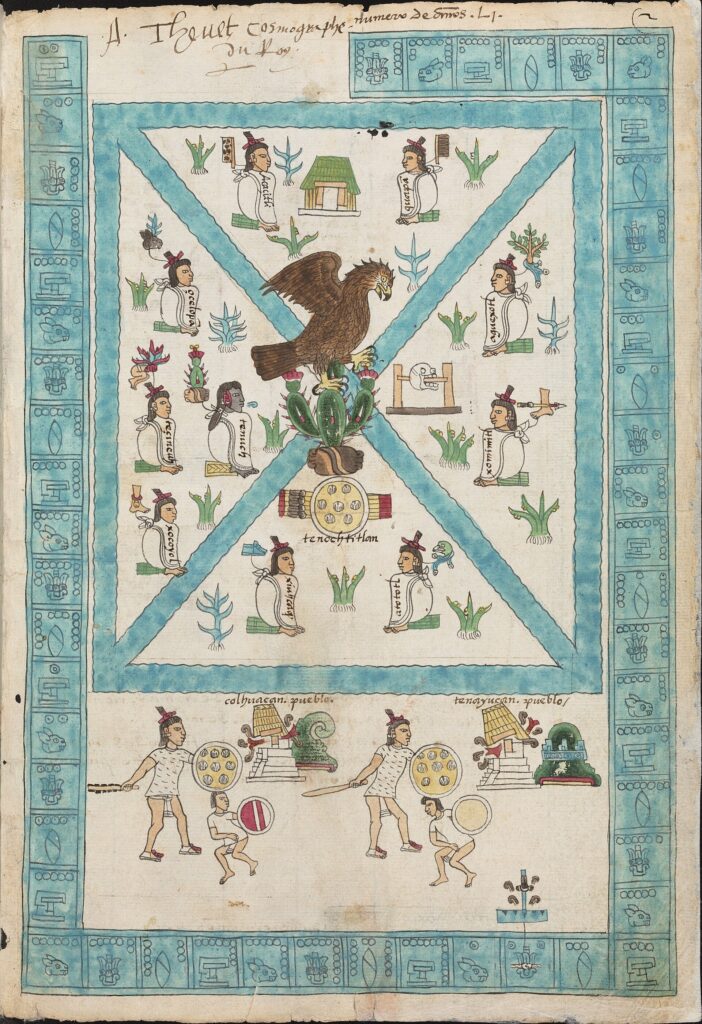
Mexica (Nahua)
The culture
The Mexica (Aztec) and wider Nahua of central Mexico, and the broader Mesoamerican codex tradition (Mixtec and others): makers of the painted books (amoxtli) that recorded history, calendar, cosmology, and sacred knowledge.
Where
Mesoamerica, central Mexico (Nahua/Mexica)
Time depth
The Mesoamerican codex tradition is deep-rooted, flourishing among the Mexica and their neighbours by the fifteenth century and reaching back into earlier Mesoamerican pictographic traditions. The surviving painted books date from before and after 1521.
Living tradition
The Nahua and their descendants are living, and the Nahuatl language and cultural heritage endure; the codex tradition itself is a historical corpus, studied and honored, with the surviving codices as a precious inheritance.
Language
Nahuatl (spoken); the codices themselves are the primary medium: pictographic and glyphic painted books (amoxtli) combining image, symbol, and calendar to record and tell.
The world of its stories
Cosmological Structure
A cosmos ordered by the sacred calendar and by cycles: the tonalpohualli (the 260-day sacred count) and the interlocking calendrical cycles governing time, fate, and the sacred. The Mexica cosmos moved through cyclical ages (the "suns"), each created and destroyed in turn, the present age itself one in a series. Time is cyclical, ordered by the calendar. The codices record that order, setting history, prophecy and cosmology into the sacred count.
Time
Cyclical and calendrical: the tonalpohualli and the interlocking cycles ordering time and fate; the cosmic ages (suns) succeeding one another; the recurring rounds of the calendar. The codex records time cyclically, the sacred count turning through its rounds.
The Sacred
The sacred calendar (tonalpohualli) and the cycles. The painted book (amoxtli) and the sacred art of the tlahcuilo (the painter-scribe). The sacred colors (the "black and red," tlilli tlapalli, a Nahua metaphor for wisdom and writing). The gods and the cosmic order. The pictographic sacred language.
Death / Afterlife
The Mexica had complex understandings of the afterlife, the destination depending on the manner of death. Within the codex tradition, the emphasis relevant here is the cyclical cosmic order (the succession of ages, the turning of the calendar) recorded and enacted in the painted books.
Why Cyclical Architecture
The Aztec codex tradition is ordered by the sacred calendar and its cycles: the tonalpohualli turning through its rounds, the cosmic ages (suns) succeeding one another, time reckoned cyclically. The codex records this order and tells its story through the turning calendar. The story is a cyclical ordering: the sacred count and the cosmic cycles turning, the painted book carrying the living teaching through the rounds. Here the cyclical shape is calendrical and painted.
Structural Movement (matching the StoryWorld's cultural steps)
Amoxtli Ipampa (the codex's sacred purpose) → Tlilli Tlapalli (the sacred visual language established) → Tonalpohualli (the sacred calendar framework, the cyclical order) → Tetlacuilolli (the character pictographs) → Tlahcuilolli Nepantla (the sequential narrative panels) → Teoxihuitl (sacred symbol integration) → Nemiliztli (the living teaching legacy, the cycle preserved and renewed).
Key figures
The Tlahcuilo
The painter-scribe, master of the sacred pictographic art, who created the codices, a revered keeper and maker of sacred knowledge.
The Gods and Cosmic Powers
The many deities of the Mexica cosmos (recorded in the codices), governing the calendar, the ages, and fate.
Cultural Roots
The Mesoamerican tradition of the painted book, shared across Nahua, Mixtec, and other cultures.
Who’s Who
Sacred elements
Sacred Objects
The amoxtli (the painted book/codex). The sacred colors and materials of the tlahcuilo. The tonalpohualli calendar.
Sacred Practices
The art of the tlahcuilo (painting the sacred books). The keeping and reading of the codices. The reckoning of the sacred calendar and its cycles.
Sacred Language
The pictographic and glyphic language of the codices: image, symbol, and glyph combined to record and tell. "Tlilli tlapalli" (the black and the red) as the metaphor for the wisdom and writing of the sacred books.
Sacred Prohibitions
The sacred books and their knowledge are precious and sacred; the calendar and its reckoning carry sacred weight. (Few painted books survive from before 1521; those that do are an irreplaceable inheritance.)
How their stories are told
How Stories Are Told
Through the painted book: pictographic sequential narrative, combining image, symbol, and the sacred calendar to record and tell history, cosmology, and sacred knowledge. The codex tells through sequences of painted panels, ordered by the sacred calendar. The story is read in pictographs, and its meaning is tied to the calendar's order. The tradition is cyclical: the sacred count and the cosmic ages turning through their rounds, recorded and enacted in the painted book.
The Purpose of Story
To record the sacred order of time: history, cosmology, calendar and teaching set into the painted book, so the order of the cosmos could be read and passed on. The codex preserves the sacred count and the living teaching for the community.
Signature Story Types
The pictographic sacred narrative; the calendrical codex; the painted history set against the sacred calendar.
How their stories are built, step by step
Nahuatl terms following the making of the sacred codex (matching the StoryWorld's seven cultural steps).
Amoxtli Ipampa (The Codex's Sacred Purpose)
Cultural meaning
The sacred purpose of the codex. The reason the painted book is made. In the Mexica tradition, the amoxtli is made to record and preserve sacred knowledge, history, calendar, and cosmology; its purpose is sacred. This step establishes the codex's sacred purpose: what this painted book is for, the sacred knowledge it will preserve and transmit, the reason for its making.
In brief
The painted book is made with sacred purpose, to preserve the knowledge, the calendar, and the order of the cosmos for the people.
Cultural teaching
In this cyclical, calendrical pattern, begin by establishing the codex's sacred purpose, what the painted book is for, the sacred knowledge and order it will preserve and transmit. In the Mexica tradition, the amoxtli is made with sacred purpose. Establish your story's sacred purpose: the knowledge, history, or cosmic order it exists to preserve and transmit for the community.
Tlilli Tlapalli (The Sacred Visual Language)
Cultural meaning
The sacred visual language, "the black and the red," the pictographic and glyphic language of the codex. In the Mexica tradition, "tlilli tlapalli" (the black ink and the red) is the metaphor for the sacred art of writing and wisdom; the codex tells through this pictographic visual language of image, symbol, and glyph. This step establishes the sacred visual language: how the story will be told in images and symbols, the pictographic medium of the codex.
In brief
In the black and the red (tlilli tlapalli) the wisdom is written; the sacred visual language tells what words alone cannot.
Cultural teaching
Establish the sacred visual language. The pictographic, symbolic medium (the "black and the red") through which the codex tells. In the Mexica tradition, the sacred art of image and glyph carries the wisdom. Let your story establish its visual, symbolic language here: how meaning is told through image and symbol, the pictographic medium that carries the sacred knowledge.
Tonalpohualli (The Sacred Calendar Framework)
Cultural meaning
The sacred calendar framework. The tonalpohualli, the 260-day sacred count, ordering the codex cyclically. The Mexica cosmos is ordered by the sacred calendar, and the codex tells its narrative through that order. This step establishes the cyclical calendrical framework: the sacred count that orders time, fate, and the telling, through whose turning rounds the story's cyclical order is set. This is the heart of the cyclical architecture.
In brief
The sacred count turns through its rounds and orders time and fate. The codex follows it.
Cultural teaching
Establish the cyclical calendrical framework. The sacred count (like the tonalpohualli) that orders time and the telling through its turning rounds. In the Mexica tradition, the calendar is the heart of the cyclical order. Let your story set its cycle here: the recurring order (a calendar, a count, a season) that the narrative will move through.
Tetlacuilolli (Character Pictographs)
Cultural meaning
The character pictographs. The painted figures and glyphs that represent the persons, gods, and beings of the story. In the codex, characters are rendered in the pictographic language: figures, name-glyphs, symbols that identify and characterize. This step establishes the story's characters in the pictographic mode: how the persons and powers of the narrative are rendered and identified in the sacred visual language, taking their places in the calendrical order.
In brief
The figures and their name-glyphs are painted; each person and power takes its place in the sacred book.
Cultural teaching
Render your story's characters in the pictographic mode. The figures, glyphs, and symbols that identify and characterize the persons and powers of the narrative. In the codex, characters are painted in the sacred visual language. Let your story establish its characters here as they take their places in the pictographic, calendrical order, rendered in the sacred visual language.
Tlahcuilolli Nepantla (Sequential Narrative Panels)
Cultural meaning
The sequential narrative panels. The painted sequence through which the codex tells its story. In the codex, the narrative unfolds through painted panels read in order, each placed in the calendar. This step sets out the telling panel by panel, each panel placed in the sacred calendar.
In brief
Panel by panel the story is painted, read in sequence through the turning of the sacred count.
Cultural teaching
Build the sequential narrative panels. The painted sequence of the codex, panel by panel, set in the calendar. In the codex, the narrative is read as a sequence of panels ordered by the calendar. Let your story unfold panel by panel here, each scene placed in its cycle.
Teoxihuitl (Sacred Symbol Integration)
Cultural meaning
Sacred symbol integration. Sacred symbols and their cosmic meaning carried through the narrative. In the codex, sacred symbols (of the gods, the cosmos, the calendar) are integrated into the telling, giving the narrative its cosmic and sacred depth. This step brings in the sacred symbols: the day-signs, colours and figures that tie the painted story to the gods and to the turning of the ages.
In brief
The sacred symbols tie the telling to the gods and to the turning of the ages.
Cultural teaching
Bring in the sacred symbols, so the painted story carries its cosmic meaning. In the codex, sacred symbols connect the story to the cosmos and the calendar. Let your story bring in its sacred symbols here, so each scene points to the turning order behind it.
Nemiliztli (The Living Teaching Legacy)
Cultural meaning
The living teaching legacy. The codex preserved as living teaching, transmitted to the community and renewed through the cycles. The completed codex is a teaching as well as a record, read again each time the calendar comes round. This step establishes the living legacy: how the codex endures as teaching, preserved and renewed through the cyclical rounds, transmitting its sacred knowledge to the community across the turning of time.
In brief
The painted book endures as living teaching, read and renewed as the sacred count turns; its wisdom is transmitted to the people across the ages.
Cultural teaching
End by establishing the living teaching legacy. The codex enduring as teaching, preserved and renewed through the cyclical rounds, transmitting its knowledge to the community. In the Mexica tradition, the codex is living teaching renewed as the calendar turns. Let your story close on the living legacy: how its sacred knowledge endures, is transmitted, and is renewed through the turning cycles, a living teaching for the community.
What makes this tradition distinct
What makes this tradition distinct from all others
The Aztec codex tradition tells through the painted book (amoxtli): a pictographic, glyphic sacred language ("the black and the red"), ordered by the sacred calendar (tonalpohualli) and its cycles. Its cyclical architecture reflects a cosmos of turning calendrical rounds and succeeding cosmic ages; the codex records and enacts this cyclical order, enduring as living teaching renewed through the cycles. Its distinctive medium is the visual, sequential, calendrically-ordered painted book of the Nahua/Mexica.
Cultural warnings — what NOT to do
- Do not treat the codex as mere decoration. It is a sacred, calendrically-ordered medium of knowledge.
- Keep the turning of the count: the architecture is cyclical and calendrical.
- Do honor the Nahua/Mexica specificity and the tragic history of the codices' destruction; treat the surviving corpus as a precious inheritance.
- Do not conflate distinct Mesoamerican traditions (Nahua/Mexica, Mixtec, Maya) into one, honor their distinctions.
The stories
Each story with its source, where to read it and why it fits.
The StoryWorld in Full
StoryWorld · Mesoamerica — central Mexico (Nahua/Mexica)
NAHUA / MEXICA — Aztec Codex (Amoxtli)
Cyclical architecture
The world as they see it
Cosmological Structure. A cosmos ordered by the sacred calendar and by cycles — the tonalpohualli (the 260-day sacred count) and the interlocking calendrical cycles governing time, fate, and the sacred. The Mexica cosmos moved through cyclical ages (the "suns"), each created and destroyed in turn, the present age itself one in a series. Time is cyclical, ordered by the calendar; the codices record and enact this cyclical order, weaving history, prophecy, and cosmology into the sacred count.
Time. Cyclical and calendrical — the tonalpohualli and the interlocking cycles ordering time and fate; the cosmic ages (suns) succeeding one another; the recurring rounds of the calendar. The codex records time cyclically, the sacred count turning through its rounds.
The Sacred. The sacred calendar (tonalpohualli) and the cycles. The painted book (amoxtli) and the sacred art of the tlahcuilo (the painter-scribe). The sacred colors (the "black and red," tlilli tlapalli — a Nahua metaphor for wisdom and writing). The gods and the cosmic order. The pictographic sacred language.
Death / Afterlife. The Mexica had complex understandings of the afterlife, the destination depending on the manner of death. Within the codex tradition, the emphasis relevant here is the cyclical cosmic order — the succession of ages, the turning of the calendar — recorded and enacted in the painted books.
The powers and figures
The Tlahcuilo
The Gods and Cosmic Powers
Cultural Roots
Sacred things and places
Sacred Objects. The amoxtli (the painted book/codex). The sacred colors and materials of the tlahcuilo. The tonalpohualli calendar.
Sacred Practices. The art of the tlahcuilo (painting the sacred books). The keeping and reading of the codices. The reckoning of the sacred calendar and its cycles.
Sacred Language. The pictographic and glyphic language of the codices — image, symbol, and glyph combined to record and tell. "Tlilli tlapalli" (the black and the red) as the metaphor for the wisdom and writing of the sacred books.
Sacred Prohibitions. The sacred books and their knowledge are precious and sacred; the calendar and its reckoning carry sacred weight. (Historically, many codices were tragically destroyed at the conquest; the surviving ones are an irreplaceable inheritance to be honored.)
How the stories are told
How Stories Are Told. Through the painted book — pictographic sequential narrative, combining image, symbol, and the sacred calendar to record and tell history, cosmology, and sacred knowledge. The codex tells through sequences of painted panels, ordered by the sacred calendar and its cycles; the story is read through the pictographic language, its meaning woven with the calendrical order. The tradition is cyclical — the sacred count and the cosmic ages turning through their rounds, recorded and enacted in the painted book.
The Purpose of Story. To record and enact the sacred cyclical order — to weave history, cosmology, calendar, and sacred teaching into the painted book, preserving and transmitting the cyclical order of time and the cosmos through the pictographic language. The codex preserves the sacred count and the living teaching for the community.
Signature Story Types. The pictographic sacred narrative; the calendrical/cosmological codex; the painted history woven with the sacred calendar.
The stories
The Surviving Mesoamerican Codices
Source The surviving Aztec/Nahua and related codices (e.g., Codex Borgia, Codex Mendoza, Codex Borbonicus)
Public domain access Many surviving codices are reproduced in public-domain facsimiles and scholarly editions via Internet Archive; the images of the historical codices are widely available
Why it fits The pictographic, calendrically-ordered sacred book itself — the medium and cyclical structure at the heart of the architecture
The Tonalpohualli (Sacred Calendar)
Source The Mexica sacred calendar and its cyclical order, recorded in the codices
Why it fits The cyclical calendrical framework that orders the codex — the turning sacred count at the heart of the cyclical architecture
The Cosmic Ages (The Five Suns)
Source The Mexica cosmology of the succeeding cosmic ages ("suns"), each created and destroyed in turn
Public domain access Documented in public-domain and scholarly sources of Mexica cosmology
Why it fits The cyclical cosmic order — the succession of ages turning, the deep cyclical time the codex records and enacts
How their stories move
The Aztec codex tradition is ordered by the sacred calendar and its cycles — the tonalpohualli turning through its rounds, the cosmic ages (suns) succeeding one another, time reckoned cyclically. The codex records and enacts this cyclical order, weaving narrative through the turning calendar. The story is not a linear drive to a climax but a cyclical ordering — the sacred count and the cosmic cycles turning, the painted book preserving the living teaching through the rounds. It is cyclical architecture in its calendrical, pictographic Mesoamerican form.
This culture
People · The Mexica (Aztec) and wider Nahua of central Mexico, and the broader Mesoamerican codex tradition (Mixtec and others) — makers of the painted books (amoxtli) that recorded history, calendar, cosmology, and sacred knowledge.
Place · Mesoamerica — central Mexico (Nahua/Mexica)
Depth · The Mesoamerican codex tradition is deep-rooted, flourishing among the Mexica and their neighbors before the Spanish conquest (with surviving pre-conquest and early-colonial codices) and reaching back into earlier Mesoamerican pictographic traditions.
Living · The Nahua and their descendants are living, and the Nahuatl language and cultural heritage endure; the codex tradition itself is a historical corpus, studied and honored, with the surviving codices as a precious inheritance.
Cyclical worlds
NATIVE AMERICAN — Animal Guide Journey (Structural Tradition)
BABYLONIAN — Enuma Elish
BAKONGO — Congo Cosmogram
DOGON — Creation Cycle
KOJIKI / SHINTO — Amaterasu
K'ICHE' MAYA — Creation Cycle (Popol Vuh)
LAKOTA — Medicine Wheel / Sacred Hoop (Structural Tradition)
NATIVE AMERICAN — Medicine Wheel Story (Circular Narrative, Structural Tradition)
PHILIPPINE — Bathala / Diwata
Mythology Catalog
- Why it fits: The cyclical cosmic order — the succession of ages turning, the deep cyclical time the codex records and enacts
GriotsWell · Simplified Lore Library · Aztec Codex (Amoxtli) · July 2026
The Guide
GriotsWell StoryWorlds · Guide
The Aztec (Mexica/Nahua) codex tradition — pictographic sacred storytelling (amoxtli)
Cyclical architecture · 7 steps
How it moves
- Amoxtli Ipampa (Codex Sacred Purpose)
- Tlilli Tlapalli (Sacred Visual Language)
- Tonalpohualli (Sacred Calendar Framework)
- Tetlacuilolli (Character Pictographs)
- Tlahcuilolli Nepantla (Sequential Narrative Panels)
- Teoxihuitl (Sacred Symbol Integration)
- Nemiliztli (Living Teaching Legacy)
Amoxtli Ipampa (the codex's sacred purpose) → Tlilli Tlapalli (the sacred visual language established) → Tonalpohualli (the sacred calendar framework — the cyclical order) → Tetlacuilolli (the character pictographs) → Tlahcuilolli Nepantla (the sequential narrative panels) → Teoxihuitl (sacred symbol integration) → Nemiliztli (the living teaching legacy — the cycle preserved and renewed). ---
Why it is told this way
The Aztec codex tradition is ordered by the sacred calendar and its cycles — the tonalpohualli turning through its rounds, the cosmic ages (suns) succeeding one another, time reckoned cyclically. The codex records and enacts this cyclical order, weaving narrative through the turning calendar. The story is not a linear drive to a climax but a cyclical ordering — the sacred count and the cosmic cycles turning, the painted book preserving the living teaching through the rounds.
To record and enact the sacred cyclical order — to weave history, cosmology, calendar, and sacred teaching into the painted book, preserving and transmitting the cyclical order of time and the cosmos through the pictographic language. The codex preserves the sacred count and the living teaching for the community.
What this StoryWorld asks
- Is the story ordered by a sacred calendar or cycle (cyclical, calendrical structure)?
- Is it told through a pictographic/visual sequential language rather than words alone?
- Does sacred symbolism connect the narrative to the cosmos and the turning of the ages?
- Does the codex endure as living teaching renewed through the cycles, rather than closing?
At a glance
People The Mexica (Aztec) and wider Nahua of central Mexico, and the broader Mesoamerican codex tradition (Mixtec and others) — makers of the painted books (amoxtli) that recorded history, calendar, cosmology, and sacred knowledge.
Region Mesoamerica — central Mexico (Nahua/Mexica)
Living tradition The Nahua and their descendants are living, and the Nahuatl language and cultural heritage endure; the codex tradition itself is a historical corpus, studied and honored, with the surviving codices as a precious inheritance.
How it is carried Nahuatl (spoken); the codices themselves are the primary medium — pictographic and glyphic painted books (amoxtli) combining image, symbol, and calendar to record and tell. ---
“The painted book is made with sacred purpose — to preserve the knowledge, the calendar, and the order of the cosmos for the people.”— Nahua/Mexica codex tradition
Keep faith with it
- Do not treat the codex as mere decoration — it is a sacred, calendrically-ordered medium of knowledge. - Do not force a linear, conflict-climax arc — the architecture is cyclical and calendrical. - Do honor the Nahua/Mexica specificity and the tragic history of the codices' destruction; treat the surviving corpus as a precious inheritance.