Guaraní — The Land Without Evil
Guaraní sacred narrative: the search for Yvy Marã E'ỹ, the Land Without Evil
Guaraní: Mbyá, Ava (Ñandeva), Kaiowá, and Paĩ Tavyterã, of Paraguay, southern Brazil, northeastern Argentina, and Bolivia. A major nation of South America, with a deep spiritual and poetic tradition.
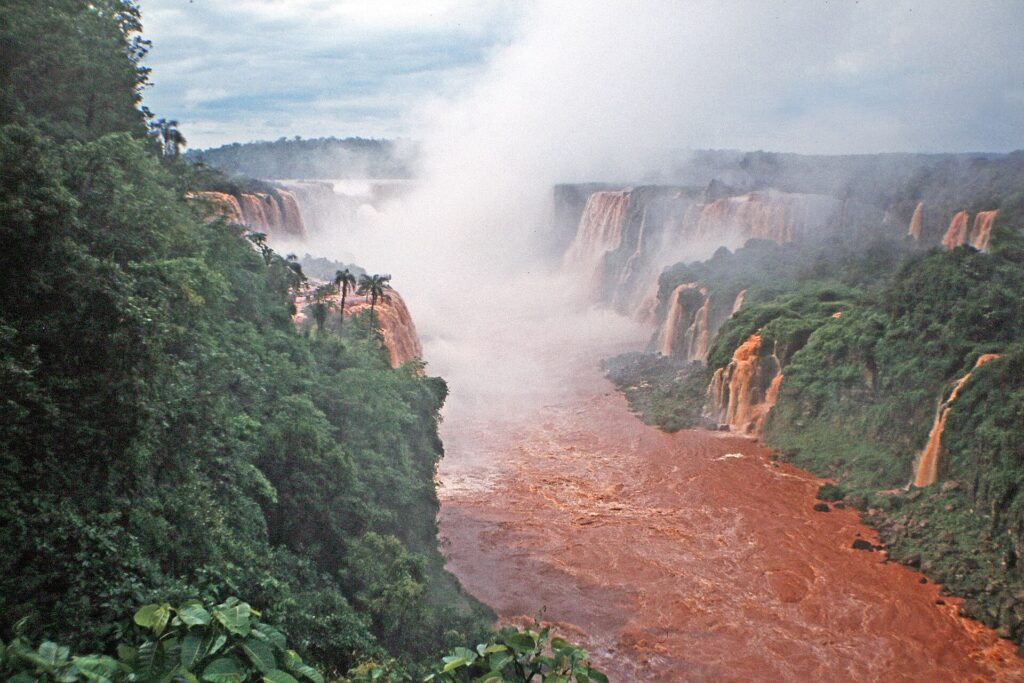
Guaraní
The culture
Guaraní: Mbyá, Ava (Ñandeva), Kaiowá, and Paĩ Tavyterã, of Paraguay, southern Brazil, northeastern Argentina, and Bolivia. A major nation of South America, with a deep spiritual and poetic tradition.
Where
South America: the Paraná and Paraguay river basins, the Atlantic forest, and the interior of the southern continent
Time depth
Ancient: the Guaraní have inhabited their lands for millennia. The tradition of the search for the Land Without Evil is deeply old and has driven great migrations across the continent, both before and after European contact.
Living tradition
Yes: the Guaraní are a living people of hundreds of thousands, and their spiritual tradition, sacred song, and the search for the Land Without Evil remain living realities, though under severe pressure from land dispossession, deforestation, and violence.
Language
Guaraní (a widely spoken language, co-official in Paraguay). The tradition is carried through sacred song and speech: the ñe'ẽ porã (beautiful words / sacred language), the ayvu (soul-language), chanted by the spiritual leaders. Song is understood as sacred substance, and the beautiful word is close to the soul itself.
The world of its stories
Cosmological Structure
A layered cosmos beneath the creator Ñamandu (Ñande Ru, "Our Father"), who arose from primordial darkness and created the world through sacred song and the beautiful words. The earth is imperfect, marked by evil (imperfection, violence, death), while Yvy Marã E'ỹ (the Land Without Evil, the Land Without Imperfection) exists as a real place, reachable, where death and suffering do not enter. The whole cosmos is oriented toward this perfect land, often placed to the east (toward the rising sun and the sea) or above.
Creation
Ñamandu, the First Father, arose amid the primordial darkness and, unfolding himself through sacred song, created the foundation of the earth, the first beautiful words that would be the soul-substance of humanity, and the divine parents of the Guaraní. Creation is an act of sacred language and song: the beautiful words are the origin and essence of the human soul (ñe'ẽ), sent from the divine to be embodied.
Time
Time points at the destination: it is the people's movement across the land toward Yvy Marã E'ỹ, the perfect place. There is an awareness of world-cycles and destructions (the world has been destroyed by flood and fire and may be again), but the deepest temporal orientation is the pilgrimage toward the Land Without Evil, a movement through geography toward a sacred goal.
The Sacred
The beautiful words (ñe'ẽ porã) and sacred song, the divine language that is soul-substance. Yvy Marã E'ỹ, the Land Without Evil, the sacred destination. The path toward it. The spiritual leaders (the karai, opygua, or paje) who receive songs and guide the people. Ñamandu and the divine parents. The forest and the land itself, sacred and imperiled.
Death / Afterlife
The Land Without Evil is, in one sense, the place where death does not enter, and reaching it, in the deepest tradition, could mean transcending mortality itself (some traditions hold that the perfected could reach it in the body, others in the soul). The soul (ñe'ẽ), being the divine beautiful-word embodied, returns toward its divine origin. Death is understood in relation to the imperfection of this earth and the perfection sought in the Land Without Evil.
Why Geographic Architecture
The Guaraní tradition is built as movement through space toward a sacred destination: the search for Yvy Marã E'ỹ, the Land Without Evil, which has set whole communities walking across the continent. The narrative moves through geography: from the imperfect place of origin, across the land, through trials of the terrain and the spirit, toward the perfect destination. The story is a pilgrimage across real country toward a place that is real and beyond the world at once. Its meaning is in the land crossed and the approach to the goal.
Structural Logic
Movement through space toward a sacred destination. The story moves across the land, from the imperfect origin, through the stages and trials of the terrain, toward the Land Without Evil. Each stage is a place and a movement. Meaning gathers place by place and peaks at the approach to the sacred goal, glimpsed or reached. Progress is measured in the crossing of the land toward the destination.
Structural Movement
Ñande Py'a Guasu (Our Great Heart, the great longing that sets the people walking) → the departure from the imperfect place → Tape (the path / the way across the land) → the trials of the terrain (the obstacles, the crossings, the hardships of the way) → the reception of the beautiful words (the divine song that guides and lightens the traveler) → the approach to Yvy Marã E'ỹ (the drawing-near to the Land Without Evil, the goal glimpsed or reached).
Key figures
Supreme Being / Creator
Ñamandu (also Ñande Ru, "Our Father"; Ñamandu Ru Ete, the True Father): the First Father, who arose from primordial darkness and created the world through sacred song and beautiful words. Among the greatest and most poetic creator-figures in the Americas.
Major Figures
- The divine parents: Ñamandu Ru Ete Tenonde, Our First True Father, and the True Fathers he brought into being (Karai Ru Ete, Jakaira Ru Ete, Tupã Ru Ete) with their True Mothers, who keep their regions of the world and send the soul-words.
- Ñanderuvusu and Ñandesy: Our Great Father and Our Mother in the Apapokuva tellings; he left the earth, and she followed him and was killed by the jaguars.
- Kuarahy and Jasy: the twin brothers, Sun and Moon, raised among the jaguars, who avenged their mother and climbed into the sky.
- Guyraypoty: the first great pajé, who danced his people through the first flood.
- The karai / opygua / paje: the prophet-singers who receive the divine songs and lead the search for the Land Without Evil.
Trickster / Culture Figure
The twin culture-heroes (associated with Sun and Moon) carry trickster and world-shaping roles. Various animal-figures appear in the tales. But the tradition's deepest register is prophetic and poetic rather than trickster-centered.
Ancestor Figures
The First Fathers and Mothers, the divine parents. The great karai (prophet-leaders) who led migrations toward the Land Without Evil. The ancestors who walked the path before.
Who’s Who
Sacred elements
Sacred Objects
The sacred song itself, the ñe'ẽ porã (beautiful words). The rattle (mbaraka) used in sacred song and dance. The ceremonial staff of the karai. The prayer-house (opy). Sacred tobacco (petỹ) and its smoke.
The mbaraka, the gourd rattle shaken by the men in the sacred dance. The takuapu, the bamboo staff the women strike on the ground to keep the dance's beat. The petỹgua, the pipe whose tobacco smoke carries prayer. The jeguaka, the feather headdress of the singers.
Sacred Places
Yvy Marã E'ỹ, the Land Without Evil: the sacred destination, a real place sought through migration. The prayer-house (opy), the sacred center of the community. The forest and the ancestral lands. The east, toward the sea and the rising sun, where the Land Without Evil is often placed.
Para Guasu, the great water in the east, beyond which the Land Without Evil is often placed. The rivers of the Paraná and Paraguay basins, the country the journeys set out from.
Sacred Practices
Sacred song and dance in the opy (prayer-house), especially at night: the chanting of the beautiful words, received from the divine. The reception of new songs by the spiritual leaders. The search for and migration toward the Land Without Evil. The naming of children (whose soul-name/ñe'ẽ is received from the divine). Fasting and purification to lighten the body toward the perfect land.
Sacred Prohibitions
The imperfection and violence of this earth (teko achy, "imperfect way of being") must be resisted and transcended, not embraced. The beautiful words are sacred and must be received and spoken rightly. The path toward the Land Without Evil requires purification and right living; the corrupt and heavy cannot reach it.
How their stories are told
How Stories Are Told
Through sacred song and beautiful speech (ñe'ẽ porã, ayvu). The cosmology lives in sacred poetry, recorded in works like the Ayvu Rapyta, "The Foundation of Human Speech". Stories and cosmology are chanted, received from the divine by the spiritual leaders. The deepest narrative movement is the migration across the land toward the sacred destination.
Who Tells Them
The spiritual leaders (karai, opygua, paje) who receive and chant the sacred songs; the community in collective song and dance in the opy; the elders who carry the tradition.
When They Are Told
In the nightly sacred song and dance of the prayer-house; at the reception of new songs; at the naming of children; in the ongoing life of a people oriented toward the Land Without Evil.
The Purpose of Story
To orient the people toward Yvy Marã E'ỹ, the Land Without Evil: to sustain the search, to receive the divine beautiful words, and to guide the walk across the imperfect earth toward the perfect place. Story and song are the map of the walk and what keeps it going. The narrative is fundamentally geographic, a movement through space toward a sacred place.
Signature Story Types
The creation through sacred song (Ñamandu's unfolding, the Ayvu Rapyta), the search for and migration toward the Land Without Evil, the twin-hero (Sun and Moon) adventures, the received prophetic songs.
How their stories are built, step by step
Guaraní terms following the walk toward the Land Without Evil.
Ñande Py'a Guasu (Our Great Heart / The Great Longing)
Cultural meaning
It begins with Ñande Py'a Guasu. The great heart, the great longing that arises in the people for the Land Without Evil. This is where the movement starts: a yearning from within that sets the people out on the road. The imperfect place of origin is felt as insufficient, and the heart turns toward the perfect destination. The longing is the beginning of the geographic movement.
In brief
The heart grows great with longing for the Land Without Evil, and the longing becomes a road.
Cultural teaching
Begin with the longing that sets the travellers moving. The great-hearted yearning for a better place, a destination, a goal that lies across the land. It comes from a heart that finds the present place lacking and turns toward the perfect one. Establish the longing and the place it reaches toward, so every step has a direction.
The Departure (Leaving the Imperfect Place)
Cultural meaning
The people depart, leaving the imperfect place of origin (teko achy, the imperfect way of being) to set out across the land toward the destination. The departure is the commitment: turning away from what is lacking and setting out into unknown country. It marks the transition from longing to movement, from the place of origin to the path.
In brief
Where imperfection holds them, the people cannot stay: they rise and walk toward the land without evil.
Cultural teaching
Mark the departure. The commitment to leave the place of origin and set out across the land. In geographic architecture the story moves when the travellers leave the starting place and commit to the road. Let your story's departure be a genuine leaving-behind, a setting-out into the terrain that lies between origin and destination.
Tape (The Path / The Way Across the Land)
Cultural meaning
Tape (the path, the way) is the crossing of the land itself. The people move through the terrain: the forests, the rivers, the plains, the changing country between origin and destination. This step is the walk itself: distance covered and places passed. The land itself becomes the medium of the story, each region crossed a stage of the sacred movement.
In brief
The path is long, and the land is wide; but each step toward the Land Without Evil is a step toward the beautiful words.
Cultural teaching
Let the crossing of the land be the substance of your story's middle. The traversal of real terrain, the movement through changing country, the accumulation of distance toward the goal. In geographic architecture, the land itself carries the narrative; each region crossed is a stage. Render the path, the country traversed, the sense of space and movement, as the medium through which your story advances toward its destination.
The Trials of the Terrain (The Obstacles and Crossings)
Cultural meaning
The road brings its trials. The obstacles of the terrain, the hard crossings, the hardships of the way. Rivers to cross, forests to get through, dangers of the land, exhaustion and hunger, and the pull to turn back or settle short of the goal. These trials come from the land and the distance, and they test whether the travellers will keep going.
In brief
The great river must be crossed, the dark forest passed; those who would reach the Land Without Evil do not turn back at the hard places.
Cultural teaching
Give the road its trials, and let them come from the terrain: the hard crossings, the exhaustion, the temptation to stop short. In geographic architecture the obstacles belong to the land and the road. There is no villain. Let your travellers face the terrain and the endurance it asks of them.
The Reception of the Beautiful Words (The Divine Song That Guides)
Cultural meaning
On the way, the spiritual leaders receive the beautiful words (ñe'ẽ porã). The sacred songs sent from the divine that guide the people, lighten their bodies, and show the way toward the Land Without Evil. This is the spiritual centre of the walk: divine guidance that comes to the travellers, sustains them and purifies them for the approach to the perfect land. The song is the map and the strength for the final stage.
In brief
Ñamandu sends the beautiful words to those who walk toward him; the song lightens the body and shows the path that the eyes cannot see.
Cultural teaching
Include the reception of guidance. The divine song, the beautiful words, the orientation that comes to the travelers on the way and sustains them toward the goal. In this tradition the walk is guided and lightened by received song, and the travellers are shown the path. Let your story include a moment where guidance, orientation, or sustaining grace comes to the travelers, showing the way toward the destination and preparing them for its approach.
The Approach to Yvy Marã E'ỹ (The Land Without Evil Glimpsed or Reached)
Cultural meaning
The travellers come near the destination. Yvy Marã E'ỹ, the Land Without Evil, is drawn near, glimpsed, or reached. This is the culmination: the arrival at the sacred place, or the approach to it, or a glimpse of it. In the deepest tradition, reaching it may mean the transcendence of imperfection and death itself. Everything the travellers walked for is answered in the approach.
In brief
At the edge of the sea, where the sun rises, the Land Without Evil shines; and those who reach it enter where death does not come.
Cultural teaching
End with the approach to the sacred destination. The drawing-near, the glimpse or the reaching of the goal. In this tradition, the arrival is transcendent: the perfect place where imperfection and death do not enter. Let your story culminate in the approach to its destination, reached, glimpsed at the horizon or still ahead.
What makes this tradition distinct
What makes this tradition distinct from all others
The Guaraní search for Yvy Marã E'ỹ, the Land Without Evil, is a cosmology laid out on the ground: a real walk across the land toward a place both real and beyond, and it has moved whole communities across South America. Its creator Ñamandu, who unfolds the world through sacred song and "beautiful words," is among the most poetic creation-figures in the Americas, and the tradition understands the human soul itself as divine beautiful-word embodied. Its whole cosmos points toward a perfect destination reached by purification and by walking.
Cultural warnings — what NOT to do
- Do not reduce the Land Without Evil to a mere physical location or utopia. It is a sacred, transcendent destination, where death and imperfection do not enter.
- Keep the sacred song with the walk: the beautiful words (ñe'ẽ porã) that guide and lighten the travellers are central.
- Do not conflate the distinct Guaraní (Mbyá, Ava, Kaiowá, Paĩ Tavyterã) into one generic group, name specific cultures where possible.
- Do not romanticize away the Guaraní's present reality: they face severe land dispossession, deforestation, and violence today, and the search for the Land Without Evil is bound up with their struggle for their lands.
The stories
Each story with its source, where to read it and why it fits.
The StoryWorld in Full
StoryWorld · South America — the Paraná and Paraguay river basins, the Atlantic forest, and the interior of the southern continent
GUARANÍ — The Land Without Evil
Guaraní — Mbyá, Ava (Ñandeva), Kaiowá, and Paĩ Tavyterã — of Paraguay, southern Brazil, northeastern Argentina, and Bolivia. A major Indigenous nation of South America with a profound spiritual and poetic tradition.
Geographic architecture
The world as they see it
Cosmological Structure. A layered cosmos beneath the creator Ñamandu (Ñande Ru, "Our Father"), who arose from primordial darkness and created the world through sacred song and the beautiful words. The earth is imperfect, marked by evil (imperfection, violence, death), while Yvy Marã E'ỹ — the Land Without Evil, the Land Without Imperfection — exists as a real place, reachable, where death and suffering do not enter. The whole cosmos is oriented toward this perfect land, often placed to the east (toward the rising sun and the sea) or above.
Creation. Ñamandu, the First Father, arose amid the primordial darkness and, unfolding himself through sacred song, created the foundation of the earth, the first beautiful words that would be the soul-substance of humanity, and the divine parents of the Guaraní. Creation is an act of sacred language and song — the beautiful words are the origin and essence of the human soul (ñe'ẽ), sent from the divine to be embodied.
Time. Oriented toward the destination — time is the journey toward Yvy Marã E'ỹ, the movement of the people across the land in search of the perfect place. There is an awareness of world-cycles and destructions (the world has been destroyed by flood and fire and may be again), but the deepest temporal orientation is the pilgrimage toward the Land Without Evil, a movement through geography toward a sacred goal.
The Sacred. The beautiful words (ñe'ẽ porã) and sacred song — the divine language that is soul-substance. Yvy Marã E'ỹ, the Land Without Evil, the sacred destination. The path/journey toward it. The spiritual leaders (the karai, opygua, or paje) who receive songs and guide the people. Ñamandu and the divine parents. The forest and the land itself, sacred and imperiled.
Death / Afterlife. The Land Without Evil is, in one sense, the place where death does not enter — and reaching it, in the deepest tradition, could mean transcending mortality itself (some traditions hold that the perfected could reach it in the body, others in the soul). The soul (ñe'ẽ), being the divine beautiful-word embodied, returns toward its divine origin. Death is understood in relation to the imperfection of this earth and the perfection sought in the Land Without Evil.
The powers and figures
Supreme Being / Creator
Major Figures
The divine parents — Ñamandu and the other First Fathers and Mothers (Karai Ru Ete, Jakaira Ru Ete, Tupã Ru Ete, and their consorts) who govern regions of the cosmos and send the soul-words.
The karai / opygua / paje — the spiritual leaders and prophets who receive divine songs, guide the people, and lead the search for the Land Without Evil.
The twin heroes — in Guaraní myth, the Sun and Moon twins whose adventures shape the world (paralleling wider South American twin-hero traditions).
Trickster / Culture Figure
Ancestor Figures
Sacred things and places
Sacred Objects. The sacred song itself — the ñe'ẽ porã (beautiful words). The rattle (mbaraka) used in sacred song and dance. The ceremonial staff of the karai. The prayer-house (opy). Sacred tobacco (petỹ) and its smoke.
Sacred Places. Yvy Marã E'ỹ, the Land Without Evil — the sacred destination, a real place sought through migration. The prayer-house (opy), the sacred center of the community. The forest and the ancestral lands. The east, toward the sea and the rising sun, where the Land Without Evil is often placed.
Sacred Practices. Sacred song and dance in the opy (prayer-house), especially at night — the chanting of the beautiful words, received from the divine. The reception of new songs by the spiritual leaders. The search for and migration toward the Land Without Evil. The naming of children (whose soul-name/ñe'ẽ is received from the divine). Fasting and purification to lighten the body toward the perfect land.
Sacred Prohibitions. The imperfection and violence of this earth (teko achy, "imperfect way of being") must be resisted and transcended, not embraced. The beautiful words are sacred and must be received and spoken rightly. The path toward the Land Without Evil requires purification and right living; the corrupt and heavy cannot reach it.
How the stories are told
How Stories Are Told. Through sacred song and beautiful speech (ñe'ẽ porã, ayvu) — the tradition is profoundly poetic, its cosmology expressed in some of the most beautiful sacred poetry in the Americas (as recorded in works like the Ayvu Rapyta, "The Foundation of Human Speech"). Stories and cosmology are chanted, received from the divine by the spiritual leaders. The deepest narrative movement is the journey — the migration across the land toward the sacred destination.
Who Tells Them. The spiritual leaders (karai, opygua, paje) who receive and chant the sacred songs; the community in collective song and dance in the opy; the elders who carry the tradition.
When They Are Told. In the nightly sacred song and dance of the prayer-house; at the reception of new songs; at the naming of children; in the ongoing life of a people oriented toward the Land Without Evil.
The Purpose of Story. To orient the people toward Yvy Marã E'ỹ, the Land Without Evil — to sustain the search, to receive the divine beautiful words, and to guide the journey across the imperfect earth toward the perfect destination. Story and song are the map and the means of the sacred journey; they carry the people forward through the land toward the goal. The narrative is fundamentally geographic — a movement through space toward a sacred place.
Signature Story Types. The creation through sacred song (Ñamandu's unfolding, the Ayvu Rapyta), the search for and migration toward the Land Without Evil, the twin-hero (Sun and Moon) adventures, the received prophetic songs.
The stories
The Search for Yvy Marã E'ỹ (The Land Without Evil)
Source Guaraní sacred tradition — the longing for and migration toward the Land Without Evil
Why it fits The definitive geographic architecture — the sacred journey across the land toward a transcendent destination, the movement through space that gives the tradition its shape
The Ayvu Rapyta (The Foundation of Human Speech) — Ñamandu's Creation
Source Mbyá-Guaraní sacred songs — Ñamandu's unfolding of the world through the beautiful words
Public domain access The Ayvu Rapyta
Why it fits The origin of the sacred beautiful-words that guide the journey — the creation through song that establishes the cosmos oriented toward the Land Without Evil
The Sun and Moon Twins
Source Guaraní twin-hero tradition — the culture-heroes (associated with Sun and Moon) whose adventures shape the world
Why it fits The world-shaping journey of the culture-heroes across the land — the movement through space and place that complements the great migration-tradition of the geographic architecture
How their stories move
The Guaraní tradition is structured fundamentally as a journey through space toward a sacred destination — the search for Yvy Marã E'ỹ, the Land Without Evil, which has driven literal migrations across the South American continent. The narrative moves through geography: from the imperfect place of origin, across the land, through trials of the terrain and the spirit, toward the perfect destination. This is geographic architecture in its purest and most sacred form — the story is a pilgrimage, a movement across real space toward a real (yet transcendent) place, where the meaning is in the journey through the land and the approach to the sacred goal.
A journey through space toward a sacred destination. The story moves across the land — from the imperfect origin, through the stages and trials of the terrain, toward the Land Without Evil. Each stage is a place and a movement; the meaning accumulates through the journey and culminates in the approach to (and glimpse or reaching of) the sacred goal. Progress is measured in the crossing of the land toward the destination.
Ñande Py'a Guasu (Our Great Heart / the great longing that begins the journey) → the departure from the imperfect place → Tape (the path / the way across the land) → the trials of the terrain (the obstacles, the crossings, the hardships of the journey) → the reception of the beautiful words (the divine song that guides and lightens the traveler) → the approach to Yvy Marã E'ỹ (the drawing-near to the Land Without Evil, the goal glimpsed or reached).
This culture
People · Guaraní — Mbyá, Ava (Ñandeva), Kaiowá, and Paĩ Tavyterã — of Paraguay, southern Brazil, northeastern Argentina, and Bolivia. A major Indigenous nation of South America with a profound spiritual and poetic tradition.
Place · South America — the Paraná and Paraguay river basins, the Atlantic forest, and the interior of the southern continent
Depth · Ancient — the Guaraní have inhabited their lands for millennia. The tradition of the search for the Land Without Evil is deeply old and has driven great migrations across the continent, both before and after European contact.
Living · Yes — the Guaraní are a living people of hundreds of thousands, and their spiritual tradition, sacred song, and the search for the Land Without Evil remain living realities, though under severe pressure from land dispossession, deforestation, and violence.
Geographic worlds
POLYNESIAN — Navigation / Wayfinding Epic
ABORIGINAL AUSTRALIAN — Songline
What makes this tradition distinct
The Guaraní search for Yvy Marã E'ỹ, the Land Without Evil, is one of the world's great sacred-geographic traditions — a cosmology structured as a literal journey across the land toward a real yet transcendent destination, which has driven actual migrations across the South American continent. Its creator Ñamandu, who unfolds the world through sacred song and "beautiful words," is among the most poetic creation-figures in the Americas, and the tradition understands the human soul itself as divine beautiful-word embodied. The orientation of the entire cosmos toward a perfect destination reached through purification and journey is distinctive and profound.
Mythology Catalog
Story 1: The Search for Yvy Marã E'ỹ (The Land Without Evil)
- Why it fits: The definitive geographic architecture — the sacred journey across the land toward a transcendent destination, the movement through space that gives the tradition its shape
Story 2: The Ayvu Rapyta (The Foundation of Human Speech) — Ñamandu's Creation
- Why it fits: The world-shaping journey of the culture-heroes across the land — the movement through space and place that complements the great migration-tradition of the geographic architecture
GriotsWell · Simplified Lore Library · Guaraní (Land Without Evil) · July 2026
The Guide
GriotsWell StoryWorlds · Guide
Guaraní sacred narrative — the search for Yvy Marã E'ỹ, the Land Without Evil
Geographic architecture · 6 steps
How it moves
- Ñande Py'a Guasu — Our Great Heart / The Great Longing
- The Departure — Leaving the Imperfect Place
- Tape — The Path / The Way Across the Land
- The Trials of the Terrain — The Obstacles and Crossings
- The Reception of the Beautiful Words — The Divine Song That Guides
- The Approach to Yvy Marã E'ỹ — The Land Without Evil Glimpsed or Reached
Ñande Py'a Guasu (Our Great Heart / the great longing that begins the journey) → the departure from the imperfect place → Tape (the path / the way across the land) → the trials of the terrain (the obstacles, the crossings, the hardships of the journey) → the reception of the beautiful words (the divine song that guides and lightens the traveler) → the approach to Yvy Marã E'ỹ (the drawing-near to the Land Without Evil, the goal glimpsed or reached). ---
Why it is told this way
A journey through space toward a sacred destination. The story moves across the land — from the imperfect origin, through the stages and trials of the terrain, toward the Land Without Evil. Each stage is a place and a movement; the meaning accumulates through the journey and culminates in the approach to (and glimpse or reaching of) the sacred goal.
To orient the people toward Yvy Marã E'ỹ, the Land Without Evil — to sustain the search, to receive the divine beautiful words, and to guide the journey across the imperfect earth toward the perfect destination. Story and song are the map and the means of the sacred journey; they carry the people forward through the land toward the goal. The narrative is fundamentally geographic — a movement through space toward a sacred place.
What this StoryWorld asks
- Is your story structured as a journey across the land toward a sacred destination?
- Does the journey begin from an inner longing for a better place rather than an external problem?
- Are the trials geographic — of the terrain and the journey — rather than a villain to defeat?
- Does the story culminate in the approach to a transcendent destination that gives the whole journey meaning?
At a glance
People Guaraní — Mbyá, Ava (Ñandeva), Kaiowá, and Paĩ Tavyterã — of Paraguay, southern Brazil, northeastern Argentina, and Bolivia.
Region South America — the Paraná and Paraguay river basins, the Atlantic forest, and the interior of the southern continent
Time depth Ancient — the Guaraní have inhabited their lands for millennia. The tradition of the search for the Land Without Evil is deeply old and has driven great migrations across the continent, both before and after European contact.
Living tradition Yes — the Guaraní are a living people of hundreds of thousands, and their spiritual tradition, sacred song, and the search for the Land Without Evil remain living realities, though under severe pressure from land dispossession, deforestation, and violence.
How it is carried Guaraní (a widely spoken language, co-official in Paraguay). The tradition is carried through sacred song and speech — the ñe'ẽ porã (beautiful words / sacred language), the ayvu (soul-language), chanted by the spiritual leaders.
“The heart grows great with longing for the Land Without Evil, and the longing becomes a road.”— Guaraní sentiment on the search for Yvy Marã E'ỹ
Keep faith with it
- Do not reduce the Land Without Evil to a mere physical location or utopia — it is a sacred, transcendent destination, where death and imperfection do not enter. - Do not sever the journey from the sacred song — the beautiful words (ñe'ẽ porã) that guide and lighten the travelers are central. - Do not conflate the distinct Guaraní (Mbyá, Ava, Kaiowá, Paĩ Tavyterã) into one generic group — name specific cultures where possible.