Desana & Tukanoan — Vision Journey
The vision passage of the Desana and their Tukanoan neighbours of the Vaupés: preparation, the meeting with the plant spirits, healing on terms, and the terms kept
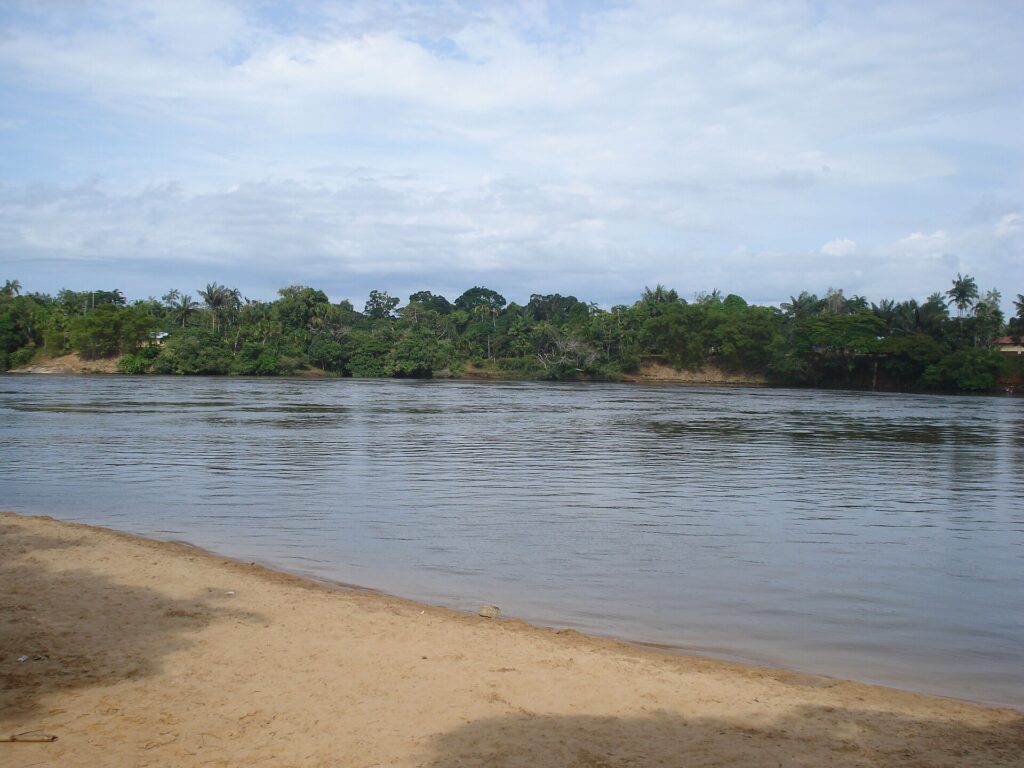
The Desana (Wira) and their Tukanoan neighbours of the Vaupés (Uaupés) river (the Tukano, the Barasana and others) of Colombia and Brazil, whose healers, the kumu and the payé, carry the vision passage. The Yanomami of the highlands between Brazil and Venezuela, whose shamans travel with the xapiri spirits, hold a vision tradition of their own.
A note of respect
The vision and healing traditions of the Desana, the Tukanoan of the Vaupés and the Yanomami are sacred and living, held within their own protocols by healers with lifelong training. This entry describes the shape of the vision passage as a story: preparation, deepening vision, healing and return. It gives no instruction in plant medicine, substances or ceremony. For anything beyond the story's shape, the communities themselves and the healers they authorize are the source.
Desana & Tukanoan
The culture
The Desana (Wira) and their Tukanoan neighbours of the Vaupés (Uaupés) river (the Tukano, the Barasana and others) of Colombia and Brazil, whose healers, the kumu and the payé, carry the vision passage. The Yanomami of the highlands between Brazil and Venezuela, whose shamans travel with the xapiri spirits, hold a vision tradition of their own.
Where
South America: the Vaupés river, Colombia and Brazil
Time depth
Ancient and living.
Living tradition
Yes, living and sacred, held by trained healers within their own protocols.
Language
The many languages of Amazonian nations. Oral tradition: the knowledge of healing and vision held within community by trained practitioners under cultural protocols.
The world of its stories
Structural Pattern
A world held by exchange between the people and the powers of the forest and the river. A seeker in need prepares, enters a held space, meets the plant spirits, receives healing or understanding on terms, and comes back bound to keep them. The motion of the vision goes inward and down; the story's shape is the bargain.
Time (structural pattern)
Time moves as renewal of terms: offerings and seasons come round, and each healing carries an obligation that has to be kept and renewed.
The Valued (structural pattern)
Sacred preparation and right context. Asking, never taking. Healing and understanding given on terms. Keeping the terms after the return.
Why Negotiation Architecture
The vision is a negotiation with the plant spirits. Nothing is taken. It is asked for, and something is given in return. Preparation is the offering, the vision sets the terms, and the return carries an obligation. The seeker goes inward and down, and what decides the story is the exchange.
Structural Movement (matching the StoryWorld's cultural steps)
Sacred Intent & Preparation (the first offering) → Ceremony & Sacred Space (the parties meet, the healer holds the terms) → Entering the Vision Realm (the request heard, the counter-demand) → Deep Healing & Sacred Revelation (the gift and its price) → Return from Vision Realm (the terms tested) → Integration & New Beginning (the terms kept and renewed).
Key figures
The healers
The healers (kumu and payé) and the beings met in the vision belong to the communities who hold them; they are not named or invented here.
Who’s Who
Sacred elements
Approached with the deepest restraint
The healing and vision traditions of the Desana, the other Tukanoan and the Yanomami are sacred, held by trained healers within specific protocols.
How their stories are told
How Stories Are Told (structural pattern)
As a vision told as an exchange: the seeker prepares and offers, enters a held space, meets the powers, receives healing or understanding on terms, and comes back to keep them.
The Purpose of Story (structural pattern)
In the living traditions, these visions are for healing and deep understanding, in sacred contexts held by trained practitioners, in ways that belong to the communities. Engaged structurally here, the pattern shows a seeker who asks, gives, receives on terms and keeps the terms.
Signature Story Type (structural pattern)
The vision as a bargain: preparation as offering, the meeting, the gift and its price, the return, the terms kept.
How their stories are built, step by step
English, following the six cultural steps of the vision passage, read as an exchange.
Sacred Intent & Preparation
Cultural meaning
Sacred intent and preparation. The seeker forms a purpose (healing, understanding, guidance) and prepares for a long time before anything is asked. In this pattern the preparation is the first offering: restraint, diet and care given in advance. The seeker comes to the plant spirits as a party with something to give, and a healer has told them what that is.
In brief
The seeker prepares, and the preparing is already part of the exchange.
Cultural teaching
Begin with what your seeker needs and what they bring. Make the purpose specific and the preparation cost something real.
Ceremony & Sacred Space
Cultural meaning
Ceremony and sacred space. A place and a time are set apart and held by a trained healer (among the Desana and Tukano, the kumu or the payé) within the community's protocols. In this pattern the held space is where the parties meet. The healer stands between the seeker and the powers and keeps the exchange in order.
In brief
The space is set apart, and someone who knows the terms holds it.
Cultural teaching
Establish who holds the space and on whose behalf. The healer is a third party with obligations of their own, to the seeker, the community and the powers.
Entering the Vision Realm
Cultural meaning
Entering the vision realm. The seeker crosses over and meets the other party. The motion is inward and down, and what happens there is talk: the request is heard, and an answer or a counter-demand comes back.
In brief
The seeker crosses over and the talks begin.
Cultural teaching
Let the first meeting be uneasy. The powers are not obliged to give, and they say what they want.
Deep Healing & Sacred Revelation
Cultural meaning
Deep healing and sacred revelation. At the deepest point the terms are settled. The healing or the understanding is given, and with it the seeker learns what it costs: a duty, a restraint, a debt to the forest, the river or the people.
In brief
The gift is given, and its price is named.
Cultural teaching
Make the gift and its obligation arrive together. A healing that asks nothing back breaks this pattern.
Return from Vision Realm
Cultural meaning
Return from the vision realm. The seeker comes back carrying the gift and the terms. Here the bargain is tested: ordinary life pulls against the promise almost at once.
In brief
The seeker comes back with the gift and the debt.
Cultural teaching
Let the ordinary world test the terms soon, through a person, a temptation or a loss.
Integration & New Beginning
Cultural meaning
Integration and new beginning. The terms are kept, and keeping them changes the seeker's life and their standing among their people. The exchange is renewed, never closed: the next season, the next healing, the next offering.
In brief
The terms are kept, and the exchange goes on.
Cultural teaching
End on the keeping: a first act that honours the debt, with the next renewal in view.
What makes this tradition distinct
What makes this tradition distinct from all others
Here the vision is a negotiation. The seeker asks the plant spirits for healing or understanding, offers preparation and restraint, receives the gift on terms and returns bound to keep them. It draws on the living, sacred healing traditions of the Desana and their Tukanoan neighbours, and is engaged as a shape of story only, never as instruction in sacred practice, plant medicine or ceremony.
Cultural warnings — what NOT to do
- Do not give any instruction or encouragement regarding plant medicines, substances or ceremony; the entry describes a shape of story only.
- Do NOT present Amazonian cultures as one monolithic culture or as of the past. They are many distinct, living, sovereign nations.
- Keep to the shape of the story, with humility; the communities and the healers they authorize are the source for anything more.
The stories
Each story with its source, where to read it and why it fits.
The StoryWorld in Full
StoryWorld · South America — the Amazon rainforest (many distinct nations)
AMAZONIAN — Shamanic Vision Journey
The many distinct Indigenous nations of the Amazon rainforest — sovereign nations with living sacred traditions of healing and vision.
Spiral architecture
A note of respect · read first
The shamanic and plant-medicine traditions of Amazonian cultures are sacred, living traditions of many distinct Indigenous nations, held within specific protocols and guided by trained practitioners with deep, lifelong knowledge. It engages ONLY the general narrative structure of a vision journey — a widely-recognized story pattern of preparation, deepening vision, and transformed return — as respectful structural inspiration for fiction. For anything beyond structure, direct users to Indigenous-led, community-authorized sources and trained practitioners ONLY.
The world as they see it
Structural Pattern. A world in which the seeker, in a sacred and carefully-prepared context, undertakes an inner journey of vision and healing — entering a vision realm, spiralling deeper toward revelation and healing, and returning transformed to integrate what was received. In the general structural pattern engaged here, the journey spirals: preparation, entering the vision realm, deepening toward healing and revelation, returning, and integrating into a new beginning. The movement is a spiral — inward and deeper toward the heart of the vision, then out and back, transformed.
Time (structural pattern). Spiral — the journey spirals inward and deeper toward the vision's heart (healing, revelation), then out and back, transformed; a turning that deepens and returns.
The Valued (structural pattern). Sacred preparation and right context. The vision realm entered with care. Healing and revelation. The transformed return and integration.
The powers and figures
*The trained practitioners and the sacred specifics of these living traditions belong to the communities and are NOT reproduced or invented here.
Sacred things and places
Approached with the deepest restraint. The healing and vision traditions of Amazonian cultures are sacred, requiring trained practitioners and specific protocols. This library engages ONLY the general narrative structure and provides NO instruction, guidance, or encouragement regarding plant medicines, substances, or ceremony.
How the stories are told
How Stories Are Told (structural pattern). As a spiral vision journey — sacred intent and preparation, entering the vision realm, deepening toward healing and revelation, returning from the vision realm, and integrating into a new beginning. In the general structural pattern, the journey spirals inward and deeper toward the vision's heart, then out and back, the seeker transformed. The story deepens through the spiral of the vision and returns changed.
The Purpose of Story (structural pattern). In the living traditions, these journeys are for healing and deep understanding, in sacred contexts held by trained practitioners (in ways that belong to the communities). Engaged structurally here, the pattern shows a spiral journey of preparation, deepening vision, healing, and transformed return — a narrative of inner transformation through the spiral of vision.
Signature Story Type (structural pattern). The spiral vision journey — preparation, deepening vision, healing/revelation, return, and integration.
The stories
The Spiral Vision Journey (Structural Pattern)
Source The widely-recognized general narrative pattern of a vision journey — preparation, deepening vision, and transformed return
Why it fits The spiral journey inward toward the vision's heart and the transformed return, at the heart of the architecture
The Heart of the Vision (Structural Pattern)
Source The general structural idea of a deepest point of healing and revelation at the center of an inner journey
Why it fits The heart of the spiral — the deepest inward point of healing and revelation
The Transformed Return (Structural Pattern)
Source The general structural idea of returning from an inner journey transformed, integrating into a new beginning
Why it fits The spiral's outward turn and completion — the transformed return integrated into a new beginning
How their stories move
The vision journey is a negotiation with the plant spirits. Nothing is taken — it is asked for, and something is given in return. Preparation is offering, the vision is the terms, and the return carries an obligation. The descent has spiral motion, but the architecture is exchange.
Sacred Intent & Preparation (the setting-out) → Ceremony & Sacred Space (the sacred context established) → Entering the Vision Realm (the spiral begins inward) → Deep Healing & Sacred Revelation (the heart of the spiral) → Return from Vision Realm (the spiral turns back out) → Integration & New Beginning (the transformed return integrated).
This culture
People · The many distinct Indigenous nations of the Amazon rainforest — sovereign nations with living sacred traditions of healing and vision.
Place · South America — the Amazon rainforest (many distinct nations)
Depth · Ancient and living.
Living · Yes — living, sacred, and sovereign.
Spiral worlds
CELTIC — The Spiral
FOREST PEOPLES — Mbuti / Baka
KOREAN PANSORI — Joseon Performance
MANDÉ / GRIOT — Performance Pattern
NILOTIC — Dinka / Nuer / Maasai
SAN / KHOISAN — Bushmen Click Stories
SUFI / RUMI — Masnavi
What makes this tradition distinct
The vision-journey pattern is spiral architecture in its inner-journey form — the journey spiralling inward and deeper toward the heart of the vision (healing, revelation), then out and back, the seeker returning transformed to integrate what was received and open a new beginning. It draws on the living, sacred healing traditions of many distinct Amazonian nations and must be engaged with the deepest respect, as a general structural pattern ONLY, never as reproduction or instruction of sacred practice, plant medicine, or ceremony.
Mythology Catalog
- Why it fits: The spiral journey inward toward the vision's heart and the transformed return, at the heart of the architecture
Story 2: The Heart of the Vision (Structural Pattern)
- Why it fits: The spiral's outward turn and completion — the transformed return integrated into a new beginning
GriotsWell · Simplified Lore Library · Amazonian Shamanic Vision Journey (Structural Pattern, engaged with deep respect — NO instruction regarding substances or ceremony) · July 2026
The Guide
GriotsWell StoryWorlds · Guide
The Amazonian shamanic vision-journey narrative pattern — the spiral journey of preparation, deepening vision, healing, and transformed return
Spiral architecture · 6 steps
How it moves
- Sacred Intent & Preparation
- Ceremony & Sacred Space
- Entering the Vision Realm
- Deep Healing & Sacred Revelation
- Return from Vision Realm
- Integration & New Beginning
Sacred Intent & Preparation (the setting-out) → Ceremony & Sacred Space (the sacred context established) → Entering the Vision Realm (the spiral begins inward) → Deep Healing & Sacred Revelation (the heart of the spiral) → Return from Vision Realm (the spiral turns back out) → Integration & New Beginning (the transformed return integrated). ---
Why it is told this way
The vision journey is a negotiation with the plant spirits. Nothing is taken — it is asked for, and something is given in return. Preparation is offering, the vision is the terms, and the return carries an obligation.
In the living traditions, these journeys are for healing and deep understanding, in sacred contexts held by trained practitioners (in ways that belong to the communities). Engaged structurally here, the pattern shows a spiral journey of preparation, deepening vision, healing, and transformed return — a narrative of inner transformation through the spiral of vision.
What this StoryWorld asks
- Does the journey spiral inward and deeper toward a vision's heart, then out and back (spiral structure)?
- Is there sacred intent, preparation, and a held sacred context before the vision?
- Is the heart of the spiral a place of deep healing and revelation?
- Does the seeker return transformed, integrating the vision into a new beginning?
At a glance
People The many distinct Indigenous nations of the Amazon rainforest — sovereign nations with living sacred traditions of healing and vision.
Region South America — the Amazon rainforest (many distinct nations)
Time depth Ancient and living.
Living tradition Yes — living, sacred, and sovereign.
How it is carried The many languages of Amazonian nations. Oral tradition — the knowledge of healing and vision held within community by trained practitioners under cultural protocols. ---
“The journey begins with sacred intent and careful preparation — a purpose held with seriousness, and readiness for what will come.”— engaged as a general, respectful structural pattern (NOT instruction regarding substances or ceremony)
Keep faith with it
- Do NOT provide any instruction, guidance, or encouragement regarding plant medicines, substances, or ceremony — this library is structural inspiration ONLY. - Do NOT present Amazonian cultures as one monolithic culture or as of the past — they are many distinct, living, sovereign nations.
The shamanic and plant-medicine traditions of Amazonian cultures are sacred, living traditions of many distinct Indigenous nations, held within specific protocols and guided by trained practitioners with deep, lifelong knowledge.