Diné — Hózhó / Blessingway
Diné (Navajo) narrative tradition: Hózhó and the Blessingway (Hózhóojí)
The Diné (Navajo) of Diné Bikéyah, the Navajo homeland in the Four Corners region of the American Southwest (Arizona, New Mexico, Utah, Colorado), within the four sacred mountains.
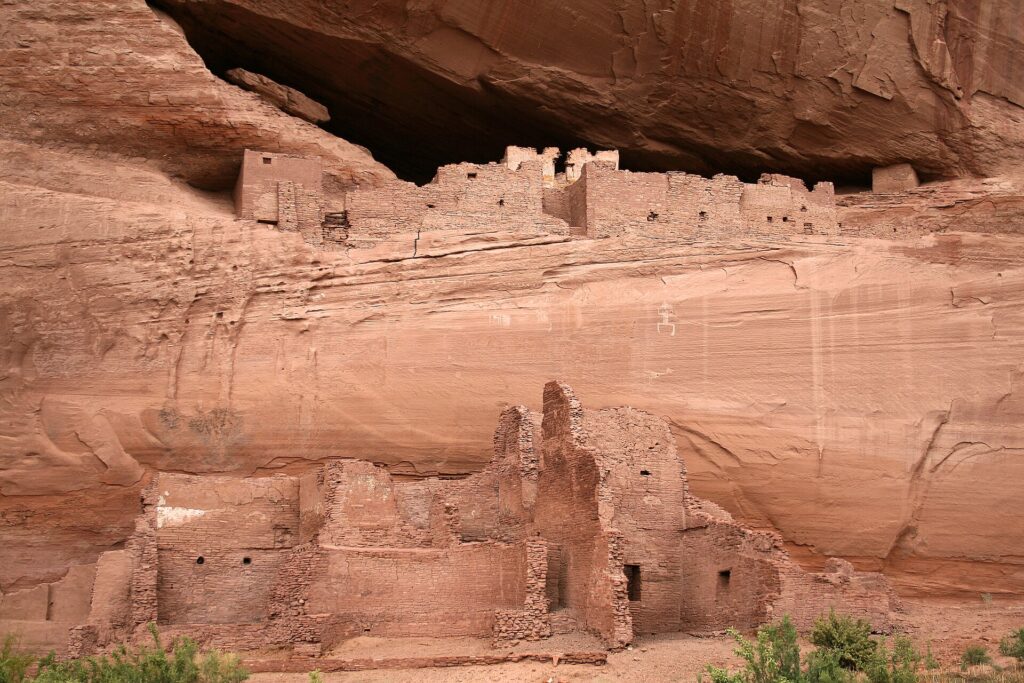
Diné
The culture
The Diné (Navajo) of Diné Bikéyah, the Navajo homeland in the Four Corners region of the American Southwest (Arizona, New Mexico, Utah, Colorado), within the four sacred mountains.
Where
North America, the American Southwest
Time depth
Ancient: the Diné have inhabited the Southwest for centuries, and the tradition of the emergence, the Holy People, and Hózhó reaches back into deep tradition. The Blessingway is the central ceremonial complex from which others derive.
Living tradition
Yes: the Diné are the largest Native nation in the United States by enrolled population and land, and their language, ceremonies, and the philosophy of Hózhó remain vibrantly alive. The Blessingway and Hózhó are living, central realities of Diné life.
Language
Diné bizaad (the Navajo language). Oral tradition: the emergence narrative, the stories of the Holy People, and above all the ceremonial chantways (especially the Blessingway, Hózhóojí), which are complex, precise, sung ceremonies restoring Hózhó. Sandpainting and song are integral.
The world of its stories
Cosmological Structure
A world within the four sacred mountains, established through the emergence: the ancestors climbed up through a series of lower worlds into this one, the Glittering World. The cosmos is held in balance between complementary forces, and the central organizing principle is Hózhó: a rich concept encompassing beauty, harmony, balance, order, health, and rightness, the state in which all things are in their proper relationship. Its complement is hóchxǫ' (disorder, ugliness, imbalance). Life is the continual restoration and maintenance of Hózhó.
Creation / Emergence
The Diné emerged from lower worlds through a series of ascents, each world left behind due to disorder, until reaching this world, where First Man and First Woman and the Holy People (Diyin Dine'é) established the order of things, the sacred mountains, and the ceremonies. Changing Woman (Asdzáá Nádleehé), the most beloved Holy Person, was found as a baby and matured, giving rise to the Hero Twins and, in the Blessingway, establishing the ceremony of Hózhó itself.
Time
Cyclical and balanced: the turning of the day and the seasons, the movement from Hózhó through disorder and back to restored Hózhó. Time is understood through the restoration of balance: things fall into disorder and are ceremonially restored to Hózhó, again and again. The Blessingway is often performed to keep Hózhó in good times as well as to restore it after trouble.
The Sacred
Hózhó itself: beauty, harmony, balance, the right relationship of all things. The four sacred mountains and the directions, each with its color, time, and meaning. Changing Woman and the Holy People. The Blessingway (Hózhóojí), the central ceremony. The corn pollen (tádídíín) used in blessing. The hooghan (hogan), the traditional dwelling, itself a model of the ordered cosmos.
Death / Afterlife
Death and the dead are treated with great care and caution in Diné tradition; the chindi (the disharmonious element left at death) is to be avoided, and specific practices surround death. The emphasis of the living tradition is overwhelmingly on the maintenance and restoration of Hózhó in life, on walking in beauty and balance. Ceremony restores the living to Hózhó; the tradition's energy is directed toward harmony in this world.
Balance-Seeking Architecture
An Architecture of Story
The Balance-Seeking Architecture GuideWhy Balance Architecture
The Diné tradition is organized entirely around balance: Hózhó, the state of beauty, harmony, and right relationship, and its complement hóchxǫ' (disorder). Story moves from Hózhó, through the entry of disorder, to the ceremony that restores Hózhó. Balance comes back; nobody is defeated. The Blessingway's very structure is a movement into and out of balance, closing with Hózhó restored in all four directions. A story in this architecture holds the complementary forces of order and disorder, and moves through their imbalance back to restored harmony: the balance re-established, beauty restored before, behind, below, and above. Coyote (disorder) and the Holy People (order) are both necessary. The tradition restores the balance and keeps a place for disorder.
Structural Logic
Movement from balance (Hózhó), through the entry of disorder (hóchxǫ'), to the ceremonial restoration of balance: the re-establishment of harmony in all directions, not the defeat of an enemy. Both order and disorder are held as necessary; the resolution is the restoration of right relationship among all things.
Structural Movement
Hózhóogo (in beauty / the balanced beginning: Hózhó established) → the four directions established (the balanced cosmos, order in all its complementary parts) → the entry of disorder (hóchxǫ' enters, imbalance, illness, trouble) → the travels among the Holy People (the ceremonial path, the seeking of restoration) → the restoration begun (the ceremony working, balance being re-established) → Hózhó Náhásdlíí' (beauty has been restored. Hózhó re-established in all four directions, the balance made whole).
Key figures
Supreme Being / Creator
No single supreme creator; the Holy People (Diyin Dine'é) (including First Man, First Woman, and especially Changing Woman) establish and maintain the order of the world.
Major Figures
- Changing Woman (Asdzáá Nádleehé): the most beloved Holy Person, associated with the earth, the seasons, fertility, and renewal; she who established the Blessingway and gave rise to the Hero Twins. She ages and grows young again with the seasons, the very image of balanced renewal.
- The Hero Twins (Monster Slayer and Born-for-Water): Changing Woman's sons, who rid the world of the monsters and made it safe, restoring balance.
- First Man and First Woman (Áłtsé Hastiin, Áłtsé Asdzáá): who helped order this world after the emergence.
- The Holy People (Diyin Dine'é): the sacred beings who established the ceremonies and the order of Hózhó.
Trickster / Culture Figure
Coyote (Mąʼii): the great trickster of Diné tradition, whose disruptions, appetites, and errors introduce disorder into the world (Coyote is often responsible for the introduction of death and disorder), balancing the establishing work of the Holy People. Coyote is essential, disorder's agent, without whom the balance would be incomplete.
Ancestor Figures
The Holy People and the first ancestors of the emergence. Changing Woman as the maternal source. The lineage of hataałii (medicine people, "singers") who carry the ceremonies.
Who’s Who
Sacred elements
Sacred Objects
Corn pollen (tádídíín), used in blessing and prayer. The sacred mountain soil bundle. Sandpaintings (iikááh), created and destroyed within ceremony as impermanent sacred images of the Holy People. The medicine bundle (jish) of the hataałii. The four sacred stones/colors of the directions.
Sacred Places
The four sacred mountains that bound Diné Bikéyah (Blanca Peak/east, Mount Taylor/south, San Francisco Peaks/west, Hesperus Peak/north). The hooghan (hogan), the traditional dwelling modeling the cosmos. The land within the mountains. Places of the emergence and the Holy People.
Sacred Practices
The Blessingway (Hózhóojí) and the other chantways: precise, sung ceremonies, often multi-day, restoring or maintaining Hózhó. Sandpainting within ceremony. The offering of corn pollen. The Walking in Beauty prayer. The ceremonies of the life cycle (including the Kinaaldá, the girl's puberty ceremony modeled on Changing Woman).
Sacred Prohibitions
The ceremonies are precise and must be performed correctly by trained hataałii, error can bring harm rather than healing. The chindi and matters of death require specific care. The sacred knowledge is not casually shared or displayed; sandpaintings are impermanent and not to be permanently reproduced. Balance (Hózhó) must be maintained; its neglect brings disorder.
How their stories are told
How Stories Are Told
Through oral narrative (the emergence, the Holy People, Changing Woman, the Hero Twins, Coyote tales) and, at the deepest level, through the ceremonial chantways: long, precise, sung ceremonies that narrate and enact the restoration of Hózhó. The chantway tells a story (often of someone who falls into disorder, travels among the Holy People and is restored) that is also the map of the ceremony restoring the patient to balance. Story and healing are one.
Who Tells Them
The hataałii (medicine people, "singers"), who undergo long training to learn the precise chantways; elders and knowledge-keepers for the narratives; the community in the ceremonies.
When They Are Told
The chantways are performed when Hózhó must be restored (in illness or trouble) or maintained (in blessing); the narratives are taught across generations, traditionally in winter. The Blessingway is performed for many life occasions to ensure Hózhó.
The Purpose of Story
To restore and maintain Hózhó: beauty, harmony, balance, the right relationship of all things. The chantway narrative is a healing instrument: it walks the patient (and the community) from disorder back into balance. Story does not defeat an enemy; it restores harmony. Its deepest expression is the closing of the Blessingway: "Hózhó náhásdlíí'" ("Beauty has been restored") spoken as the balance is re-established in all directions.
Signature Story Types
The emergence narrative, the stories of Changing Woman and the Hero Twins, the Coyote tales (disorder's agent), and the ceremonial chantway narratives (especially the Blessingway) that enact the restoration of Hózhó.
How their stories are built, step by step
Diné concepts in Navajo, following the movement of the Blessingway from Hózhó through disorder to restored Hózhó.
Hózhóogo (In Beauty / The Balanced Beginning)
Cultural meaning
The story begins in Hózhó. The state of beauty, harmony, balance, and right relationship in which all things stand in their proper place. This is balance present: the world walking in beauty, all its complementary forces in harmony. The Blessingway begins here, in the establishment of Hózhó, the state the whole ceremony will maintain or restore.
Wisdom quote
"Hózhóogo naasháa doo." In beauty I walk. With beauty before me, with beauty behind me, with beauty above and below me, I walk (from the Diné Blessingway).
Cultural teaching
In this balance architecture, begin with balance in place. Hózhó, the state of beauty and right relationship in which all things stand in harmony. Establish your story's world in its balance: the complementary forces in right relationship, the world walking in beauty. This is the state the story will move away from and restore, so establish it as a real and present harmony.
The Four Directions (The Balanced Cosmos)
Cultural meaning
The balanced cosmos is established in its complementary parts. The four sacred directions, each with its mountain, color, time of day, and meaning, all in balanced relationship. The Diné world is bounded and ordered by the four sacred mountains, the four directions held in balance. This step establishes the full structure of the balance: the complementary parts, each necessary, that together make the harmonious whole.
In brief
The four sacred mountains stand in the four directions, and between them the people walk in Hózhó, held in balance by the whole.
Cultural teaching
Establish the full structure of the balance. The complementary parts, each necessary, that together make the harmonious whole. In Diné tradition, the four sacred directions and mountains give the balance its complete structure. Show your story's balance in its complementary parts: the forces, directions, or elements that together hold the world in harmony, so that the coming disorder disturbs a fully-structured balance and the restoration re-establishes the whole.
The Entry of Disorder (Hóchxǫ' Enters)
Cultural meaning
Disorder enters, hóchxǫ', the imbalance, the illness, the trouble that disrupts Hózhó. In Diné understanding, what arrives is imbalance entering the whole: sickness, disharmony, a falling-out of right relationship. Coyote, the trickster, is often disorder's agent. The balance is disturbed, and the world falls out of Hózhó, requiring ceremonial restoration.
In brief
When Coyote crossed the trail, the order was disturbed, and disharmony entered where there had been beauty.
Cultural teaching
Let disorder enter as an imbalance, a falling-out of right relationship, with no villain to defeat. In Diné tradition, hóchxǫ' (disorder) disturbs Hózhó, and Coyote, who brings it, is disorder's necessary agent and is never destroyed. Frame your story's disruption as the entry of imbalance (sickness, disharmony, broken relationship) that must be restored, not conquered.
The Journey Among the Holy People (The Path of Restoration)
Cultural meaning
The path of restoration begins. The travels among the Holy People, the ceremonial path toward re-establishing Hózhó. In the chantway narratives, the one who has fallen into disorder travels among the Holy People, learns the ceremonies and gathers what is needed to restore balance. This step is the seeking of restoration: the movement through the sacred path that leads from disorder back toward Hózhó, guided by the Holy People and their knowledge.
In brief
The one who had fallen into disorder went to the Holy People, and they taught the songs and the way, so that Hózhó could be restored.
Cultural teaching
Let the restoration proceed through a sacred path. Travel among the sources of order and knowledge, gathering what is needed to re-establish balance. In Diné chantway tradition, the one who has fallen into disorder goes among the Holy People to learn the way of restoration. Let your story's turn toward restoration take real effort: gathering the knowledge, help and right relationships needed to restore the balance.
The Restoration Begun (The Ceremony Working)
Cultural meaning
The restoration is enacted. The ceremony working, the balance being re-established. In the Blessingway, this is the singing, the sandpainting, the offering of pollen, the precise ritual acts that walk the patient back into Hózhó. The restoration is a process, right relationship re-established part by part, the balance rebuilt with care. The world moves from disorder back toward harmony.
In brief
With pollen and song, direction by direction, the balance is rebuilt and Hózhó is called back into all things.
Cultural teaching
Show the restoration as a careful process, direction by direction and element by element, with no single moment of victory. In the Blessingway, Hózhó is rebuilt precisely and completely. Let your story's restoration be a genuine process of re-establishing the balance in all its complementary parts, the harmony carefully called back into all things.
Hózhó Náhásdlíí' (Beauty Has Been Restored / The Balance Made Whole)
Cultural meaning
The Blessingway closes with the words "Hózhó náhásdlíí'" ("Beauty has been restored") repeated for each of the four directions: beauty restored before, behind, below, above. Hózhó is re-established in all directions, the balance made whole. This is the resolution: harmony restored in full, beauty walking again in all things, right relationship re-established throughout the world.
Wisdom quote
"Hózhó náhásdlíí', Hózhó náhásdlíí', Hózhó náhásdlíí', Hózhó náhásdlíí'." Beauty has been restored, in all four directions (the closing of the Diné Blessingway).
Cultural teaching
End with the complete restoration of balance, beauty re-established in all directions, harmony made whole, right relationship restored throughout. The Blessingway closes with "Hózhó náhásdlíí'": beauty restored before, behind, below and above. Let your story close on the full restoration of harmony in all its parts: the balance made whole, beauty walking again throughout the world, right relationship re-established in every direction.
What makes this tradition distinct
What makes this tradition distinct from all others
The Diné tradition is organized entirely around Hózhó: a rich concept of beauty, harmony, balance, and right relationship that has no single English equivalent and shapes the whole worldview. Its ceremonies (especially the Blessingway) are healing instruments in which story and restoration are one: the chantway narrative walks the patient from disorder back into balance. Disorder (hóchxǫ') is restored, not defeated; even Coyote, disorder's trickster-agent, is necessary to the whole. The four sacred directions and mountains give the balance a complete structure, and the tradition's energy is directed overwhelmingly toward harmony in this life, "walking in beauty."
Cultural warnings — what NOT to do
- Do not reduce Hózhó to "harmony" or "beauty" alone. It is a rich, untranslatable concept of balance, order, health, and right relationship; honor its depth.
- Do not resolve by defeating disorder: Diné balance restores Hózhó rather than destroying hóchxǫ'; even Coyote is necessary.
- Do not reproduce or fabricate the precise ceremonial content: the chantways are sacred, precise, and belong to the trained hataałii; teach the architecture without reproducing protected ceremony or sandpaintings.
- Handle death and the chindi with care and restraint; the tradition's energy is toward Hózhó in life. Do not misattribute Hózhó to other traditions (a correction noted in prior Run 1 work: Hózhó is specifically Diné).
The stories
Each story with its source, where to read it and why it fits.
The StoryWorld in Full
StoryWorld · North America — the American Southwest
DINÉ — Hózhó / Blessingway
Diné (Navajo) people — Diné Bikéyah, the Navajo homeland in the Four Corners region of the American Southwest (Arizona, New Mexico, Utah, Colorado), within the four sacred mountains.
Balance architecture
The world as they see it
Cosmological Structure. A world within the four sacred mountains, established through the emergence — the ancestors' journey up through a series of lower worlds into this, the Glittering World. The cosmos is held in balance between complementary forces, and the central organizing principle is Hózhó — a rich concept encompassing beauty, harmony, balance, order, health, and rightness, the state in which all things are in their proper relationship. Its complement is hóchxǫ' (disorder, ugliness, imbalance). Life is the continual restoration and maintenance of Hózhó.
Creation / Emergence. The Diné emerged from lower worlds through a series of ascents, each world left behind due to disorder, until reaching this world, where First Man and First Woman and the Holy People (Diyin Dine'é) established the order of things, the sacred mountains, and the ceremonies. Changing Woman (Asdzáá Nádleehé), the most beloved Holy Person, was found as a baby and matured, giving rise to the Hero Twins and, in the Blessingway, establishing the ceremony of Hózhó itself.
Time. Cyclical and balanced — the turning of the day and the seasons, the movement from Hózhó through disorder and back to restored Hózhó. Time is understood through the restoration of balance: things fall into disorder and are ceremonially restored to Hózhó, again and again. The Blessingway is often performed to maintain and ensure Hózhó, not only to restore it after trouble.
The Sacred. Hózhó itself — beauty, harmony, balance, the right relationship of all things. The four sacred mountains and the directions, each with its color, time, and meaning. Changing Woman and the Holy People. The Blessingway (Hózhóojí), the central ceremony. The corn pollen (tádídíín) used in blessing. The hooghan (hogan), the traditional dwelling, itself a model of the ordered cosmos.
Death / Afterlife. Death and the dead are treated with great care and caution in Diné tradition; the chindi (the disharmonious element left at death) is to be avoided, and specific practices surround death. The emphasis of the living tradition is overwhelmingly on the maintenance and restoration of Hózhó in life — on walking in beauty and balance. Ceremony restores the living to Hózhó; the tradition's energy is directed toward harmony in this world.
The powers and figures
Supreme Being / Creator
No single supreme creator in the Western sense; the Holy People (Diyin Dine'é) — including First Man, First Woman, and especially Changing Woman — establish and maintain the order of the world.
Major Figures
Changing Woman (Asdzáá Nádleehé) — the most beloved Holy Person, associated with the earth, the seasons, fertility, and renewal; she who established the Blessingway and gave rise to the Hero Twins. She ages and grows young again with the seasons — the very image of balanced renewal.
The Hero Twins (Monster Slayer and Born-for-Water) — Changing Woman's sons, who rid the world of the monsters and made it safe, restoring balance.
First Man and First Woman (Áłtsé Hastiin, Áłtsé Asdzáá) — who helped order this world after the emergence.
The Holy People (Diyin Dine'é) — the sacred beings who established the ceremonies and the order of Hózhó.
Trickster / Culture Figure
Coyote (Mąʼii) — the great trickster of Diné tradition, whose disruptions, appetites, and errors introduce disorder into the world (Coyote is often responsible for the introduction of death and disorder), balancing the establishing work of the Holy People. Coyote is essential — disorder's agent, without whom the balance would be incomplete.
Ancestor Figures
Sacred things and places
Sacred Objects. Corn pollen (tádídíín), used in blessing and prayer. The sacred mountain soil bundle. Sandpaintings (iikááh), created and destroyed within ceremony as impermanent sacred images of the Holy People. The medicine bundle (jish) of the hataałii. The four sacred stones/colors of the directions.
Sacred Places. The four sacred mountains that bound Diné Bikéyah (Blanca Peak/east, Mount Taylor/south, San Francisco Peaks/west, Hesperus Peak/north). The hooghan (hogan), the traditional dwelling modeling the cosmos. The land within the mountains. Places of the emergence and the Holy People.
Sacred Practices. The Blessingway (Hózhóojí) and the other chantways — precise, sung ceremonies, often multi-day, restoring or maintaining Hózhó. Sandpainting within ceremony. The offering of corn pollen. The Walking in Beauty prayer. The ceremonies of the life cycle (including the Kinaaldá, the girl's puberty ceremony modeled on Changing Woman).
Sacred Prohibitions. The ceremonies are precise and must be performed correctly by trained hataałii — error can bring harm rather than healing. The chindi and matters of death require specific care. The sacred knowledge is not casually shared or displayed; sandpaintings are impermanent and not to be permanently reproduced. Balance (Hózhó) must be maintained; its neglect brings disorder.
How the stories are told
How Stories Are Told. Through oral narrative (the emergence, the Holy People, Changing Woman, the Hero Twins, Coyote tales) and, at the deepest level, through the ceremonial chantways — long, precise, sung ceremonies that narrate and enact the restoration of Hózhó. The chantway tells a story (often of a protagonist who falls into disorder, journeys among the Holy People, and is restored) that is simultaneously the map of the ceremony restoring the patient to balance. Story and healing are one.
Who Tells Them. The hataałii (medicine people, "singers"), who undergo long training to learn the precise chantways; elders and knowledge-keepers for the narratives; the community in the ceremonies.
When They Are Told. The chantways are performed when Hózhó must be restored (in illness or trouble) or maintained (in blessing); the narratives are taught across generations, traditionally in winter. The Blessingway is performed for many life occasions to ensure Hózhó.
The Purpose of Story. To restore and maintain Hózhó — beauty, harmony, balance, the right relationship of all things. The chantway narrative is a healing instrument: it walks the patient (and the community) from disorder back into balance. Story does not defeat an enemy; it restores harmony. Its deepest expression is the closing of the Blessingway: "Hózhó náhásdlíí'" — "Beauty has been restored" — spoken as the balance is re-established in all directions.
Signature Story Types. The emergence narrative, the stories of Changing Woman and the Hero Twins, the Coyote tales (disorder's agent), and the ceremonial chantway narratives (especially the Blessingway) that enact the restoration of Hózhó.
The stories
Changing Woman and the Blessingway
Source Diné tradition — Changing Woman (Asdzáá Nádleehé), her maturing, and the establishment of the Blessingway (Hózhóojí)
Why it fits The very source of the balance architecture — the establishment of the ceremony of Hózhó, the restoration of beauty and right relationship
The Emergence (Diné Bahaneʼ)
Source Diné emergence narrative — the ancestors' journey up through the lower worlds into the Glittering World, each world left for its disorder
Public domain access The tradition is the Diné's own
Why it fits The movement from disorder toward the establishment of balanced order — the cosmic pattern of leaving imbalance behind and establishing Hózhó
Coyote and the Entry of Disorder
Source Diné Coyote (Mąʼii) tales — the trickster whose disruptions introduce disorder, and even death, into the world
Public domain access Public-domain Navajo folklore collections; academic archives via Internet Archive
Why it fits Disorder's necessary agent in the balance — Coyote introduces the imbalance that the restoration of Hózhó must address, showing that disorder is held, not simply destroyed
How their stories move
Hózhóogo (in beauty / the balanced beginning — Hózhó established) → the four directions established (the balanced cosmos, order in all its complementary parts) → the entry of disorder (hóchxǫ' enters — imbalance, illness, trouble) → the journey among the Holy People (the ceremonial path, the seeking of restoration) → the restoration begun (the ceremony working, balance being re-established) → Hózhó Náhásdlíí' (beauty has been restored — Hózhó re-established in all four directions, the balance made whole).
This culture
People · Diné (Navajo) people — Diné Bikéyah, the Navajo homeland in the Four Corners region of the American Southwest (Arizona, New Mexico, Utah, Colorado), within the four sacred mountains.
Place · North America — the American Southwest
Depth · Ancient — the Diné have inhabited the Southwest for centuries, and the tradition of the emergence, the Holy People, and Hózhó reaches back into deep tradition. The Blessingway is the central ceremonial complex from which others derive.
Living · Yes — the Diné are the largest Native nation in the United States by enrolled population and land, and their language, ceremonies, and the philosophy of Hózhó remain vibrantly alive. The Blessingway and Hózhó are living, central realities of Diné life.
Balance worlds
ANCIENT EGYPTIAN — Ma'at Balance
JAVANESE — Wayang Kulit
INDIAN — Rasa (रस) / The Emotional Architecture of the Natyashastra
TAMIL SANGAM — Akam / Puram
Mythology Catalog
- Why it fits: Disorder's necessary agent in the balance — Coyote introduces the imbalance that the restoration of Hózhó must address, showing that disorder is held, not simply destroyed
GriotsWell · Simplified Lore Library · Diné (Hózhó/Blessingway) · July 2026
The Guide
GriotsWell StoryWorlds · Guide
Diné (Navajo) narrative tradition — Hózhó and the Blessingway (Hózhóojí)
Balance architecture · 6 steps
How it moves
- Hózhóogo — In Beauty / The Balanced Beginning
- The Four Directions — The Balanced Cosmos
- The Entry of Disorder — Hóchxǫ' Enters
- The Journey Among the Holy People — The Path of Restoration
- The Restoration Begun — The Ceremony Working
- Hózhó Náhásdlíí' — Beauty Has Been Restored / The Balance Made Whole
Hózhóogo (in beauty / the balanced beginning — Hózhó established) → the four directions established (the balanced cosmos, order in all its complementary parts) → the entry of disorder (hóchxǫ' enters — imbalance, illness, trouble) → the journey among the Holy People (the ceremonial path, the seeking of restoration) → the restoration begun (the ceremony working, balance being re-established) → Hózhó Náhásdlíí' (beauty has been restored — Hózhó re-established in all four directions, the balance made whole). ---
Why it is told this way
Movement from balance (Hózhó), through the entry of disorder (hóchxǫ'), to the ceremonial restoration of balance — the re-establishment of harmony in all directions, not the defeat of an enemy. Both order and disorder are held as necessary; the resolution is the restoration of right relationship among all things.
To restore and maintain Hózhó — beauty, harmony, balance, the right relationship of all things. The chantway narrative is a healing instrument: it walks the patient (and the community) from disorder back into balance. Story does not defeat an enemy; it restores harmony.
What this StoryWorld asks
- Does your story begin in the presence of balance (Hózhó) rather than the absence of a problem?
- Is the disruption an entry of imbalance (disorder) rather than a villain to defeat?
- Does restoration proceed through a careful re-establishment of balance in all its parts, rather than a victory?
- Does your story close on harmony restored in all directions rather than an enemy defeated?
At a glance
People Diné (Navajo) people — Diné Bikéyah, the Navajo homeland in the Four Corners region of the American Southwest (Arizona, New Mexico, Utah, Colorado), within the four sacred mountains.
Region North America — the American Southwest
Time depth Ancient — the Diné have inhabited the Southwest for centuries, and the tradition of the emergence, the Holy People, and Hózhó reaches back into deep tradition. The Blessingway is the central ceremonial complex from which others derive.
Living tradition Yes — the Diné are the largest Native nation in the United States by enrolled population and land, and their language, ceremonies, and the philosophy of Hózhó remain vibrantly alive. The Blessingway and Hózhó are living, central realities of Diné life.
How it is carried Diné bizaad (the Navajo language). Oral tradition — the emergence narrative, the stories of the Holy People, and above all the ceremonial chantways (especially the Blessingway, Hózhóojí), which are complex, precise, sung ceremonies restoring Hózhó.
“Hózhóogo naasháa doo — In beauty I walk. With beauty before me, with beauty behind me, with beauty above and below me, I walk.”— from the Diné Blessingway (Walking in Beauty)
Keep faith with it
- Do not reduce Hózhó to "harmony" or "beauty" alone — it is a rich, untranslatable concept of balance, order, health, and right relationship; honor its depth. - Do not resolve by defeating disorder — Diné balance restores Hózhó rather than destroying hóchxǫ'; even Coyote is necessary.